 ABU LAHAB · Section Seven
Section Seven
Constructing Responses Beyond the Flame
From automatic commands to examined responses that still protect what matters
This section does not dismantle your commands. It examines which parts still serve the life you are living now, and rewrites them into responses that are actually yours.

The Distinction That Changes Everything
Not destruction. Update.
Before anything is built in this section, one distinction needs to be clear: the goal is not to dismantle your commands.
Some of what Section Six revealed deserves to remain.
A person who examined their experience and concluded that certain behaviors require caution, that trust takes time, that boundaries need to be stated, that patterns deserve attention, has not been running Abu Lahab.
They have been learning.
The problem is not the command that says: "I verify before trusting." The problem is the command that says: "Trust is never safe. Full stop."
The first is a calibrated response to experience. The second is a totalizing rule that applies its verdict before the situation has had a chance to differ from the original one.
This section works with the second kind. Not because old commands are always wrong, but because commands written for one world and applied unchanged to every world since need to be examined before they are renewed.
The sequence is: Command → Examination → Update → Response. Not destruction. Update.
Response One — What Still Deserves Protection
Keeping the protection while changing the instrument
Response One
What Still Deserves Protection
Return to Section Five. The protection the flame was guarding, the story, the identity, the unspoken boundary, the demand for acknowledgment, most of it is real.
Most of it deserves to continue being protected.
The question is not: "Should I stop protecting this?"
The question is: "Is the flame still the best available instrument for protecting it?"
Write, in one paragraph: "What I am protecting is still worth protecting because..."
Name what would actually be lost if this protection were removed entirely.
This is the foundation of what gets built next, because any response constructed without acknowledging what the command was legitimately protecting will collapse.
Response Two — What Part of the Command Remains Useful
From total rule to calibrated instruction
Response Two
The Useful Part of the Command
Now look at the command itself. Not at its costs. Not at its origins. At its content.
Is there a version of this command that still fits the life you are actually living?
A calibrated version, one that carries the insight of the original experience without the totalization that made it expensive.
| Original Command | Calibrated Version |
|---|---|
| "Never trust anyone." | "Trust is extended gradually, based on observed behavior." |
| "Never show weakness." | "Vulnerability is offered selectively, to people who have demonstrated they can hold it." |
| "Never back down." | "I choose which positions are worth holding, and hold them deliberately." |
| "Never need anyone." | "I build real capacity for self-sufficiency while remaining open to genuine support." |
Write the calibrated version of the command you examined in Section Six. One sentence. Specific. What you actually believe, having examined the original command and the context that produced it.
Response Three — What No Longer Fits
Revising an instruction written for another world
Response Three
The Part That No Longer Fits
Now identify the part of the command that does not survive examination.
Not because it was wrong when it formed. But because it was written for a specific situation, and that situation has changed, ended, or is no longer the primary context in which you are operating.
Write it directly: "The part of this command that no longer fits is..."
Do not attach emotion to this. It is a revision, the kind that any operating system requires when the environment it was built for has changed.
Response Four — What Becomes Possible
Writing a response that is actually yours
Response Four
The Examined Response
Having identified:
What still deserves protection.
What part of the command remains useful.
What no longer fits.
You now have the materials to write a response that is actually yours.
Write it as a statement of position: "In situations where [this kind of challenge arises], my examined response is..."
It needs only to be: something you arrived at through examination, rather than something that arrived before the examination began.
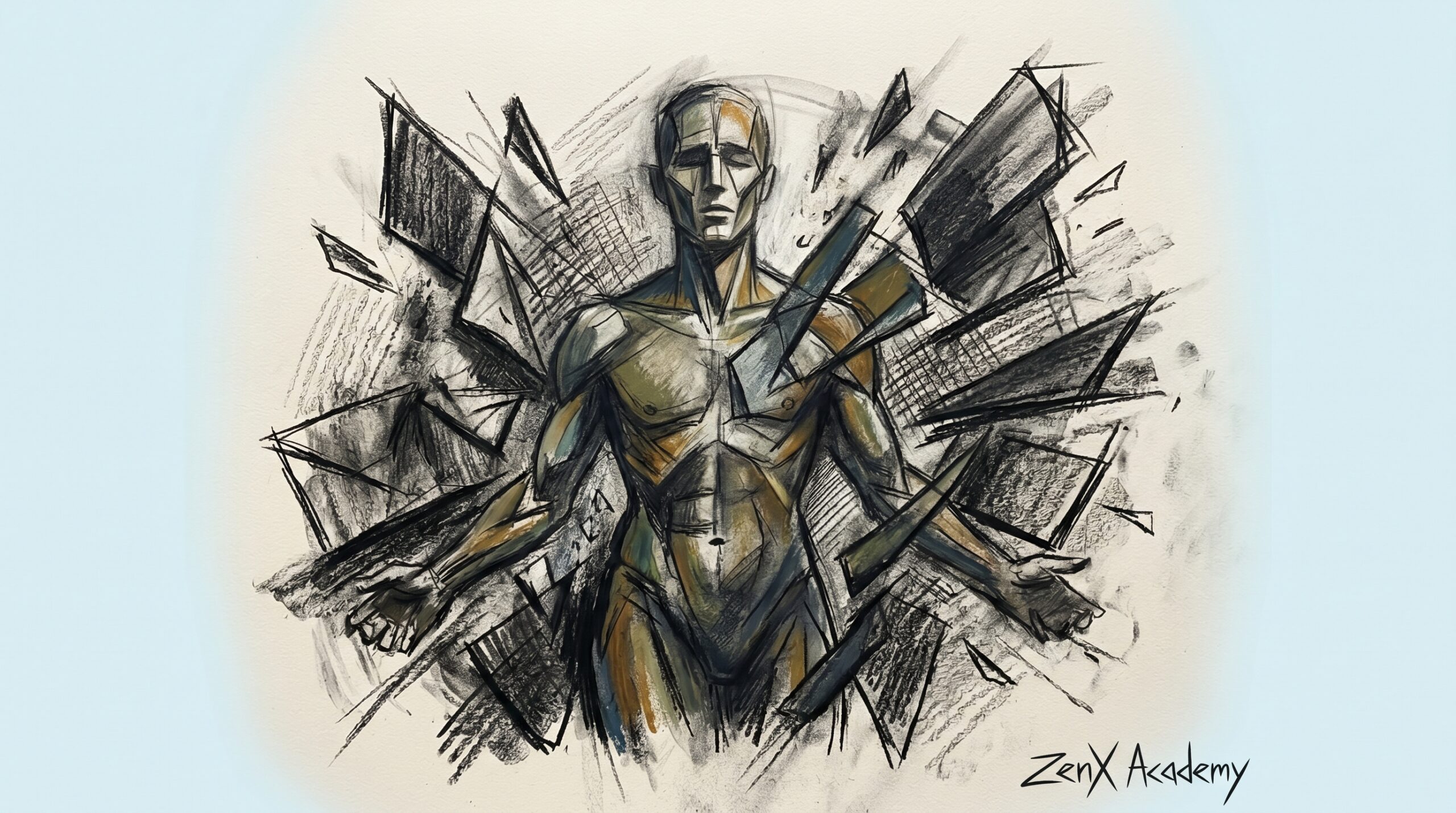
Exercise Five — The Update
Writing the new operating instruction
Bring together the four responses:
"What I am protecting that still deserves protection:"
"The calibrated version of the command:"
"What no longer fits:"
"My examined response in these situations:"
Read them as a sequence.
This is not a healed version of yourself. This is not a transformation.
This is an updated operating instruction, written by you, based on examined experience, for the life you are currently living.

A Note on Discomfort
When the new response does not feel natural
The examined response often feels unfamiliar in the beginning.
Sometimes that unfamiliarity feels like relief, a loosening of something that had been held too long.
Sometimes it feels like resistance, as if something is being displaced that was not ready to move.
Both are signs that something has actually changed. Neither is evidence of failure.
Section Eight addresses what happens when the flame returns, because it will. And what that return reveals that the original examination could not.