On Authority, Collapse, and the Cost of Ungoverned Minds
You have already been diagnosed. You know, at the structural level, that your consciousness operates without your governance. But diagnosis is not enough. Diagnosis without understanding produces only anxiety. You need to understand not just that you are ungoverned, but why this matters. Why it is not a personal problem but a civilizational one. Why the collapse you feel happening around you — in politics, in culture, in relationships, in your own mind — is not incidental to the problem of inner authority. It is the direct result of it.
The Law of Inner Governance
There is a law that operates silently in human affairs. It is not written in philosophy textbooks because it predates modern philosophy. It is not discussed in business schools because it operates below the level of strategy. Yet it shapes everything.
The law states this: A consciousness that does not govern itself will be governed by everything else.
This is not metaphor. This is structural fact. When the throne of consciousness is empty, something fills it. Not by invasion. Not by force. But by necessity. Nature abhors a vacuum, and so does the human mind.
If you do not establish authority over your own thoughts, your own impulses, your own values — then you will be governed by:
The pattern that captures you in your moment of weakness.
The voice of someone else speaking through your mind.
The culture's demand for what you should be.
Your own fear, operating as if it were wisdom.
The algorithm designed to exploit your attention.
Your unexamined childhood, still running the show.
These are not dramatic. They are quiet. They operate so smoothly that you do not notice them. You experience them as yourself.
But here is what matters: Once something else has occupied your throne, removing it requires extraordinary effort. The patterns do not want to leave. The introjected voices defend their territory. The cultural imperatives have made you believe they are natural law. The fears have convinced you they keep you safe.
The longer you go ungoverned, the more powerful these occupying forces become. They accumulate. They reinforce each other. They create a kind of structural lock — not because they are strong, but because you have forgotten that the throne was ever yours to claim.
What occupies the throne hardens over time. Resistance becomes invisible. Compliance becomes identity.
This is why the modern crisis is not what people think it is. They look at politics and see failure of leadership. They look at culture and see moral decay. They look at their own lives and see insufficient motivation, willpower, or intelligence. They are looking at symptoms while ignoring the disease.
The disease is this: A civilization composed of ungoverned minds will inevitably produce ungoverned systems. A culture where individual consciousness is colonized cannot produce authentic institutions. A society of people who do not govern themselves cannot be governed justly — because there is no authority present to recognize justice.
Why Intelligence Alone Cannot Save You
There is a particular cruelty in this: The more intelligent you are, the more sophisticated your self-deception becomes.
A person of ordinary intelligence might be captured by a simple pattern. They experience it. They suffer. Eventually, if they are fortunate, they recognize it and begin to work with it.
But an intelligent person? An intelligent person can rationalize their captivity with extraordinary elegance. They can build philosophical justifications for their patterns. They can explain why their fears are actually wisdom. They can articulate why they have no choice. They can make their prison sound like freedom.
Intelligence, without the structure of inner authority, becomes a tool of captivity, not liberation. The clever mind that does not answer to conscious authority becomes a master of self-delusion.
The intelligent mind, ungoverned, does not produce freedom. It produces elegance. Elaborate justifications. Sophisticated imprisonment.
This is why brilliant people often report, late in life, that they wasted decades following a pattern they could have recognized and worked with if they had simply been willing to be ordinary about their struggle.
The mind has a strange property: It can be made aware of its own captivity and still remain captured. You can understand perfectly well that you are being run by a pattern, that an introjected voice is speaking through you, that your behavior serves someone else's agenda — and still continue doing it. Understanding alone does not grant freedom.
This produces a particular form of suffering. You are conscious enough to see the bars of your cage. But not conscious enough to leave. You are trapped in the space between awareness and authority — knowing something is wrong but unable to change it.
Most people, at some point in their lives, inhabit this space. Some eventually develop the capacity to move beyond it. Others spend their entire lives here, oscillating between the clarity of seeing their patterns and the powerlessness of being unable to escape them.
The Architecture of Collapse
Consider the nature of a system that is not governed from within. What happens?
In the short term, it appears to function. The patterns continue. The behaviors repeat. The familiar continues operating as familiar. There is a kind of stability that looks, from the outside, like equilibrium.
But there is no equilibrium. There is only postponement.
A mind that does not have a conscious authority cannot make real choices about competing demands. When your achievement drive conflicts with your need for rest, you cannot choose. You are run by whichever pattern is stronger in that moment. When a cultural expectation conflicts with your authentic desire, you cannot choose. You are run by whichever internalized voice has the most power.
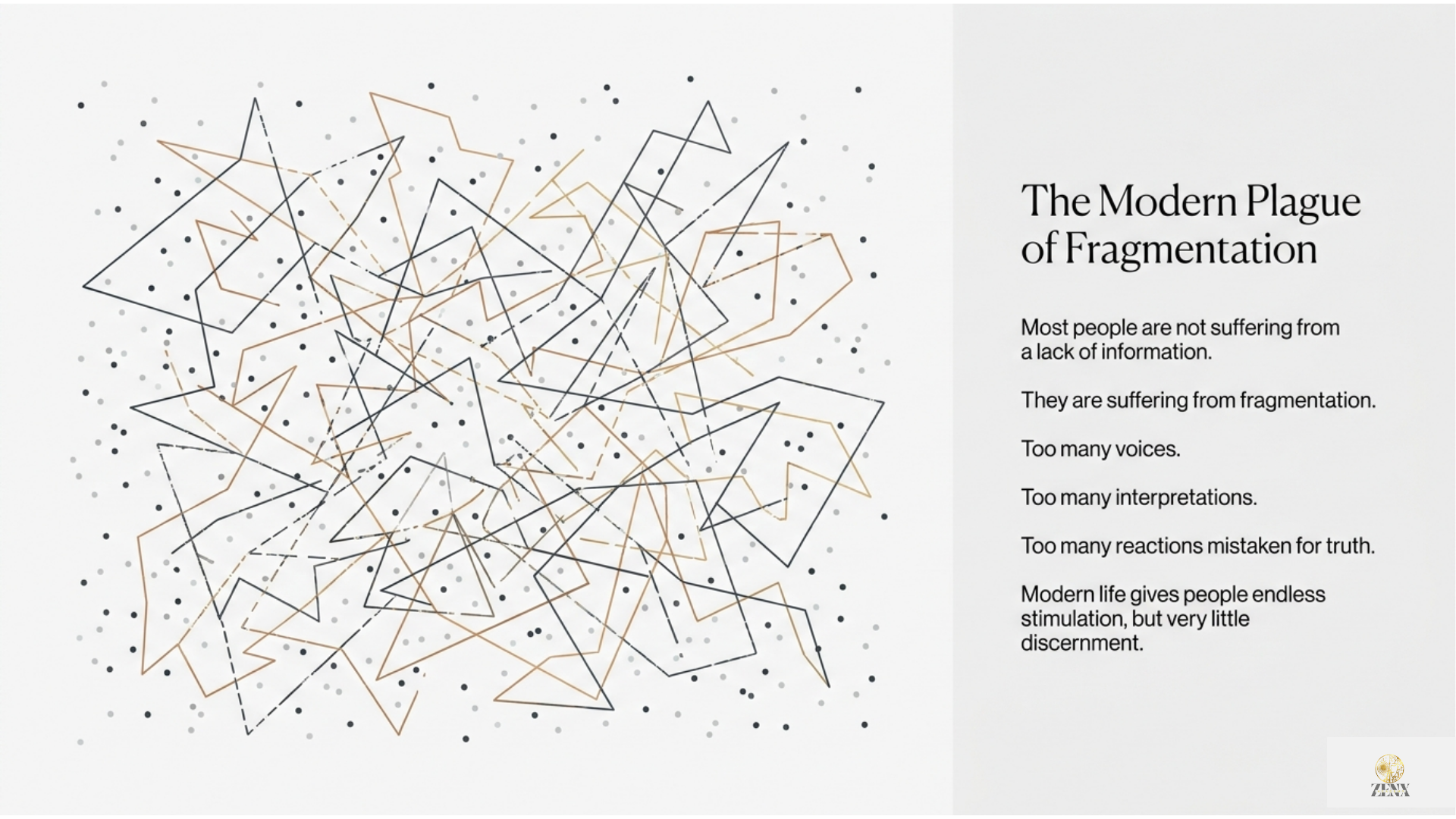
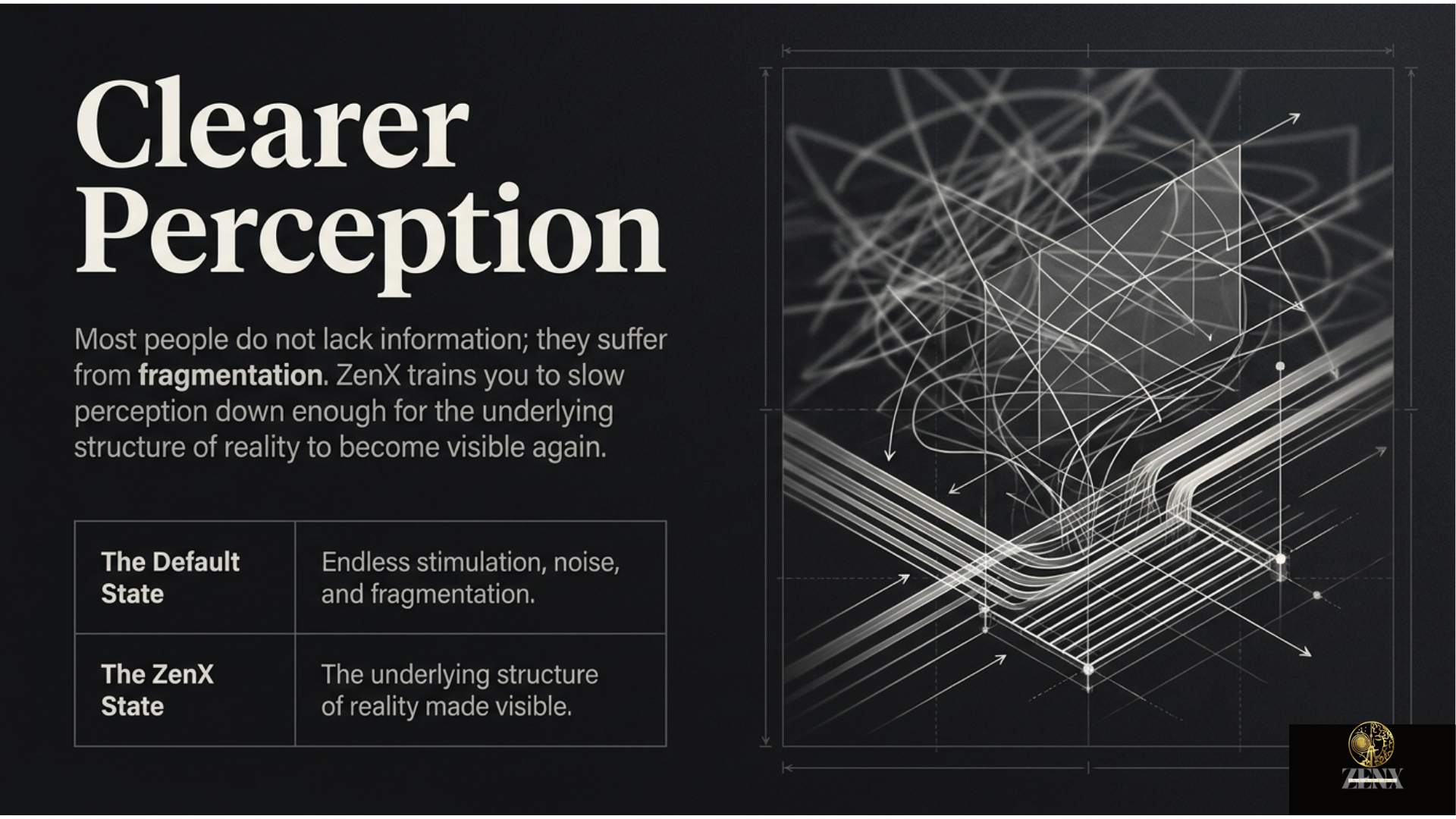
The result is a constant state of low-level crisis. Your different systems are in perpetual conflict. Your thoughts contradict each other. Your values are inconsistent. Your actions do not align with your stated beliefs. You are fractured.
You call this "being human." You are wrong. This is being ungoverned.
Without inner authority, coherence deteriorates. Systems conflict. Meaning fragments. What remains is motion without direction.
Over time, this fragmentation increases. The systems compete more intensely. The internal conflicts grow louder. The energy required to maintain this state of low-level chaos consumes more and more of your resources. You become exhausted. Not because you have worked hard, but because you are fighting yourself.
When a system reaches this point — when the cost of maintaining ungoverned operation exceeds the system's capacity to manage it — something must give. The system collapses.
This collapse looks like crisis. A breakdown. A failure. An illness. A relationship ending. A career imploding. But it is not truly a collapse. It is a rupture. An enforced moment where the fiction of functioning can no longer be maintained.
At this point, one of two things happens: Either you develop the capacity for genuine authority — for real governance of your own consciousness — or you find a new way to avoid it. You develop a new pattern, a new distraction, a new sophisticated justification for remaining ungoverned.
Many people choose the second path. They are not weak for doing so. They simply have not yet encountered the cost of that choice clearly enough to change it.
The Necessity You Cannot Avoid
There is something else you need to understand. It is not comforting, but it is true.
You cannot avoid the question of inner authority forever. Life will force it upon you. Not because it is enlightened or spiritual to ask it. But because the consequences of not asking it eventually become impossible to ignore.
You will be forced to ask: Who is governing me? The only question is when, and what it will cost.
You can postpone this reckoning. You can spend years, decades, in avoidance. You can develop enormous sophistication in the art of not asking this question. You can be successful by every external measure — achievement, wealth, status, intelligence — and still be profoundly ungoverned.
But you cannot escape it entirely. Because at some point, the cost becomes too high. A relationship collapses because you cannot govern your own reactivity. A career implodes because you cannot distinguish your authentic values from cultural imperatives. Your health deteriorates because you cannot say no to patterns that are destroying you. Your mind fragments so thoroughly that you cannot hold a coherent thought.
At that point — and everyone reaches it eventually — the question of inner authority becomes not a philosophical abstraction but a desperate necessity.
The series you are about to encounter is not for people who are still comfortable in their ungoverned state. It is for people who have been forced, by circumstance or by intelligence, to recognize that the throne of their consciousness is occupied by something other than themselves.
It is not a series about enlightenment or transformation or becoming a better person. It is a series about a particular form of necessity: the necessity of governance. The necessity of authority. The necessity of taking the throne that is yours by right but has been occupied by everything and everyone else for your entire life.
What follows is not comfort. It is something stranger. It is clarity about what has been colonizing you. It is a map of the architecture that must be understood before it can be changed. It is the beginning of a conversation you cannot avoid, in a language you have never been taught to speak.
The conversation is about who, precisely, is governing you.
The Solomonic Consciousness Series
- Part I: The Solomonic Self
- Part II: The Valley of Ants
- Part III: Sad — The Field of Awareness
- Part IV: Horses of the Evening
- Part V: The Throne
- Part VI: The Return
The reading is optional. The question is not.
© 2026 Jilani Garraoui. Solomonic Consciousness Series. All rights reserved.