 The Samiri · Room Two
Room Two · The Samiri
The Manufacturer of Substitutes
Understanding the state that replaces transformation with performance
Introduction : Why We Chose This Name
A specific kind of operation, not a moral verdict
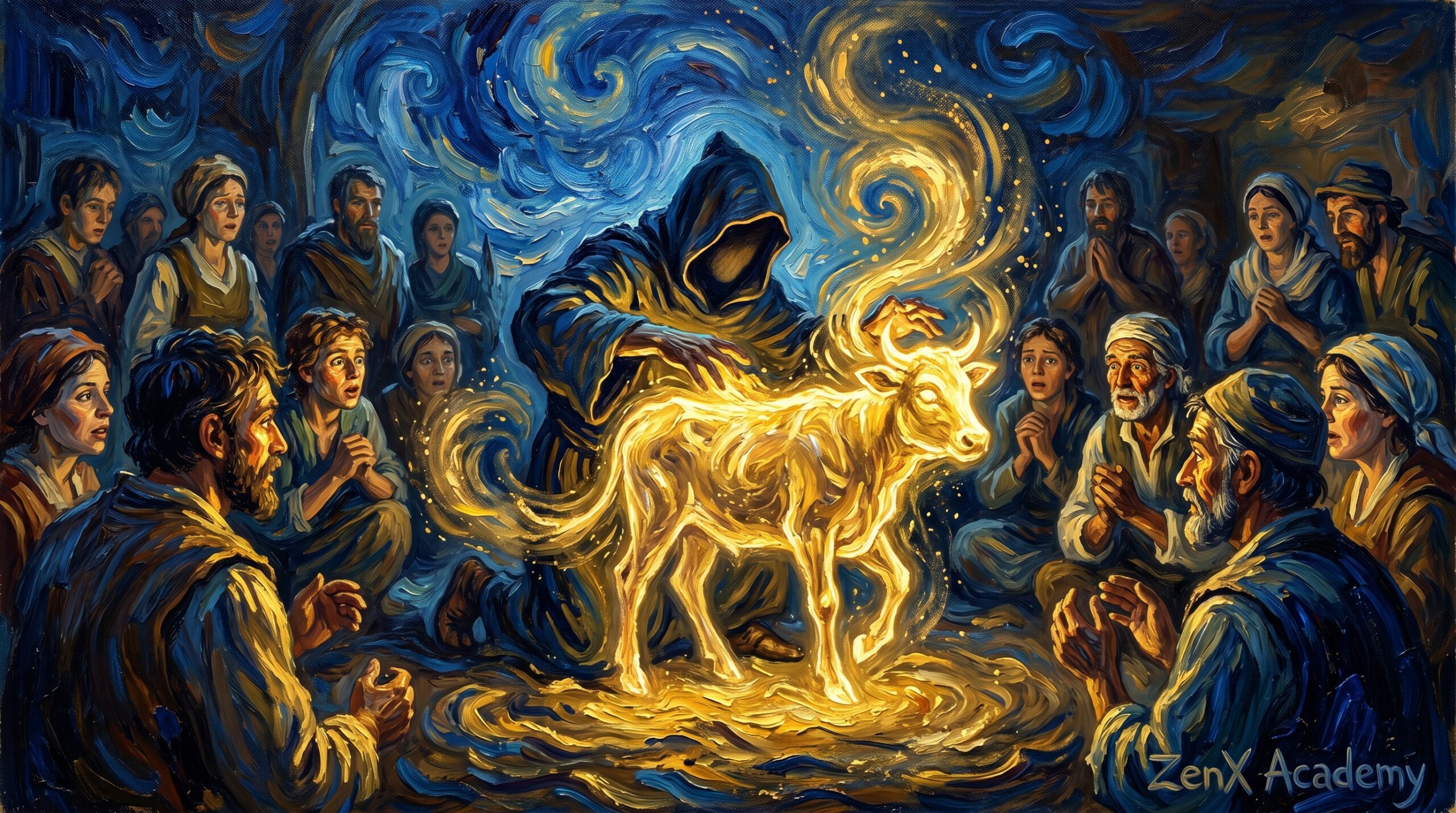
In the ancient account, when Moses was absent from his people, someone stood among them and said: "I saw what you did not see."
He did not say: "I invented this." He said: "I have access to something you don't."
He took something real, a handful of dust from the trace of the messenger, and added something of his own to it.
And what emerged had a sound. It moved. It resonated. People gathered around it.
They called it their god.
This is the psychological structure of the Samiri: not a liar who fabricates from nothing, but a manufacturer who takes something real and adds to it until what comes out sounds alive without being alive.
The ancient texts give this output a specific name: Khwar.
The lowing of the calf. Sound. Movement. Presence.
But not life.
What Khwar Actually Means
Signal without the substance that would justify the signal
Khwar is not noise in the ordinary sense. It is a very specific kind of signal: something that produces emotional response, a sense of recognition, the feeling of meaning, the experience of depth, without producing changed behavior over time, capacity that remains when the emotion disappears, a response that survives real conditions, or transformation that persists beyond the moment of feeling.
This distinction is the center of this room.
And it is more difficult to make than it sounds, because Khwar is designed to feel exactly like the real thing.
Khwar is not the absence of feeling. It is feeling that produces no residue. Sound that leaves nothing behind when the resonance fades.
A Critical Distinction Before We Go Further
This room is not an argument against symbols
This room is not an argument against symbols. It is not an argument against emotion, inspiration, or resonance.
Some of the most genuine transformations in human experience begin with a symbol. Some of the most real meaning arrives first as feeling. Some of the most living ideas start as metaphor.
The problem is not the symbol. The problem is the substitution.
When the symbol replaces the process it was pointing toward, when the feeling of transformation replaces the work of transforming, when the identity of someone who understands replaces the actual practice of understanding, that is when the Samiri has been at work.
The calf is not the crime. The worship of the calf, in place of the journey it was supposed to represent, is what the Samiri manufactures.
Ibrahim and the Hanid Calf
The structural contrast between what has been through fire and what only looks like it has
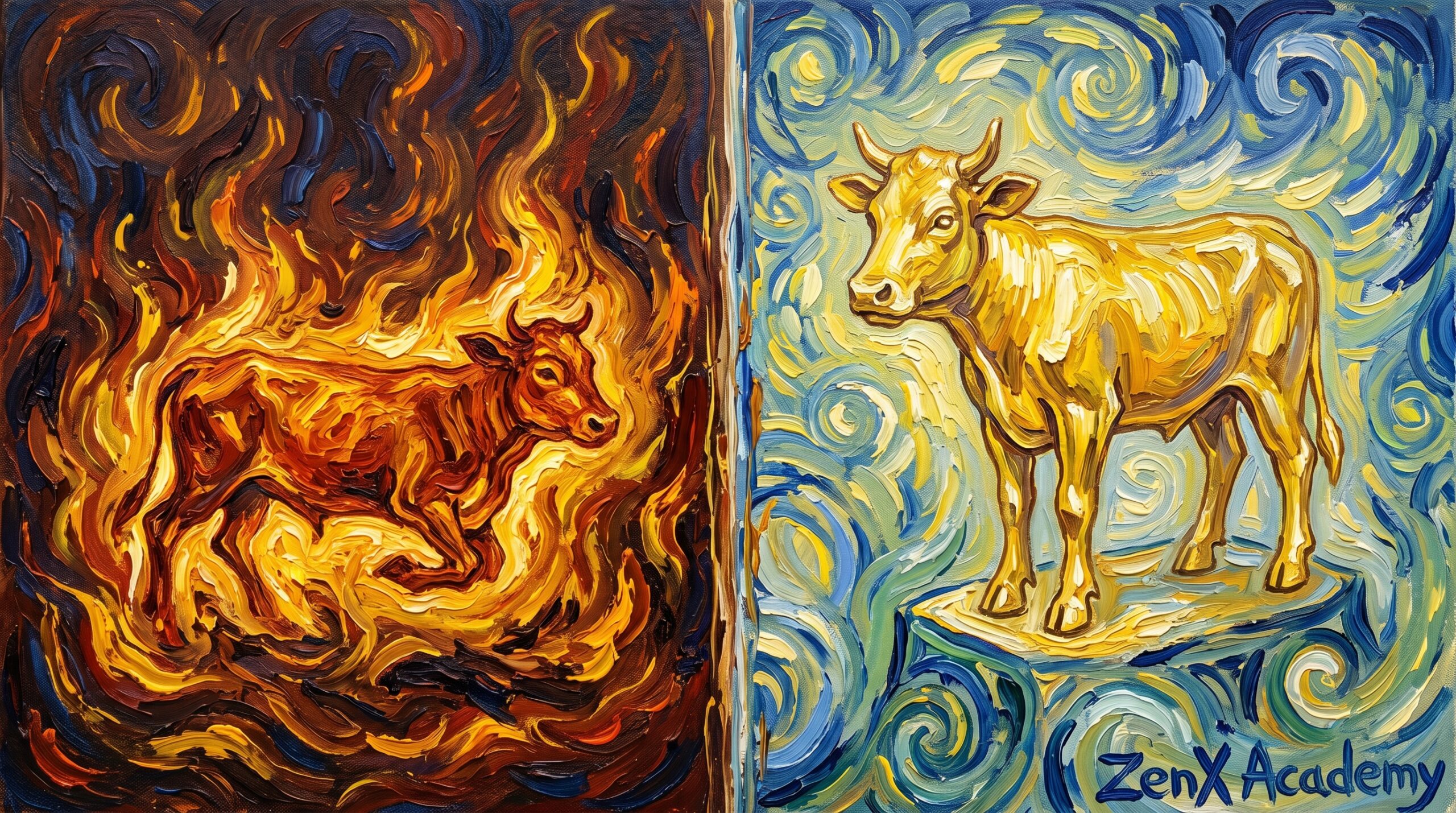
Ibrahim brought a different kind of calf.
Hanid, roasted. Something that had been through fire. Transformed by a real process. Useful precisely because it had been changed by contact with something real.
The contrast is not moral. It is structural.
| Ibrahim's Calf | The Samiri's Calf |
|---|---|
| Hanid — processed through fire | Jasad — body only, not transformed |
| Nourishes | Impresses |
| Has been through something | Only looks like it has |
| Useful when the feeling is gone | Collapses without the emotional charge |
| Builds capacity | Builds identity |
This room works with the Samiri's calf, the one that has not been through fire, and with the internal state that manufactures it.
The Samiri and Time
The desire to have arrived without having traveled
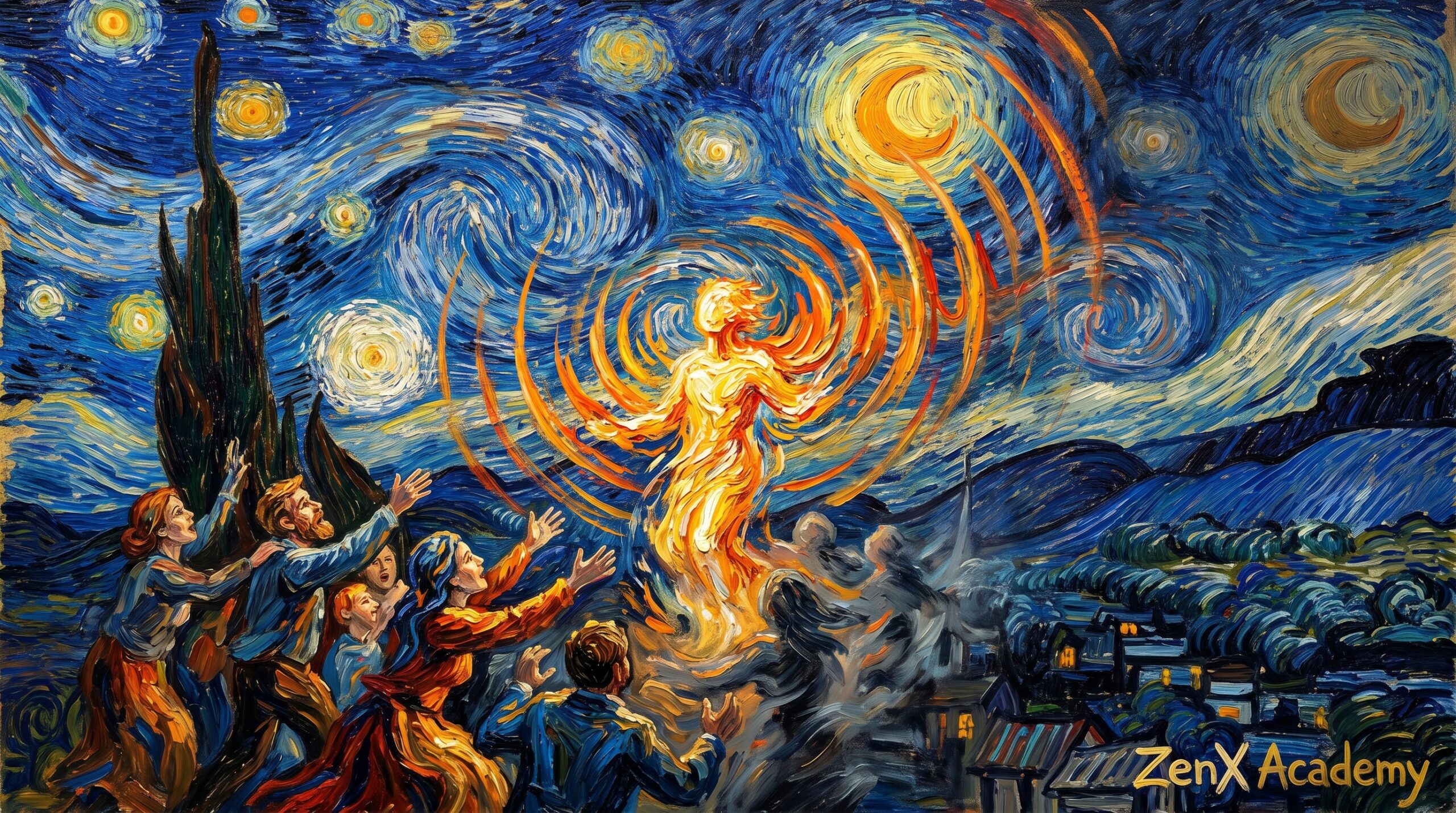
Abu Lahab's time is instantaneous. Verdict before evidence. Heat before thought.
The Samiri operates in a different time: the time of impatience.
The desire to have arrived without having traveled, to have the insight without the examination, the wisdom without the years, the transformation without the discomfort, the depth without the silence.
This impatience, العجلة, is not weakness. It is the natural human preference for the result over the process, for the symbol over the territory it maps, for the sound of meaning over the slow, often quiet work of building it.
The Samiri does not create this impatience. He finds it, and serves it.
With extraordinary precision, the Samiri offers something that sounds like the end of the journey, while leaving the actual path untouched.
In psychological terms, this is the internal state that manufactures substitutes: performance instead of practice, display instead of digestion, resonance instead of work.