 The Samiri · Room Three
Room Three · The Samiri
Integration: What Life Feels Like When Substitution Is No Longer Running the Center
Section Nine
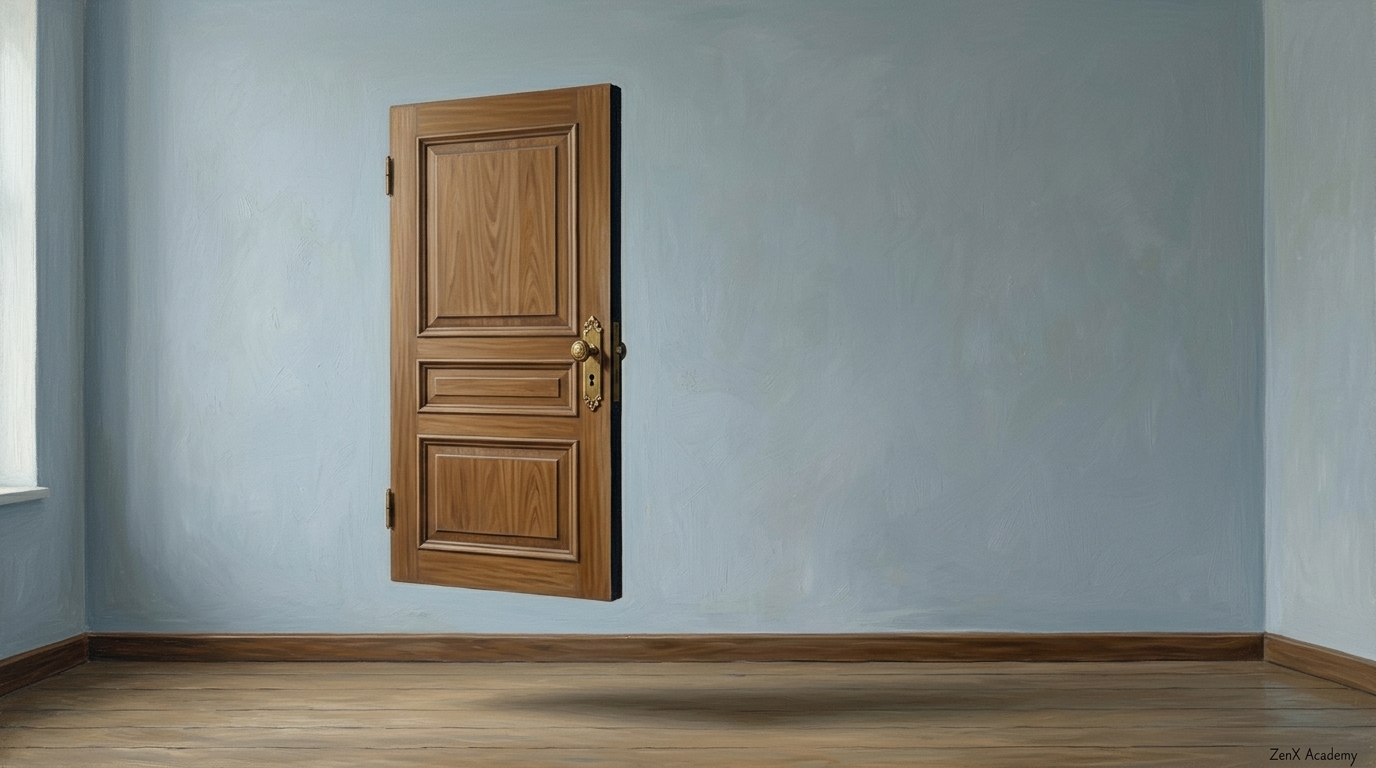
A Slower Section
The previous sections have moved quickly
through complex territory.
This one will not.
Not because the territory ahead is simple,
but because Section Nine is itself a practice
in what it is describing.
The Samiri thrives on density.
On continuous revelation.
On the feeling that each paragraph is delivering something essential
that must be absorbed before the next one arrives.
That feeling, the feeling of this text at its most concentrated,
is itself a condition worth noticing.
If you have found this room genuinely useful,
part of what integration looks like
is the capacity to read more slowly.
To sit with less.
To let a single paragraph settle
before moving to the next.
This section is written for that pace.
What Integration Is Not

Integration is not the elimination of the Samiri.
The commands do not disappear.
The container command will activate again.
The visibility rule will produce its performance again.
The substitute will arrive before the real process has completed.
The upgraded calf will appear.
Sometimes built from the insights of this very room.
Integration is not the condition in which this no longer happens.
It is the condition in which something else is also present
when it does.
What Stable Operation Actually Looks Like
Not a description of achievement. A description of a different quality of movement.
It is quieter.
Not because there is less to say,
but because the urgency to say it before the experience has settled
has decreased.
The person who has metabolized something
does not need to share it immediately.
Does not feel the pressure to produce language for it
before the experience has found its own words.
They can hold it a little longer.
Let it change slightly before it is spoken.
This is not silence as performance.
It is the quiet of something that does not require an audience
to remain real.
It tolerates being ordinary.

The Samiri produces a specific kind of life,
one in which every encounter is potentially meaningful,
every experience possibly significant,
every moment a potential entry into depth.
The person who has done this work
can have an ordinary day.
A day where nothing particularly interesting happened,
where no significant insight arrived,
where the process did not visibly advance.
And this can be enough.
Not every period of not-arriving
is a substitution that needs to be interrupted.
Sometimes the real process looks like nothing happening.
And the capacity to remain in that without immediately filling it,
without reaching for something to make it mean more,
is itself a form of hanid.
It changes its relationship with error.

The Samiri's substitute is expensive to be wrong about.
If what I have built my identity around
turns out to be acquired rather than constructed,
if the calf turns out to be a body with a sound
rather than something that has been through fire,
the exposure is significant.
The identity requires the meaning to remain intact.
Integration reduces this pressure.
Not because the person becomes indifferent to being wrong,
but because the cost of a mistake
is not attached to the survival of the structure.
The mistake can be absorbed.
Updated.
Incorporated into a more honest version.
Without requiring the collapse of everything built around it.
This is the specific freedom that comes
from having actually built something,
from having gone through fire,
rather than having acquired it.
What has been constructed can withstand the discovery
that it was constructed imperfectly.
What has only been acquired
cannot afford to be revised.
It examines intermittently, not continuously.

The examination described throughout this room
is not meant to run constantly.
A physician who spends every waking hour
diagnosing themselves
is not practicing medicine.
They are producing a different kind of illness.
The examination is available.
It activates when the sequence is felt.
It interrupts when the gap opens.
It applies the fire test when a specific domain reveals its emptiness.
And then it rests.
The person who has integrated this work
is not always watching.
They are sometimes simply present,
in the conversation, in the relationship, in the work,
without the meta-layer running continuously.
And when the substitution activates,
when the command fires,
when the calf begins to take shape,
something registers.
Not always in time.
Not always precisely.
But with enough frequency, and early enough in the sequence,
that the construction of the substitute
is no longer entirely unconscious.
That is enough.
Three Signs That Integration Is Occurring
Not milestones. Observations.
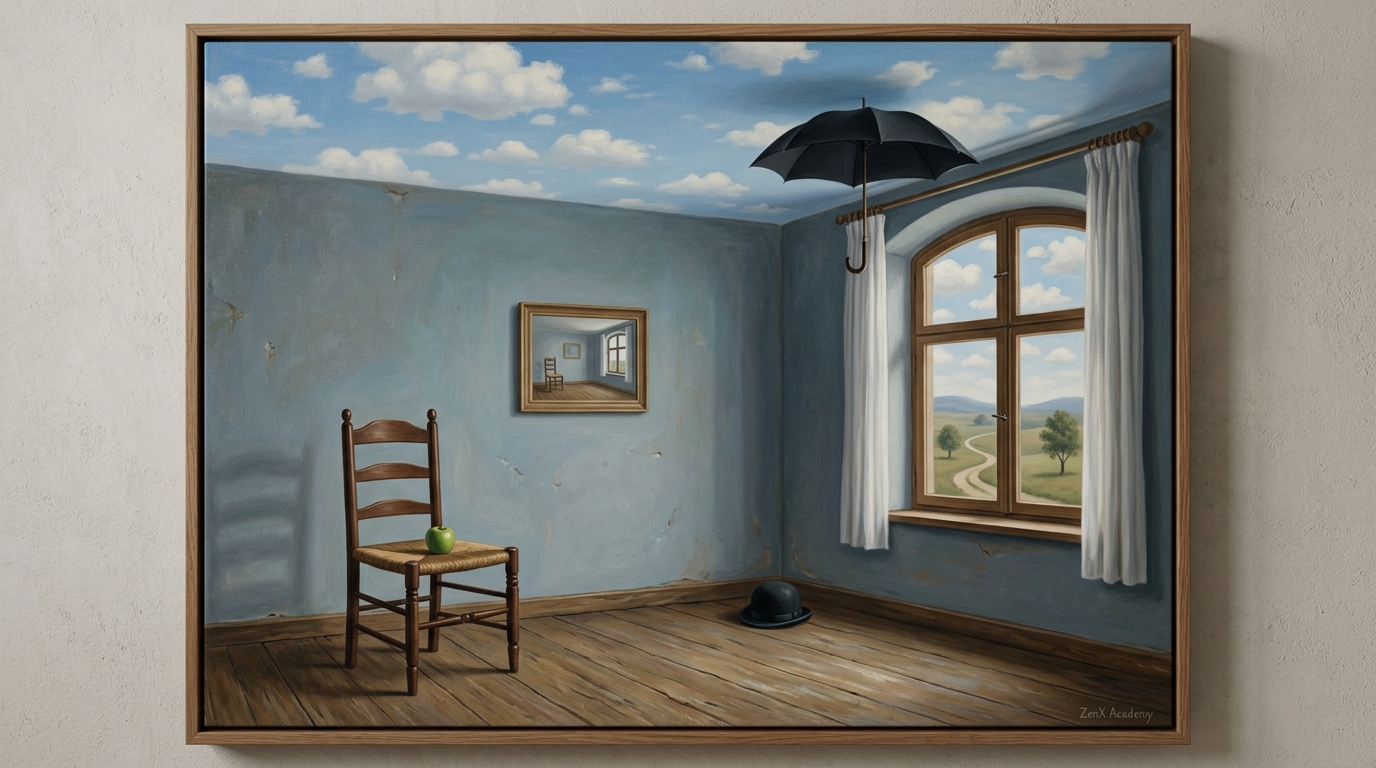
Sign One: Consumption Has Slowed
Not because understanding has decreased,
but because the urgency to fill the container before it empties
has become less automatic.
You find yourself returning to the same material
rather than continuously moving to new material.
The same insight, encountered again, produces something different,
because more of your actual experience has had the chance to meet it.
Sign Two: Not-Knowing Has Become Statable
Not as performance of humility.
As accurate description.
In at least some conversations,
in at least some contexts,
you can say "I don't know yet"
without it feeling like exposure that must be compensated for.
The gap between what is understood
and what has been metabolized
can be acknowledged
without immediately filling it.
Sign Three: The Examination Turns on Itself Without Destabilizing
You can notice when the framework is producing Khwar,
when ZenX language is completing sentences faster than the situation warrants,
when the examination has become a new container,
without this recognition collapsing the work.
The system can correct itself
without the correction requiring everything to be dismantled.
This is the sign that the examination
has become part of how you operate,
rather than something you are performing.
The Minimal Daily Practice

One question only. Not every day: when it is relevant.
"What am I in the middle of that I have not yet given enough time to arrive?"
Not: what should I work on?
Not: where am I performing?
What real process is currently underway
that deserves more of the between-state
before I reach for language, for framework, for resolution?
Name it.
Do not immediately do anything with it.
Let it remain named but open.
This is the practice.
The Last Note on the Samiri
Ibrahim brought a roasted calf.
Not because roasting is more moral than not roasting.
Because the people who visited him
were real, and their presence required something real,
something that had been through an actual process,
rather than something that only looked significant.
The hanid calf was not offered as a spiritual symbol.
It was offered as food.
Nourishment.
Something that would actually be useful to the people who received it.
Not because of how it looked or what it represented,
but because of what it was.
This is the final distinction this room leaves you with:
Not: is this deep?
Not: is this resonant?
Not: is this the kind of thing someone serious thinks about?
Is this useful to anyone who is not performing depth,
in an actual situation, under real conditions,
when the framework is not present to support it?
If yes: it may be hanid.
If no: it may be a calf with a beautiful sound.
The difference is the fire.
And the fire is not a metaphor.
Where the Architecture Continues
What this room opens
Section Ten: what this room opens,
and where the architecture continues.