 IMRA'AT NUH · Section Seven
Section Seven · Noah's Architecture
THE ARK AS RESTORED BALANCE
Noah did not build the ark because he was disciplined. He built it because something inside him was still working.
Noah did not build the ark because he was disciplined. He did not build it because he was productive. He built it because something inside him was still working. The part that receives before it builds. The part that listens before it acts. The part that is open, genuinely, structurally open, to what arrives from outside the inventory of what is already known.

The Architecture This Room Is Actually Describing
The integrated interior of reception and expression
Every room in this series has introduced a counterpart, a figure or mode that represents the movement toward what the room's examined condition has moved away from. Haman has the examining faculty. Qarun has Harun, the transmitter rather than the possessor. Imra'at Lut has Lut, the discernment that can still see what the system has covered.
Here, the counterpart is not simply Noah the individual. It is Noah as the embodiment of a specific interior architecture. The architecture of a self in which the two original principles, the receptive and the expressive, are working in their intended relationship.
Not as two separate faculties. As one integrated movement. Receive. Carry. Form from within. Express into the world. This is the interior economy of the self in its original design.
The Quran describes it with precision: خَلَقَكُم مِّن نَّفْسٍ وَاحِدَةٍ وَخَلَقَ مِنْهَا زَوْجَهَا. Created you from a single self, and created from it its zawj. Not two separate things. One thing, in its fullness, containing within itself the original pairing.
The zawj is not the partner across from you. The zawj is the original wholeness of the self, the condition in which the receptive and expressive principles move together, each in its proper relationship to the other, neither operating alone.
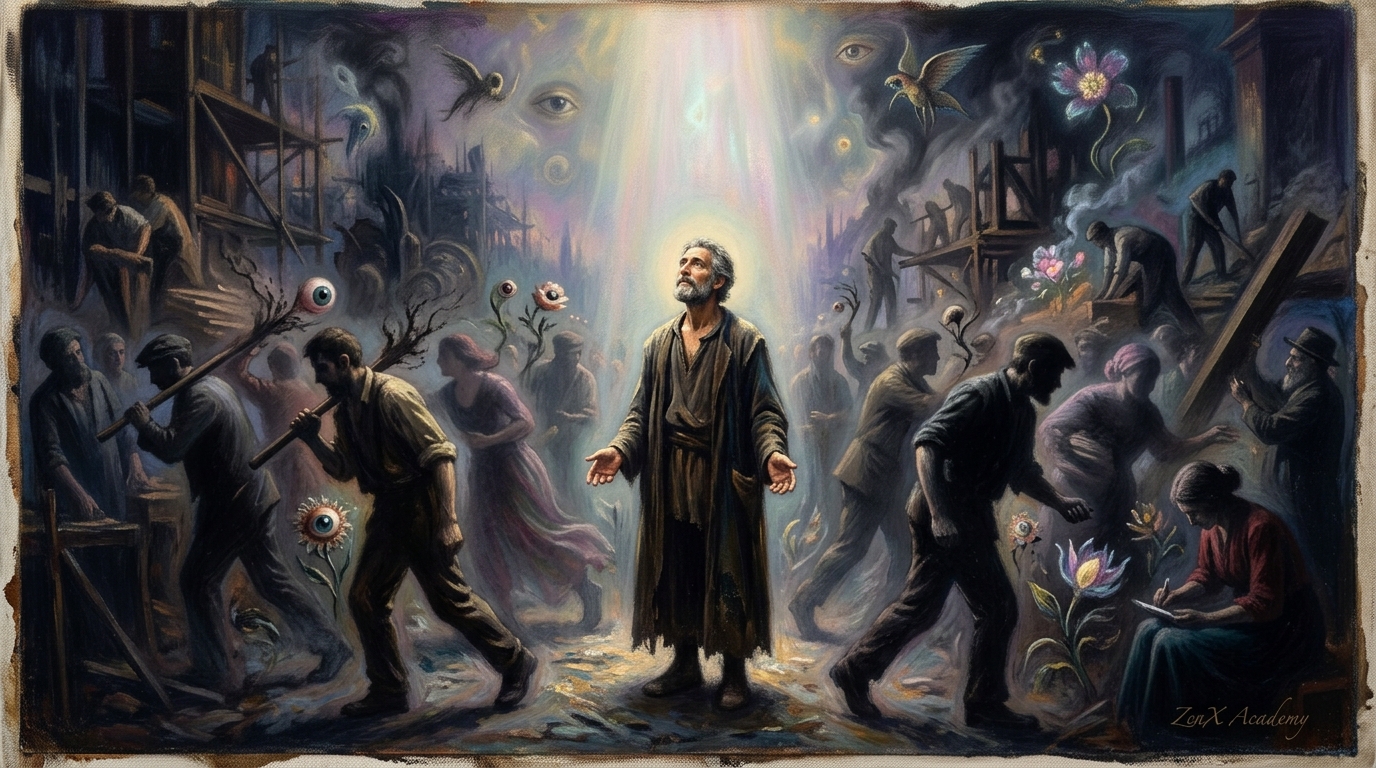
And the rooms of the three feminine figures, Imra'at Nuh, Imra'at Lut, Imra'at Abi Lahab, describe three stages in the dissolution of this original pairing. Three stages in which the self moves from zawj toward imra'at. From the integrated architecture toward the condition of the principles operating in separation, the expressive running ahead of the receptive, the masculine force untethered from what was meant to orient it.
Why the Prophets Were Prophets
The intact receptive principle
Every prophet in the Quran is, in the framework this room is working within, a self in which the receptive principle was intact. Ibrahim left what he had inherited, emptied the interior of the accumulated programming, and became capable of receiving what the fitrah had always been pointing toward.
Musa carried something within him that the palace of Fir'aun could not extinguish, the capacity to be reached, to be called, to hear what arrived from outside the inventory of the established world.
Isa was the direct fruit of reception fully expressed, born from Maryam's intact carrying capacity, his entire existence the evidence of what the receptive principle produces when it is working as it was designed.
And Noah, building for generations without visible vindication, maintaining a direction that made no sense to the world around him, was a self in which the receptive principle had not been replaced by the accumulated confidence of what was already known.
He kept receiving. Not because he was disciplined about it. Because the faculty was intact. Because the interior pairing, the zawj within him, was working. The expressive built. But the receptive oriented the building.

And the building was therefore toward something real, something that the surrounding world could not yet see, because the surrounding world was running on expression alone, on the accumulated inventory of what was already known, on the confident production of a self that had stopped genuinely receiving.
The Three Stages of Dissolution
From dormancy to inversion to conversion
Imra'at Nuh: Reception Stops
This is the first stage. The receptive principle does not invert. It does not corrupt. It does not produce from what opposes the fitrah. It simply stops being exercised.
The self is still proximate to what the fitrah points toward. Still appreciating, understanding, processing. But the carrying faculty, the specific interior function through which genuine reception produces formation, has gone dormant.
And because it has gone dormant, the expressive principle begins, gradually, to operate without it. Not dramatically. Not visibly. Not with any announcement. The self continues producing, from its accumulated inventory, from what it already knows, from the sophisticated relationship it has built with what it has been beside without entering.
The production continues. But it is no longer coming from reception. It is coming from what reception produced before it went dormant. The self is living, slowly, off its reserves.
Imra'at Lut: Reception Inverts
This is the second stage, and it represents a deeper dissolution than the first. The receptive principle has not simply gone dormant. It is active, but it is receiving from the wrong source.
The system that saturated the self has become the marja', the reference point, and the receptive function now opens toward that system rather than toward the fitrah.
What was designed to receive what the original orientation recognizes as its own direction is now receiving the signals of a collective definition of reality that has been deposited in the place where fitrah should be.
The result is a self that is genuinely receiving, but receiving from a source that is not fitrah. Which means the carrying is real, the formation is happening, but what is being formed is not aligned with the original design.
The self is still productive. But what it is producing comes from the wrong source.
Imra'at Abi Lahab: Reception Serves Destruction
This is the third stage, the full conversion. The receptive function is now actively oriented toward what opposes the light. Not dormant. Not inverted. Converted.
The faculty that was made to receive what the fitrah points toward is now carrying what opposes it. Gathering. Carrying. Supplying.
The specific image the Quran gives, carrying wood for the fire that burns what is being built, describes the full dissolution of the original design. The receptive function still works. But it is working in the service of destruction rather than formation.
What Noah Represents
The demonstration of intact architecture
Against this sequence of dissolution, Noah is not a solution. He is not a treatment. He is not a technique for restoring the dormant faculty.
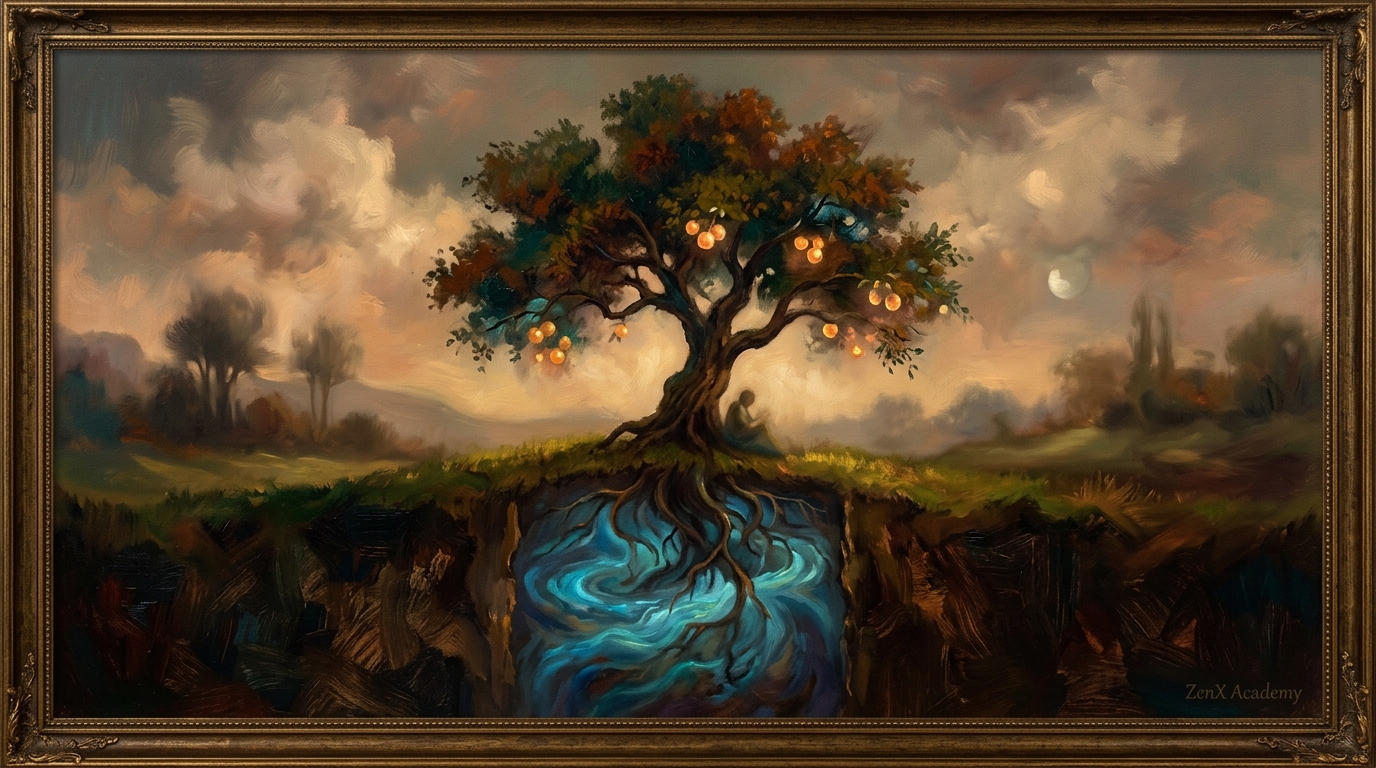
He is the demonstration that the original architecture can remain intact. That the interior pairing, the zawj within the self, can continue working, across generations, against ridicule, without external validation, in conditions that make no sense to those operating from expression alone.
The ark was built. But before the ark was built, Noah received. And before he received, there was something in him that the receiving centuries of collective noise had not been able to close. The faculty was alive.
The self was still zawj, still the integrated architecture of a self in which reception and expression were working together, in the right order, in the right relationship.
Receive first. Then carry. Then build from what the carrying formed. The ark was the last step. Not the first.
What the Restored Architecture Looks Like
The return to the original design
The movement this room is pointing toward is not the development of a new faculty. It is the restoration of the original one. The return to the condition the self was designed for, the zawj, in which the receptive and expressive principles move together, neither running ahead of the other, neither operating without the guidance of the other.
This restoration does not produce a passive self. Maryam was not passive. She received fully, and what she received formed something, and what it formed emerged into the world and changed everything.
The receptive principle, when intact, produces the most significant expressions. Because it produces from genuine carrying, from the formation of something that arrived from outside the existing inventory and was genuinely received and genuinely changed what it was received by.
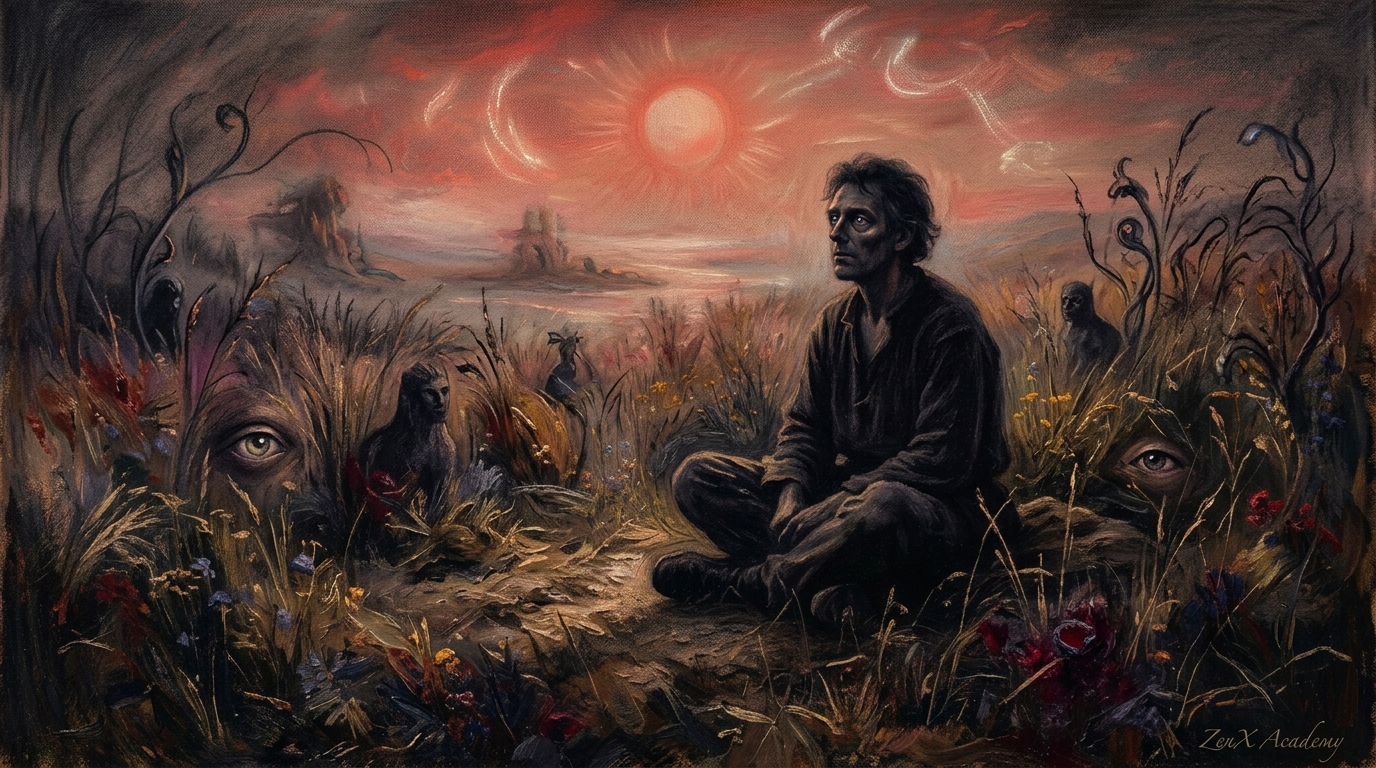
The restored architecture looks like this: Something arrives. The interior opens to it, not to process, not to categorize, not to confirm what is already known. To receive.
The something crosses the threshold into the place where formation happens. The self is changed by the carrying, in ways that were not predicted, in ways that were not chosen, in ways that could not have been arrived at through the accumulated inventory alone.
And from the changing, something emerges into the world. Not the self's previous production, enhanced. Something new. The fruit of genuine reception. The evidence of the zawj functioning. The ark, built by a self that was still receiving.
The Maryam Counterpoint
The original design before dissolution
Maryam does not appear in this room as an ideal to aspire to. She appears as the original design. The self as it was made. Before the faculty went dormant. Before the reception inverted. Before the receptive function was converted to serve what opposes the direction it was made for.
She received what arrived, fully, without the interposition of the accumulated inventory, without the saturation command or the timing command or the fluency command or the continuity command.
Something arrived. She carried it. And what was born from the carrying was not her project. It was the fruit of what she had received.
This is the architecture Noah embodied. This is the architecture this room is pointing toward. Not as aspiration. As the original condition of the self. The zawj before the dissolution began. The integrated interior, working as it was designed.
The self that receives before it builds, and builds because it has received, and what it builds serves life rather than replaces it.
Exercise: The Interior Marriage
One question asked in three ways
This exercise approaches the restored architecture through one question asked in three ways.
Way One: The Source
In the domain your fitrah has been pointing toward, when you produce, build, act, create: where does what you are producing come from? From the accumulated inventory of what you already know? Or from something that arrived, that you received, that changed you, and that is now being expressed through what you are building?
The difference between these two sources is the difference between the expressive principle operating alone and the expressive principle operating in its proper relationship with the receptive.
Way Two: The Order. In your current way of engaging with what matters to you, what comes first? Production, building, expression, and then, sometimes, the attempt to ground it in something received? Or reception, carrying, formation from within, and then the expression of what the formation produced?
The order reveals the architecture. The self that produces first and receives later is running on expression alone. The self that receives first, even imperfectly, even partially, even with the carrying faculty not yet fully restored, is working toward the original design.
Way Three: The Evidence
What has arrived in your life recently, something you received, genuinely received, that changed you in ways you did not choose, that has begun to produce something that could not have come from your accumulated inventory alone?
If nothing comes to mind: the expressive principle has been running without genuine reception. If something does come to mind: the faculty is not as dormant as the distance suggested. The evidence of reception is always specific. It is the particular change that arrived uninvited and left you different.
The particular thing that formed from within that could not have been predicted from what was already there. The particular birth, however small, that came from carrying rather than from production.
Name it. Because naming the evidence of genuine reception is itself a form of recognizing that the faculty is not dead. It is asleep. And the recognition that it is not dead is the beginning of the restoration.
Noah built for generations. But before the ark, there was reception. Before the expression, there was carrying. The ark was the fruit of a self in which the interior pairing was intact, the zawj functioning as it was designed, the receptive and expressive working together in the order that produces what serves life rather than replaces it. This is the architecture the room is pointing toward. Not discipline. Not methodology. The restored original, the self receiving again, carrying again, building from what the carrying forms.
Imra'at Nuh · Noah's Architecture
Psychological Architecture · ZenX Academy