When the Fire Lights Itself
Abu Lahab On the internal architecture of rage, narrative,and the room you keep walking into.

You already had that argument.
Not out loud.
In your head.
Same person. Same scene.
But this time you win.
Better lines. Sharper tone.
You finally say what you "should have said."
And it feels real enough…
that your body reacts like it's happening again.
You know the feeling. It starts somewhere below your ribs. Moves up through your chest, into your throat, until your jaw locks and your vision narrows down to one thing. Could be someone cutting you off in traffic. Could be a dismissive comment in a meeting. Could be nothing more than a look. And just like that, you're not thinking anymore. You're burning.
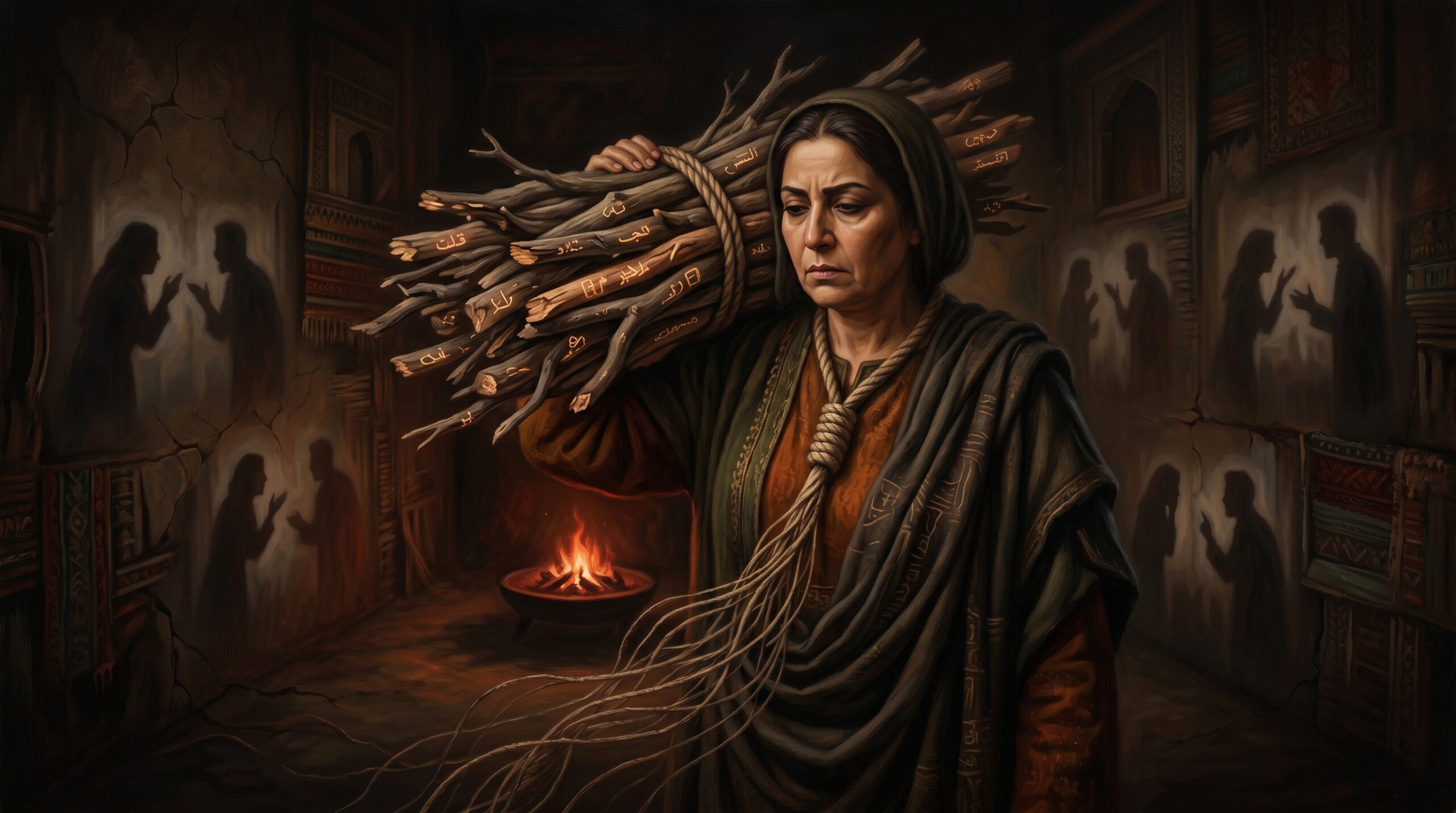
This is Abu Lahab. Not a historical figure. Not a religious reference. A room. A specific, recurring room inside your own mind that the right trigger will open every single time.
The First Thing
Anger doesn't just show up. It arrives with luggage. Someone, or something, has already been carrying the fuel into the room long before the match gets struck. That's the wife. Not a character. The internal narrative that tells you exactly why your fury is justified. The story that was already half written before the fire even started.
She lays the wood piece by piece. The memory of what they did last time. The pattern you've identified, the one where they always do this. The mounting file of evidence that makes this moment feel like a verdict, not an incident. And you believe her. Every single time.
That's the trap. The justification doesn't feel constructed, it feels discovered. Like you didn't build the case, you just finally saw it clearly. That's why the fire spreads so fast. The kindling was already there, dry, waiting. All it needed was the right moment.
What It Actually Looks Like
Say it happened yesterday. Someone was dismissive in a way that didn't sit right. Maybe they took credit for something you did. Maybe it was subtler than that, just a tone, just a particular expression that communicated something they'd never say out loud. You let it go. Or you told yourself you did.
Now you're in the shower. Or brushing your teeth. Or stuck in traffic staring at a bumper. And suddenly you're back in that room, re-running the scene. Except this time you have better lines. The perfect response you didn't think of until now. The precise, devastating thing you should have said that would've ended the whole thing cleanly.
That's the wife at work. The original moment, whatever it actually was, has been quietly expanded into something larger. A pattern. A history. Proof of something you've suspected for a long time. And Abu Lahab, the fire itself? He doesn't need to deliberate. By the time he arrives, the thinking's already been done for him. The narrative handed over, justified, ready to burn.
The Architecture
Here's what's actually happening underneath it. Something triggers your threat-detection system. Your brain doesn't pause to evaluate, it categorizes. Threat. And cortisol moves through your body before you've formed a single conscious thought. The part of your brain that handles context, nuance, the ability to consider that maybe you misread the situation, that goes partially offline. You're running older software now. Faster, cruder, built for survival not accuracy.
And here's where it gets interesting. The actual threat is almost never what you think it is. The tone you read as aggression was probably exhaustion. The dismissive comment was more likely insecurity than contempt. The silence you interpreted as judgment was almost certainly just distraction.
But Abu Lahab doesn't wait for accuracy. He moves on the signal. And the wife amplifies everything, translating every ambiguous moment into confirmation. She finds the through-line. See, they always do this. They've never really respected you. Remember that time three years ago? Same thing. Different day.
This is not you processing an emotion. This is a system running a program it's run a hundred times before.
When It's Coming
You can learn to feel it before it takes hold, but you have to know what to look for. There's a shift. Something was fine, and then, between one breath and the next, it isn't. A comment lands wrong. A look feels loaded. Something small becomes the only thing in the room, and everything else recedes until it's handled.
Watch for that shift. The moment the internal narrator kicks in and starts building context around the thing that just happened. That's the wood being laid. That's the preparation. The fire hasn't started yet, but the room is being arranged for it.
And if you're already rehearsing what you should have said? You're already inside. The door closed behind you without you noticing.
What To Actually Do
You're not going to eliminate the fire. That's not the point and it's not realistic. The point is to understand the structure well enough to intervene before it burns through everything.
Start with the wife. Before you react, before you even name what you're feeling, ask yourself what story you're currently telling about this. Not what happened, what story you're telling about what happened. Because the story is the fuel. Without the narrative, what you have is an event. Uncomfortable, maybe. Annoying. But just an event.
The moment the wife starts weaving, this is just like always, they never take you seriously, this is exactly what you knew would happen, the wood is going down. The fire is being prepared. You don't have to stop it, but you can at least see it. Name it. Something like: I'm building a case right now. That's all. Just the recognition.
Then, if you can, go one layer deeper. Because anger is almost never the actual thing. Under it, usually, is something smaller and more honest. Hurt. Fear. The feeling of being dismissed or made small. Someone threatened a version of you that you've been working hard to maintain.
The fire is an attempt to feel large again. The problem is that burning someone else doesn't make you bigger. It just makes the room smaller for everyone.
So let it burn without feeding it. This is the hardest part. The instinct is to keep adding, replay the moment, rehearse the response, find new evidence for the case. Instead, just feel the heat. Don't add to the story. Let the fire work through what's actually there and exhaust itself. You don't have to agree with what happened. You don't have to forgive it on a timeline that doesn't fit. You just don't have to keep building.
Later, when it's genuinely cooled, ask the real question. What actually needs to happen here? Sometimes nothing. The moment was awkward, not catastrophic. The comment was careless, not aimed. Let it be what it was. But sometimes something does need addressing. A real line was crossed. A real conversation needs to happen. Have it then. From a clear place, from Musa's side of the room, not Abu Lahab's.
Abu Lahab isn't something to get rid of. He's part of the house. The lights come on in that room sometimes. That's not failure, that's just how the system works. What changes is whether you walk in and sit down without noticing, or whether you catch yourself standing at the door and understand what's on the other side.
The work isn't to seal the room off. It's to learn its shape. To recognize the wife's voice when she starts narrating. To feel the wood being laid and know what that means.
So when the fire lights, and you're standing there burning, don't go looking for who struck the match.
Find the wood.
That's where the real work is.