 AZAR · Section Ten
Section Ten
What You Can No Longer Not See
An epistemic closing that reframes understanding as ongoing observation
This section is not a celebration of transformation. It is a clarification of what has actually changed: the way you look, the questions that are now available, and the architecture you can no longer pretend not to see.
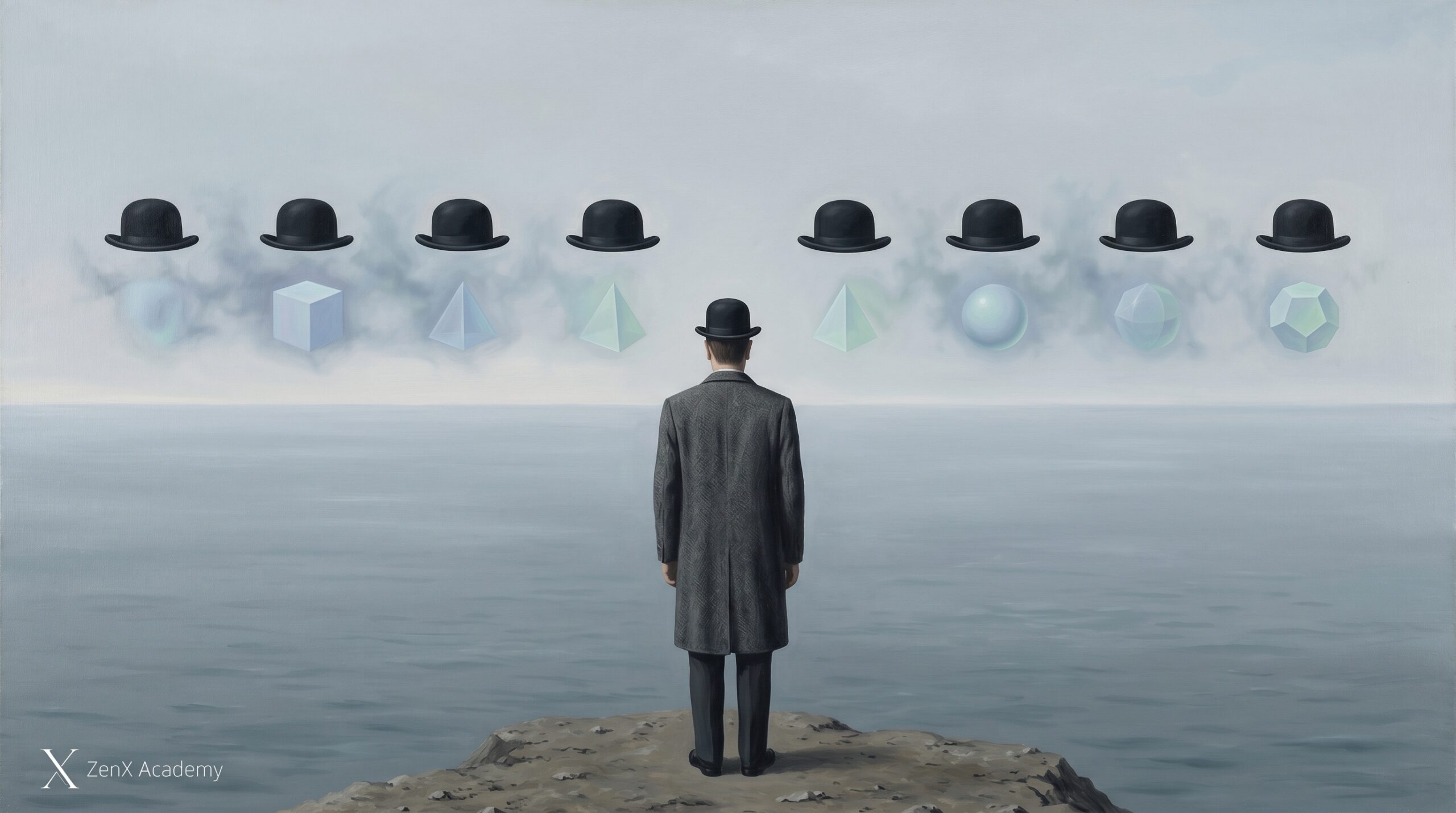
What Has Changed
Not transformation. A way of looking.
You have not been transformed by this document. Transformation is not what happened here, and claiming it would be the first act of the Samiri, replacing the work of integration with the comfortable identity of someone who has completed something.
What has changed is more specific, and more durable: you now have a way of looking.
Not a belief system. Not a set of principles to follow. Not a framework to identify with.
A specific, operational capacity: the ability to ask, in the middle of a situation, "Is this mine — or is this running?"
That question was not available to you before this work in the same way. It is available now.
This is the primary outcome of AZAR: not a different self, but a different position relative to what runs the self.
What You Can No Longer Not See
Vocabulary for what was already happening
You will notice things that you cannot unnotice. Not because you have been given special insight, but because you have been given specific vocabulary for something that was already happening.
You will notice the pre-formed thought. Not every time. Not immediately. But with a frequency that was not available before.
You will recognize the role activating, the version of yourself that appears in certain situations without being chosen, and you will know what to call it.
You will encounter the Samiri, in yourself and in the world around you, the golden substitute, the belief that replaces the practice, and you will see its structure more clearly than before.
You will recognize Pharaoh in the moment certainty escalates with doubt, in your own voice and in others'.
You will see Korah in the person who speaks fluently about development and has moved nothing.
You will recognize Noah's Wife standing at the threshold with the map in her hand, explaining why the moment is not yet right.
And you will see Azar, running beneath all of it, not always in time to interrupt, but increasingly visible.
The architecture does not disappear once seen. But it can no longer fully hide.
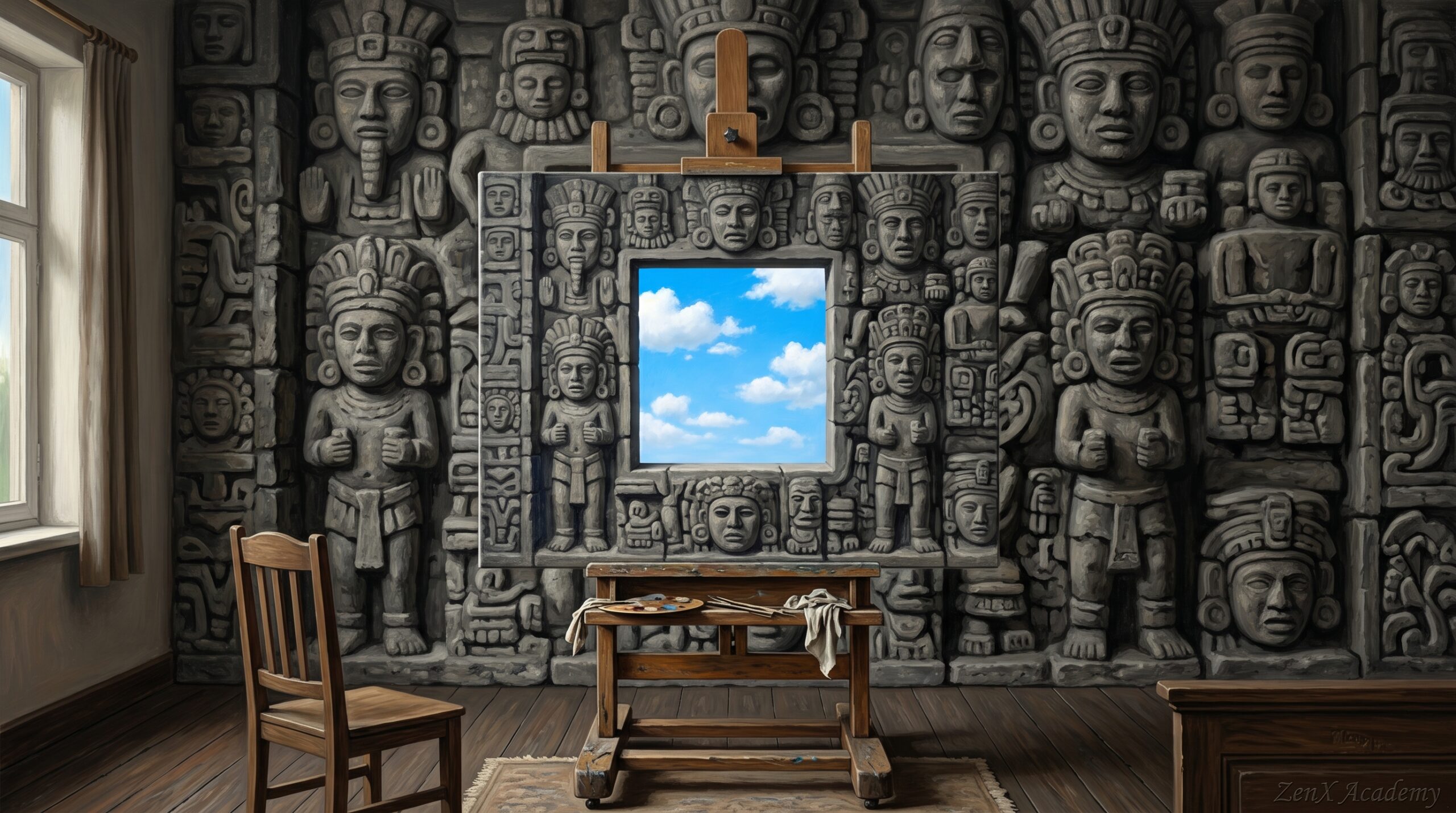
What This Is Not The End Of
One state in depth. A larger field ahead.
This document addressed one state in depth. The work with the remaining eight follows the same structure you have practiced here, but enters different territory, activates in different conditions, and requires different forms of examined operation.
That work is what ZenX continues. Not as content to consume, but as a structured methodology for developing the capacity to navigate your own internal architecture with increasing precision.
Each state you learn to observe reduces the territory in which you operate fully unconsciously. None of them eliminates the architecture. All of them increase your participation in how it runs.
One Final Clarification
Not freedom from the past. A different relationship with it.
Ibrahim did not become a man without a father. He became a man who could look at what his father built, and see it clearly enough to decide, from examination rather than inheritance, what to do with it.
That is not freedom from the past. That is a different relationship with it. One in which you are the examiner, not only the one examined.
One in which the question "Is this mine?" is available in more moments than before. One in which the gap between signal and execution is increasingly occupied by something other than automatic continuation.
This is what ZenX is building toward. Not enlightenment. Not the elimination of the architecture. The capacity to examine what runs you — before it has finished running.
You now know how to look. The rest of the map is waiting.