 AZAR · Section Nine
Section Nine
The Deeper Map
Azar as one of nine psychological operating states inside a larger internal architecture
Azar is foundational, but it is not the whole system. This section sketches the deeper map: nine distinct operating states that together form the experiential operating system you have been living inside.
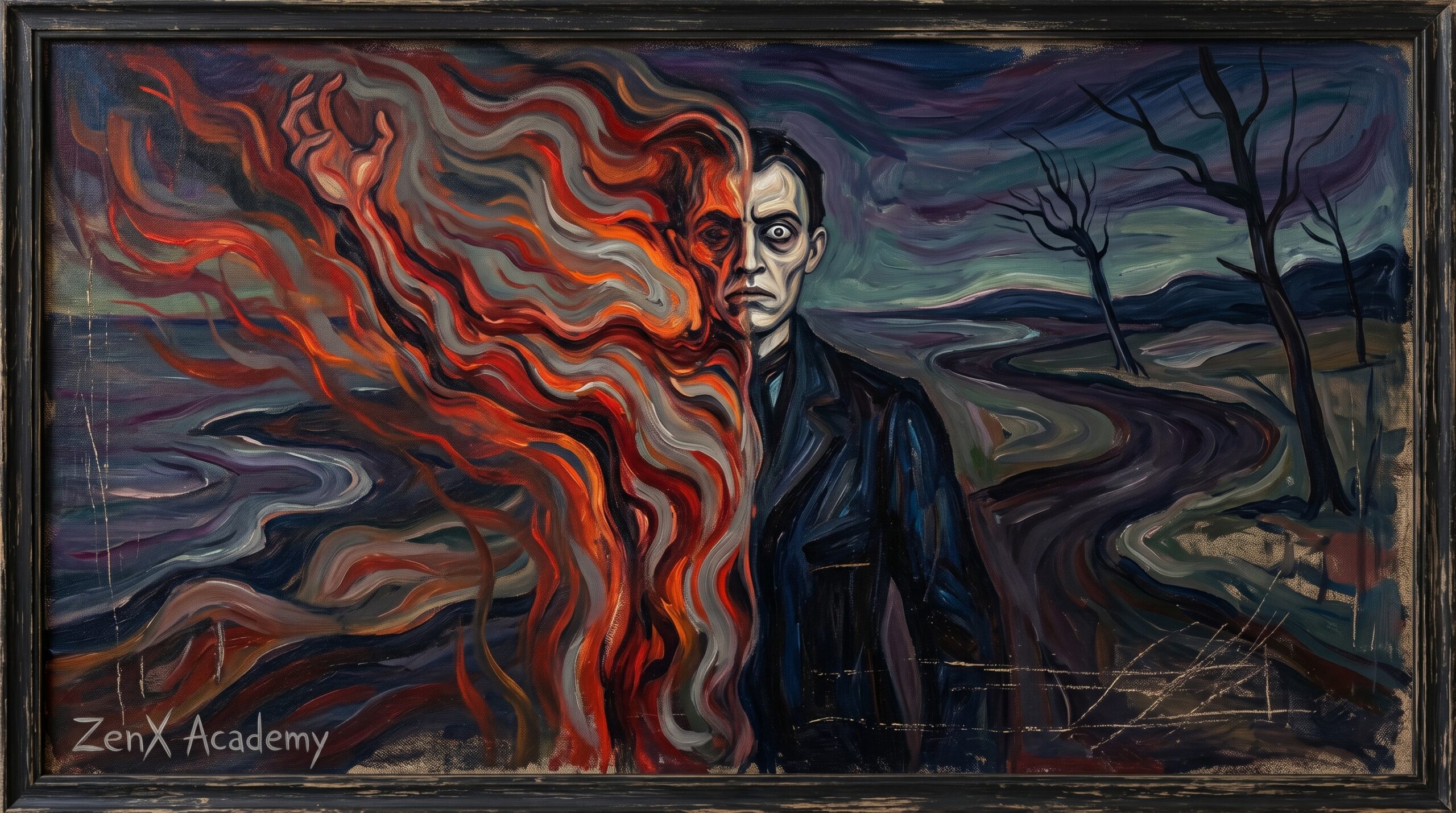
What Azar Is Part Of
One foundational state inside a nine-state architecture
Azar is one state. It is the first one addressed in this work because it is the foundational one, the installer that makes the others possible.
But the internal architecture that shapes how you perceive, react, decide, and construct identity is not a single mechanism. It is a system of nine distinct operating states.
Each state has a name drawn from the same source as Azar, the Quranic record, read not as religious instruction but as a precise diagnostic map of the human internal world.
Each state has been present in your life. Not as a character you read about. As a mode you have operated from, often without knowing it had a name, a structure, and a specific function.
What follows is not a complete account of each state. That work belongs to separate modules. What follows is a map, enough to show you where Azar fits, and what the rest of the architecture looks like.
How to Read This Map
Four lenses for each state
Each state is described by four things: what it is, when it activates, what it produces, and what it protects.
What it is, the core operating function. When it activates, the conditions that call it forward. What it produces, the behavioral and perceptual output. What it protects, the function it serves, even when it causes damage.
Read each one slowly. You are not looking for the states that apply to others. You are looking for the ones you recognize from the inside.
The Nine Operating States
An overview of the experiential operating system
State One — AZAR
The Inherited Installer
What it is: The mechanism that formats beliefs, reactions, and identity reference points before the analytical faculty develops. The programming you did not choose that operates as if it is you.
When it activates: Most situations, but with particular intensity when inherited reference points are challenged, when authority is questioned, or when situations closely resemble the original contexts of installation.
What it produces: Automatic responses that feel like personality. Reactions that arrive before thought. Positions defended without examination.
What it protects: The continuity of the inherited self. The familiar structure, even when it no longer serves.
You have worked with this state through the previous eight sections.
State Two — ABU LAHAB
The State of Consuming Rage
What it is: The operating state in which anger becomes the primary perceptual lens, not as an emotion that passes, but as a sustained orientation that shapes what you see, what you remember, and what you pursue.
When it activates: Perceived injustice. Blocked goals. Situations that threaten status or recognition. A specific kind of helplessness that converts immediately into heat.
What it produces: Behavior aimed at damage rather than resolution. Words chosen for impact rather than accuracy. Decisions made to prove a point rather than achieve an outcome. The sensation of being entirely right, and entirely burning.
What it protects: The ego's refusal to absorb a wound without converting it into force.
State Two-B — The Wife of Abu Lahab
The Preparation of Conditions for Rage
What it is: The state that does not rage itself, but reliably creates the conditions in which rage becomes inevitable. The accumulated grievance. The story told internally until the threshold is lowered. The slow arrangement of kindling before the flame appears.
When it activates: In ongoing relationships, particularly close ones. When resentment is stored rather than addressed. When a pattern of perceived injustice is maintained through selective memory.
What it produces: A relational environment in which conflict becomes almost structural. Where the other person's next ordinary action will become the trigger, because the preparation was already complete.
What it protects: The refusal to be accountable for the moment of ignition, by ensuring that ignition appears to come from outside.
State Three — The Samiri
The Materializer of the Abstract
What it is: The operating state that takes anything requiring sustained effort, tolerance of uncertainty, or invisible progress — and replaces it with something visible, immediate, and requiring only belief.
When it activates: During long processes with delayed reward. When complexity feels unbearable. When the gap between current position and desired outcome produces anxiety. When the group needs something to gather around that can be seen.
What it produces: The golden calf in its many modern forms: the system that promises to do the work. The belief that substitutes for the practice. The identity of "someone who knows this" that replaces actually doing it. The shortcut that looks like a path.
What it protects: The avoidance of the sustained discomfort that real development requires. You will recognize this state in how you relate to the ideas in this document, whether you are reading them as understanding, or as practice.
State Four — Pharaoh
The State of Threatened Grandiosity
What it is: The operating state that converts threat into declaration. Not confidence, which is quiet, but the particular posture that announces itself most loudly when it is most uncertain.
When it activates: When position, competence, or status is questioned. When someone beneath the established hierarchy challenges it. When the internal narrative of being exceptional encounters evidence that complicates it.
What it produces: The sentence "I am your Lord Most High" in its thousand daily forms. The dismissal that does not examine the challenge. The escalation of certainty in proportion to the size of the doubt. The inability to say "I don't know" or "I was wrong" without it feeling like structural collapse.
What it protects: A self-concept built on a foundation too fragile to be questioned without threatening the entire construction.
State Five — Potiphar's Wife
The Narcissistic Mirror
What it is: The operating state that places the self at the gravitational center of every relational orbit, not through cruelty, but through a perceptual architecture in which others primarily exist as reflections, confirmations, or threats to the self's image.
When it activates: In close relationships. When attention is redistributed. When someone fails to see you in the way you require to be seen. When your narrative about yourself is not confirmed by the other person's behavior.
What it produces: The interpretation of others' independent existence as a form of betrayal. The rewriting of events to restore the self to its central position. The particular pain of being seen accurately, rather than as needed.
What it protects: A self whose coherence depends on external mirroring rather than internal examination.
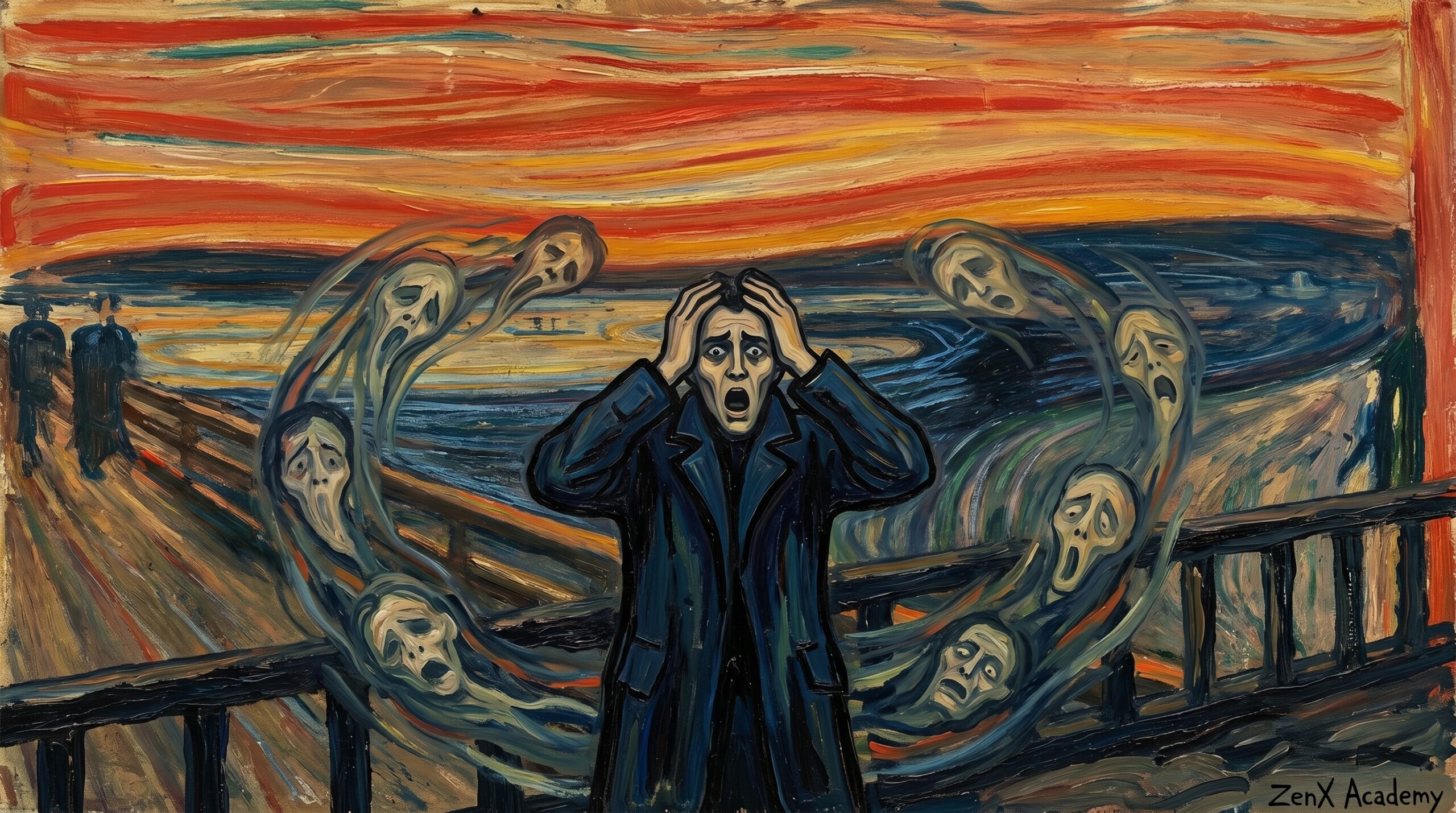
The Remaining States
From intellectual vanity to the architect of coherence
State Six — Korah
Intellectual Vanity
What it is: The operating state that mistakes accumulated knowledge, credentials, or conceptual sophistication for actual development — and uses intellectual possession as a substitute for the examined operation it claims to represent.
When it activates: After significant learning. When knowledge has been acquired but not integrated. When the gap between what is understood and what is practiced is too uncomfortable to acknowledge directly.
What it produces: The performance of insight without its function. Explanations of psychological mechanisms offered by someone still fully inside them. The particular arrogance of the person who has read everything about a subject and changed nothing.
What it protects: The self-image of the developed person, maintained by accumulation rather than construction. This state is particularly active in people who engage seriously with frameworks like this one.
State Seven — Noah's Wife / Lot's Wife
The Holder of the Map Who Will Not Move
What it is: The operating state that possesses genuine understanding, is proximate to real clarity, and remains in place. Not from ignorance. From a refusal to accept what the clarity requires.
When it activates: At the threshold of genuine change. When the examined position is clear enough to act on, and the cost of acting on it has become visible. When staying is no longer comfortable but leaving remains unacceptable.
What it produces: Understanding without movement. Clarity without consequence. The sophisticated analysis of a situation that has not changed — and will not, because understanding has become the activity that replaces action.
What it protects: Everything that would be lost if the movement were made. The relationships, the roles, the familiar self that exists inside the known structure.
State Eight — Haman
The Architect of Coherence
What it is: The operating state that holds the entire system together. Not a state entered directly, but the function that ensures the other states remain integrated, that the false self maintains its structural consistency, and that no single examination penetrates far enough to disturb the whole.
When it activates: Whenever the system is threatened with genuine disruption. When one state has been seen clearly enough to begin changing — and the others require reorganization to compensate.
What it produces: The seamless collaboration of the other states to produce a self that feels continuous, coherent, and real — despite being largely inherited, performed, and assembled from examined components.
What it protects: The experience of being a unified, consistent self — even when that self is primarily a construction of Azar, Abu Lahab, the Samiri, Pharaoh, and the rest operating in rotation.
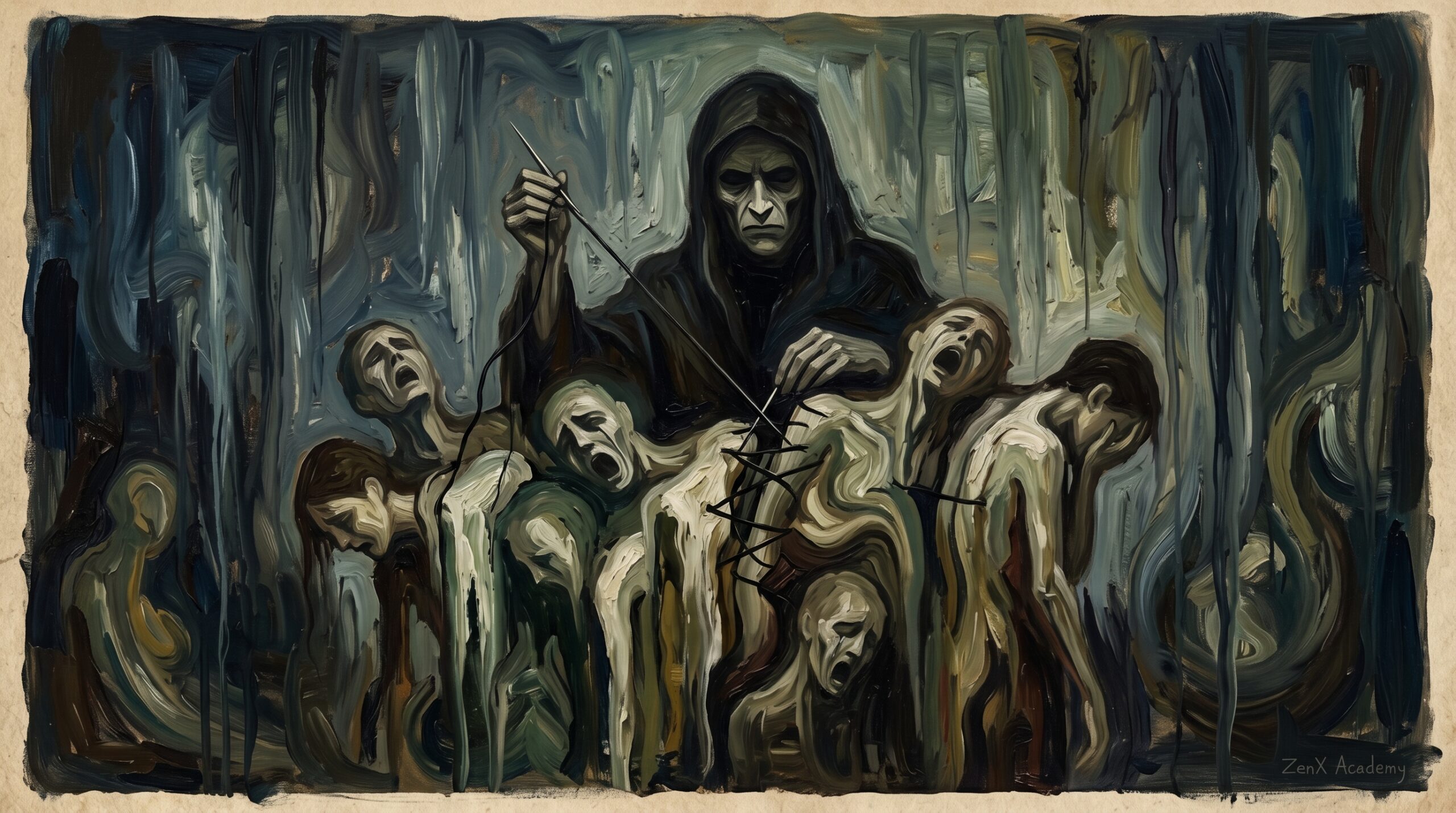
How These States Relate to Each Other
Not isolated characters, but a coordinated system
They do not operate in isolation. Most people, in most situations, are running a combination of states simultaneously — or cycling between them rapidly enough that the transitions are invisible.
Azar installs the reference points. Abu Lahab activates when those reference points are threatened. The Samiri provides relief from the discomfort of genuine work. Pharaoh defends the system when it is challenged externally. Potiphar's Wife requires the mirror that confirms it.
Korah accumulates knowledge that explains it without changing it. Noah's Wife holds the map at the threshold. Haman keeps all of it organized and feeling like a self.
This is the architecture. Not a mythological universe. An operating system — running in you, and in everyone around you, most of the time, below the threshold of conscious navigation.
Where This Work Goes From Here
Azar as entry point into a larger field
AZAR was the entry point. Not because it is the most dramatic state, but because it is the most foundational. Nothing else installs without it first.
The work with the remaining eight states follows the same structure you have developed here: identification, mapping, observation, interrogation, interruption, construction, integration.
The tools are the same. The territory is larger.
Each state has its own activation conditions, its own diagnostic questions, its own exercise sequence, its own specific form of examined operation. That work is what comes next in ZenX. This document was the first entry.
Section Ten — what this opens, and where to continue.