 The Samiri · Room Three
Room Three · The Samiri
The Hidden Commands Beneath the Substitution
Section Six
From Protection to Instruction
Section Five identified what the Samiri protects against:
the emptiness of between-states,
the terror of genuine failure,
the unbearable silence of real process.
But protection does not operate as a feeling.
It operates as an instruction.
A short, repeating directive
the system issues to itself
to ensure the protected thing stays protected.
These are not conscious decisions.
They are commands that formed
at the moment the system encountered
the specific discomfort it could not tolerate,
and decided, without announcing it:
"This must never be felt again."
The Samiri's commands are different from Abu Lahab's.
Abu Lahab's commands protect against recurrence of damage.
"Never be that vulnerable again."
"Never trust that much."
The Samiri's commands protect against the specific experience of structural suspension,
of being without a container for meaning.
"Never be without a framework."
"Never be seen not knowing."
"Never remain in the unresolved."
These sound like intellectual virtues.
That is precisely what makes them difficult to examine.
The Four Commands
Every Abu Lahab structure runs on one or more
of the following command types.
They are not theoretical categories.
They are the actual instructions
the system gives itself,
translated into language
you can examine.
The Four Samiri Commands
Command One: The Container Must Not Be Empty
This is the foundational command.
It formed at the moment the system first experienced
what it feels like to be without a structure for meaning,
and registered that state as unbearable.
Its instruction is not:
"Find the right meaning."
Its instruction is:
"Ensure something is always present.
The container must never be empty.
If the current structure is dissolving,
find the next one before the dissolution is complete."
This command explains the specific pattern
of moving from one framework to another,
not because the previous one failed,
but because the transition between them
produced a moment of structural suspension
that triggered the command.
The Samiri does not wait for the old structure to fully dissolve.
He begins building the new calf
at the first sign that the current one is loosening.
Where to locate it:
Think of a period in your life
when a significant framework, a belief system, a practice, a way of understanding yourself,
began to feel insufficient.
What arrived before you had fully processed the insufficiency?
Was there a period of genuine suspension,
of holding the dissolution without resolving it,
or did something new arrive
almost immediately to fill the space?
If the transition was faster than the dissolution:
the container command was operating.
Command Two: The Rule of Visible Knowing
After the container command forms,
the system needs an operational principle
for how to move through the world
without exposing the suspension it fears.
This is the rule:
"I must always have a position.
Always a framework.
Always language for what is happening.
Always the appearance of someone
who is further along in the process than they actually are."
This rule sounds like competence.
It sounds like the natural disposition of someone
who takes thinking seriously.
What it actually produces,
under the Samiri's operation,
is the consistent presentation of arrival
at the expense of the honest experience of being in process.
The rule does not prevent knowing.
It prevents the honest exposure of not-yet-knowing.
And not-yet-knowing,
the genuine middle state of real learning,
is precisely where metabolized meaning is built.
Where to locate it:
Think of the last time you were in a conversation
about a topic you care about,
and you did not fully know your position yet,
but spoke as if you did.
Not to deceive.
But because the alternative,
"I am genuinely uncertain about this",
felt like a form of exposure
that the rule does not permit.
Command Three: What the Rule Forces
Every rule produces behavioral requirements.
The Samiri's rule produces these:
Must consume before the previous consumption has metabolized.
The container must never show signs of being insufficient:
which means it must be continuously replenished.
Must produce insight before the experience has found its own words.
The framework provides language in advance:
preventing the discomfort of experience
that has not yet been interpreted.
Must perform the depth the identity claims.
Being seen as someone engaged with development
requires continuous visible evidence of that engagement.
Must never rest in genuine not-knowing.
Every question must be in process of being answered.
Uncertainty is tolerable only if it is moving toward resolution.
Must move to the next framework before the current one fully reveals its limits.
Because fully revealing limits would require remaining
in the between-state that the command was built to prevent.
These are not character flaws.
They are the behavioral signature
of a system protecting itself
from the specific exposure it registered as unbearable.
Where to locate it:
Which of these behavioral patterns is most consistently present in you?
Identify the one that operates most automatically:
the one that runs before you have decided to run it.
That is Command Three's primary output in your system.
Command Three: What the Rule Forces
Every rule produces behavioral requirements.
The Samiri's rule produces these:
Must consume before the previous consumption has metabolized.
The container must never show signs of being insufficient:
which means it must be continuously replenished.
Must produce insight before the experience has found its own words.
The framework provides language in advance:
preventing the discomfort of experience
that has not yet been interpreted.
Must perform the depth the identity claims.
Being seen as someone engaged with development
requires continuous visible evidence of that engagement.
Must never rest in genuine not-knowing.
Every question must be in process of being answered.
Uncertainty is tolerable only if it is moving toward resolution.
Must move to the next framework before the current one fully reveals its limits.
Because fully revealing limits would require remaining
in the between-state that the command was built to prevent.
These are not character flaws.
They are the behavioral signature
of a system protecting itself
from the specific exposure it registered as unbearable.
Where to locate it:
Which of these behavioral patterns is most consistently present in you?
Identify the one that operates most automatically:
the one that runs before you have decided to run it.
That is Command Three's primary output in your system.
Command Four: What It Costs to Obey
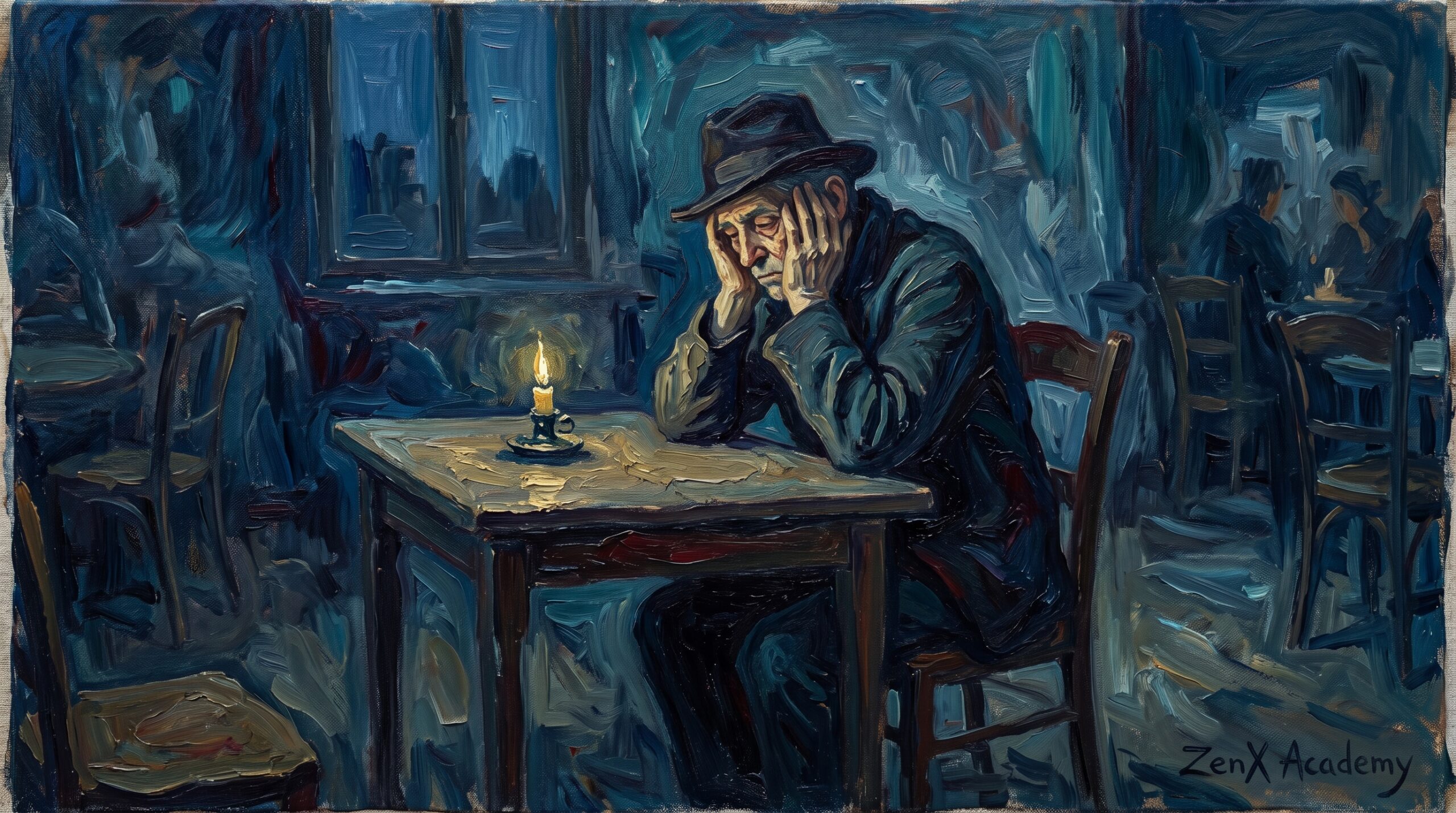
Every command has a price.
The Samiri's commands are particularly expensive
because their costs are largely invisible,
they appear as virtues,
as the reasonable habits of a thoughtful person.
What continuous consumption costs:
The capacity to metabolize.
An insight consumed before the previous one has changed anything
builds a library with no readers.
What premature language costs:
The experience itself.
When the framework arrives before the experience has found its own words,
the experience is shaped by the framework
rather than the framework being shaped by the experience.
The map precedes the territory, and the territory becomes harder to see.
What the performance of depth costs:
Actual depth.
The performance must be maintained,
which means it must be protected from any encounter
that might reveal the gap between performance and reality.
This protection progressively closes off
exactly the encounters that would produce what is being performed.
What the refusal of not-knowing costs:
Real learning.
Genuine learning requires a period of being genuinely without an answer,
of inhabiting the question rather than efficiently resolving it.
The command that prevents this
does not prevent understanding.
It prevents the kind of understanding
that changes how you act.
Where to locate it:
For the behavioral pattern you identified in Command Three, ask:
"What would I be unable to maintain about myself,
what claim, what identity, what position,
if I stopped obeying this command for three weeks?"
What would become visible about the gap
between what the performance claims
and what has actually been built?
Exercise Six: The Command Examination
Write each command in a single sentence:
"My container command is:
(What must never be empty, what must always be present)"
"My visibility rule is:
(What I must always appear to have, what I must never be seen without)"
"What the rule forces me to do:
(The specific behavioral pattern that maintains the appearance)"
"What it costs me to obey:
(What remains unconstructed while the performance is maintained)"
Read them together as a sequence.
You are looking at the operating instructions
of one specific form of protection,
the one that the Samiri has been running
on your behalf,
in your name,
with your intelligence,
to prevent an exposure
that you may be more capable of tolerating now
than you were when the command was written.
A Note on These Commands
Unlike Abu Lahab's commands,
which were written after damage,
the Samiri's commands are often written
in the absence of any specific wound.
They form in response to a condition,
the condition of being a mind
that needs meaning to function,
living in a world where meaning is genuinely uncertain
and often unavailable on demand.
There is nothing pathological in that need.
What became expensive
is the specific instruction
the system gave itself in response to that need:
"Never feel the absence.
Always have a substitute ready.
Move fast enough that the emptiness
never has time to make itself felt."
That instruction has produced a life
of impressive depth
and a specific kind of incompleteness,
the incompleteness of someone
who has consumed many maps
and walked very few of the actual territories.
From Commands to Building Meaning
Updating the instructions rather than abandoning them
Section Seven moves from the commands
to what becomes possible when they are examined,
not abandoned,
but updated.
And to what it actually means
to build meaning
rather than acquire it.