 IMRA'AT AL-AZIZ · Section Five
Section Five
What the Seduction Protects
The house and what it guards
The seduction does not operate without reason. Understanding what the house guards changes what the work actually is.
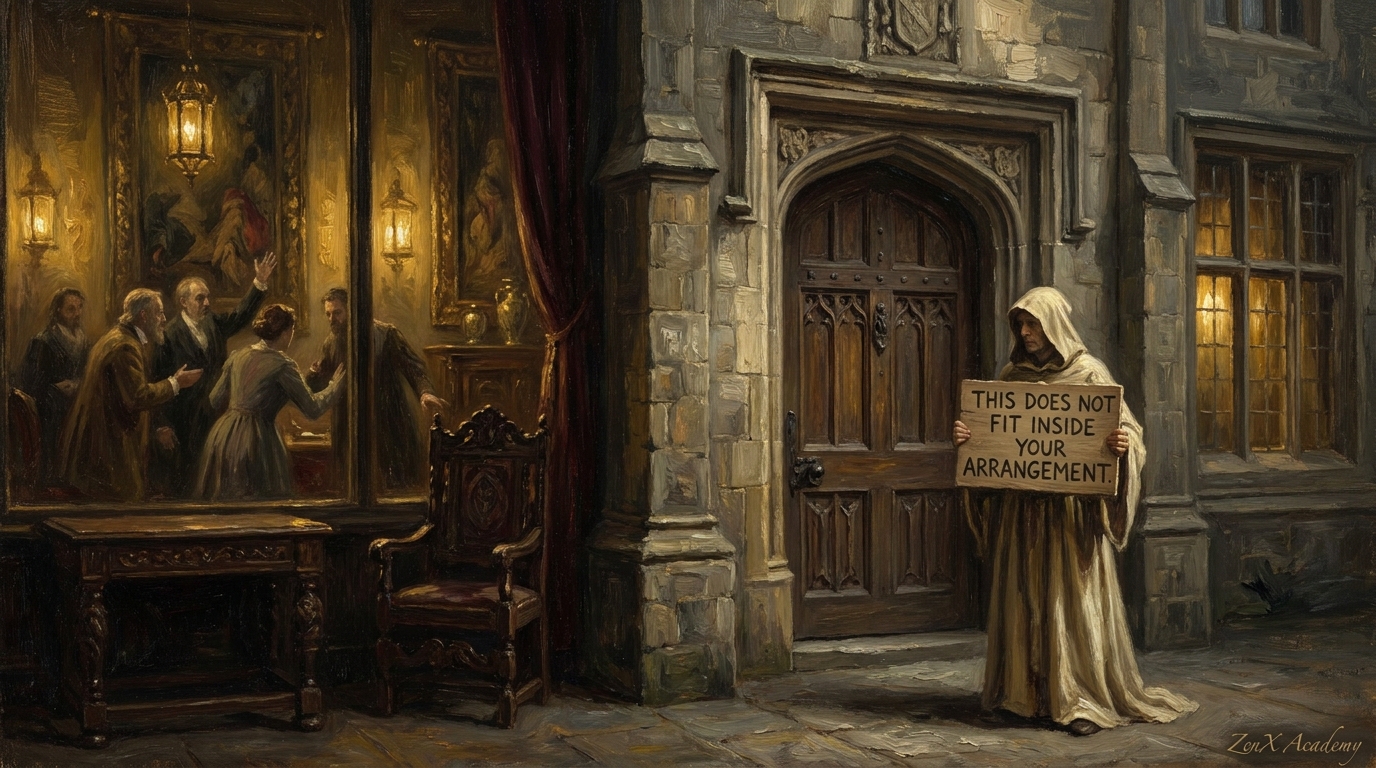
Why the House Was Built
The seduction does not operate without reason
Imra'at Al-Aziz does not negotiate with Yusuf because she is malicious.
She negotiates because the system she governs,
the house, the arrangement, the internal order,
requires her to.
Because Yusuf's clarity,
his uncompromised direction,
his refusal to enter the conversation,
is a structural threat to everything the house maintains.
Not a moral threat.
A structural one.
What he carries
does not fit inside the house's organization.
And the house will do what houses do
when something real and uncontained enters:
It will try to negotiate with it
until it becomes part of the existing arrangement,
or until it leaves.
This is the architecture of the house.
And understanding what it guards
changes what the work actually is.
The Four Protections of the House
What the arrangement is actually defending
The Comfort of the Known Arrangement
Genuine preference for the familiar structure
The house has been organized in a specific way
for a specific period of time.
There are positions within it.
Roles.
Expectations.
A predictable internal climate.
The clarity that Imra'at Al-Aziz negotiates against
would disturb this arrangement.
Not dramatically.
But genuinely.
The decision, if made, would require
something different from the existing positions.
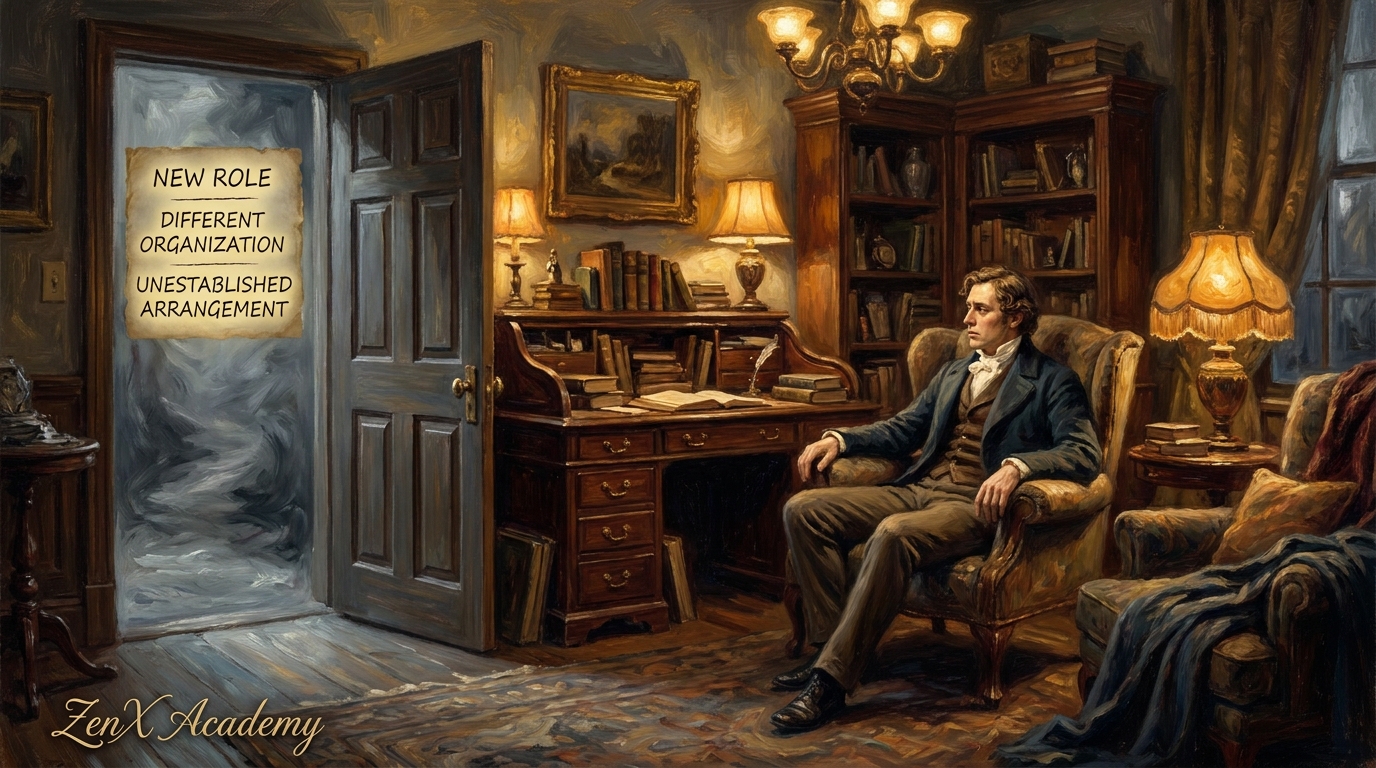
A new role.
A different organization.
An arrangement that has not yet been established.
The house does not oppose this because it is hostile to the decision.
It opposes it because the comfort of the known arrangement
is genuinely preferable to the discomfort of the real transition.
This is not weakness.
It is the honest response of a system
that has organized itself around specific patterns
and that would need to genuinely reorganize
if the decision were carried through.
What the seduction sounds like here
"The current arrangement works well enough. Why introduce instability for something uncertain?"
The Coherence of the Self-Narrative
Protecting the story that holds the self together
The house maintains a story.
A story about who you are,
what you have chosen,
why you have moved the way you have moved,
and what the trajectory of your life means.
The clarity that the seduction negotiates against
often contains a quiet challenge to this story.
Not an attack on it.
A complication.
If the decision were made,
if the direction were followed,
something in the existing story
would need to be revised.
Not necessarily abandoned.
But revised.
- "If I do this, what does it mean about why I didn't do it before?"
- "If this is the right direction, what does that say about the direction I've been in?"
The house will work to prevent this revision,
not because the story is more important than the decision,
but because the coherence of the narrative
feels like the coherence of the self.
And revising the story
feels, from inside the house,
like revising the self.
What the seduction sounds like here
"Everything you've built has been leading somewhere. This decision doesn't fit the arc you've been creating."
The Safety of the Current Position
The safety of not having committed to something that might not work
The house offers a specific kind of safety:
the safety of not having committed to something
that might not work.
If you have not made the decision,
if you have remained in the continuous conversation about whether to decide,
you have not exposed yourself to the possibility of genuine failure.
The decision, once made and acted upon,
can be evaluated.
It can succeed or fail in visible, measurable terms.
The conversation about the decision
cannot be evaluated in the same way.
The house protects you from the exposure of the committed position.
Not from failure.
From the specific visibility that commitment creates,
the visibility of someone who decided
and whose decision can now be seen to have worked or not.
The negotiation keeps everything in the safer category of potential.
And potential, unlike actualized commitment,
cannot fail.
What the seduction sounds like here
"This isn't the right time to be certain. Better to wait until the odds are clearer."
The Identity Organized Around Not Having Decided
The deepest protection, and the most difficult to see
Over time, the continuous conversation about the decision
becomes part of who you are.
Not the decision itself.
The approaching of it.
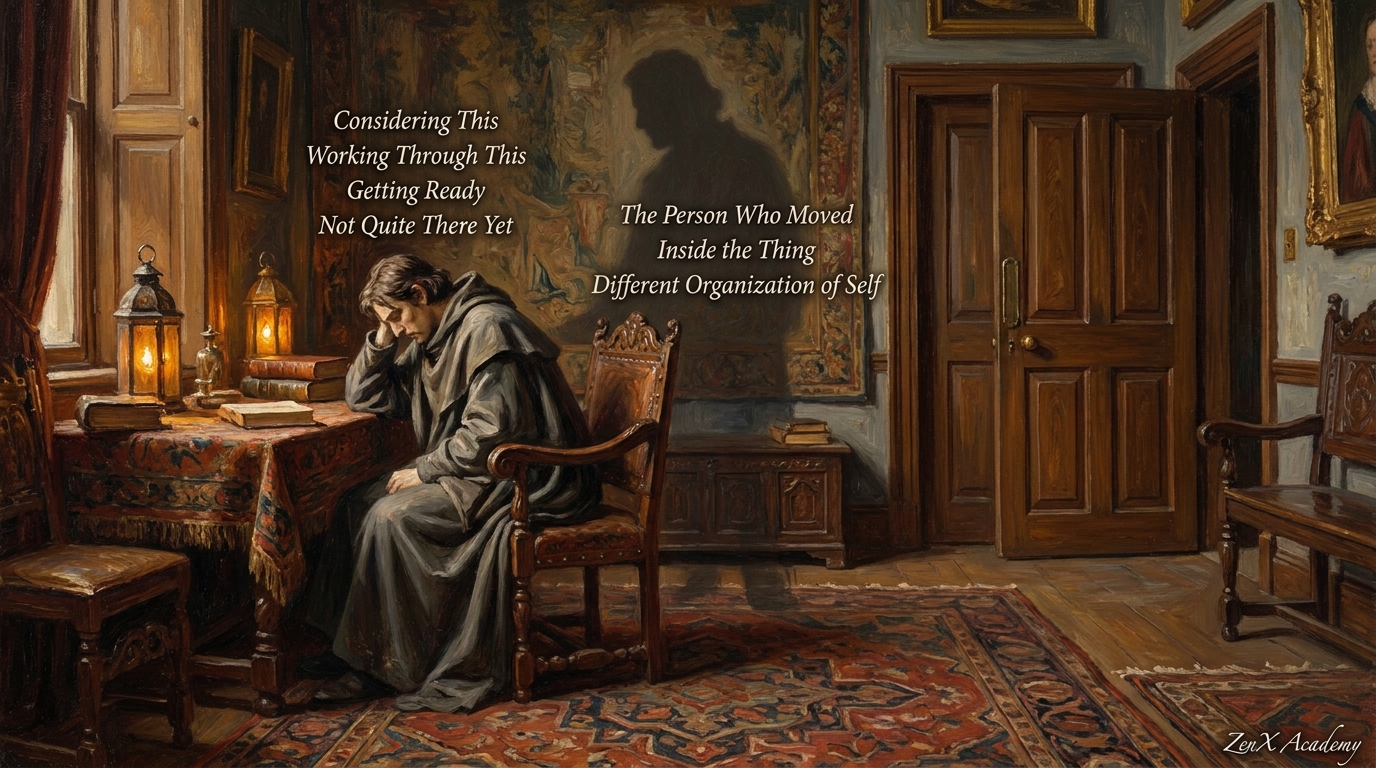
- The person who is considering this.
- Working through this.
- Getting ready for this.
- Not quite there yet with this.
This is an identity.
It has its own coherence.
Its own internal consistency.
Its own way of presenting itself to the world
and to itself.
And if the decision were made,
if the movement were taken,
this identity would dissolve.
Not into something bad.
Into something different.
The person who decided,
who moved,
who is now inside the thing rather than approaching it,
is a different organization of self
from the person who was approaching it.
The house protects this identity
by ensuring that the approach continues indefinitely,
that the arriving never becomes arrival,
so that the identity of the approaching self
can remain intact.
What the seduction sounds like here
"You're still figuring out what you actually want. That's not a failure. That's where you are."
What Changes When You See This
None of these protections is fiction
Understanding what the house guards
does not dissolve the protections.
The arrangement is genuinely comfortable.
The narrative is genuinely valuable.
The safety is genuinely preferable to exposed failure.
The identity of the approaching self is genuinely real.
None of these protections is fiction.
What changes is the question.
The question was: "Should I make this decision?"
That question lives inside the house. It is the question the seduction is expert at engaging.
The new question is: "What is the house protecting that requires this decision to remain unmade?"
That question is not about the decision.
It is about the arrangement.
And the arrangement, once seen clearly,
can be examined the same way
everything else in ZenX has been examined:
"Was this built consciously?
Or did it form in the absence of the decision
I was continuously approaching?"
Exercise Five: The House Map
Mapping what the arrangement is defending
Return to the domain you identified in Section Three
as most actively producing murawadat.
Work through these four questions in writing.
One paragraph each.
Question One: The Arrangement
What would change in my daily structure, in how my time, energy, and attention are organized, if the decision were made and acted upon?
Not: how would it feel. What would actually be different in the arrangement of things.
Question Two: The Narrative
What would need to be revised in how I explain my trajectory if this decision were now part of my story?
Not: whether the revision would be good. What specifically would need to change in how the story is told.
Question Three: The Exposed Position
What specifically could fail, in visible, evaluable terms, that is currently not exposed to evaluation because the decision remains in the conversation rather than the action?
Question Four: The Approaching Identity
Who am I, in relation to this thing, right now?
Not what I will be when I decide. Who I am in the continuous approach, in the not-yet-arrived state.
And then: "Is this identity something I consciously chose, or something that formed in the space the decision left empty?"
Section Six moves from the protections to the commands they produce: the specific instructions the house runs on.