 IMRA'AT NUH · Section One
Section One · The Mechanism
THE LOSS OF RECEPTIVITY
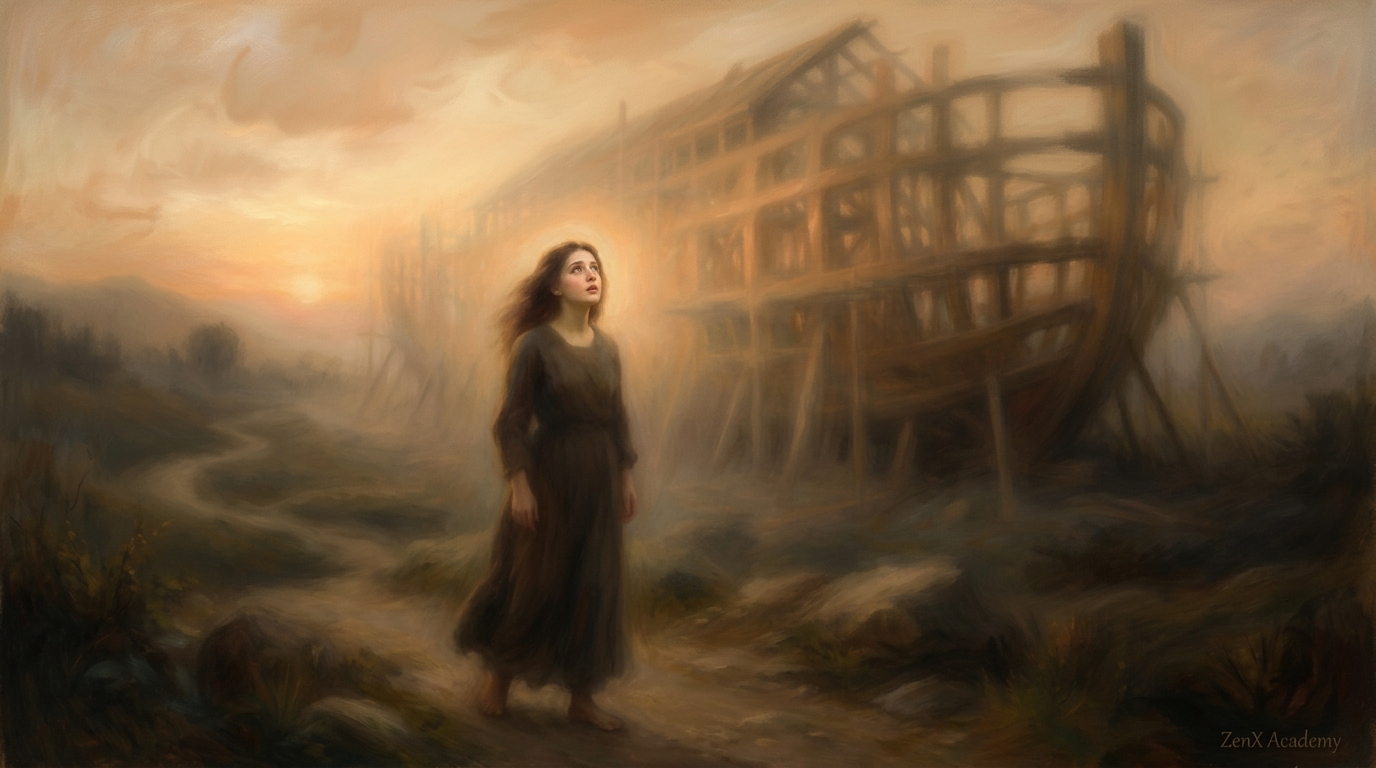
She did not stop seeing the ark. She stopped receiving it.
There are two people who can stand beside the same construction for the same number of years. One leaves changed. One leaves exactly as they arrived. The difference is whether something inside them was still capable of being reached by it.
What Receiving Actually Means
The crossing from information into formation
There is a specific experience that happens when something from outside crosses into the interior and actually lands. Not when it is processed. Not when it is understood. Not when it is filed accurately into your existing framework of knowledge.
When it lands in the place where things produce movement. Where something shifts, however slightly, in how you are oriented. Where the encounter leaves you different, even minimally, from how you arrived.
This is reception. And it is different from every other relationship you can have with information, methodology, or construction.
You can see without receiving. You can understand without receiving. You can appreciate, acknowledge, agree with, even teach without receiving. Reception is what happens when the encounter crosses from the space of information into the space of formation.
When it reaches the part of the interior that can be moved, summoned, called toward a different direction than the one you were already in. The Quran describes this faculty without naming it the way we are naming it here.
Ibrahim was struck by what he saw in the sky. It reached him. Maryam received the word. It entered her. Asiya saw what Fir'aun could not see in the same palace. She received what he refused.

In each case, the capacity to be reached, to be genuinely affected by what arrives, was intact. And in each case, what they received called them into action, into formation, into a movement they had not already decided to make.
This is what the ark required of everyone who lived beside it. Not agreement. Not understanding. Not even willingness in the abstract.
The intact capacity to be reached by it, to receive its call as a call, again, each time it arrived, in a way that produced the movement entry requires. And this capacity, in her, had been lost. Not taken. Not refused. Lost the way any capacity is lost when it is not exercised, gradually, quietly, without the moment of loss ever being clearly visible.
How Receptivity Is Lost
Proximity without entry
Receptivity is not lost through opposition. It is not lost through a decision. It is lost through a specific kind of proximity, the proximity that is not accompanied by entry.
When you live beside something that calls you to change and you remain unchanged, something adjusts. Not the construction. Your interior relationship to its call.
The first time the ark's necessity reached you, it arrived as a disruption. It interrupted the ordinary frequency of your awareness. It produced in you the specific experience of being summoned, of being called from where you were toward somewhere that would require you to be different.
That disruption was the signal of intact receptivity. The interior was open, and something from outside entered it and moved something inside. But if you remain in proximity without entry, if the call arrives and you do not move, something begins to adjust for the gap.
Not consciously. Not as a decision. The interior learns, through repetition, that this particular call does not produce movement. It begins to process the call the way it processes known information, efficiently, accurately, without disruption.
The call still arrives. But it no longer lands in the place where movement is generated. It lands, instead, in the place where things are understood. And understanding, however deep, however accurate, does not cross the threshold into the interior where formation happens.
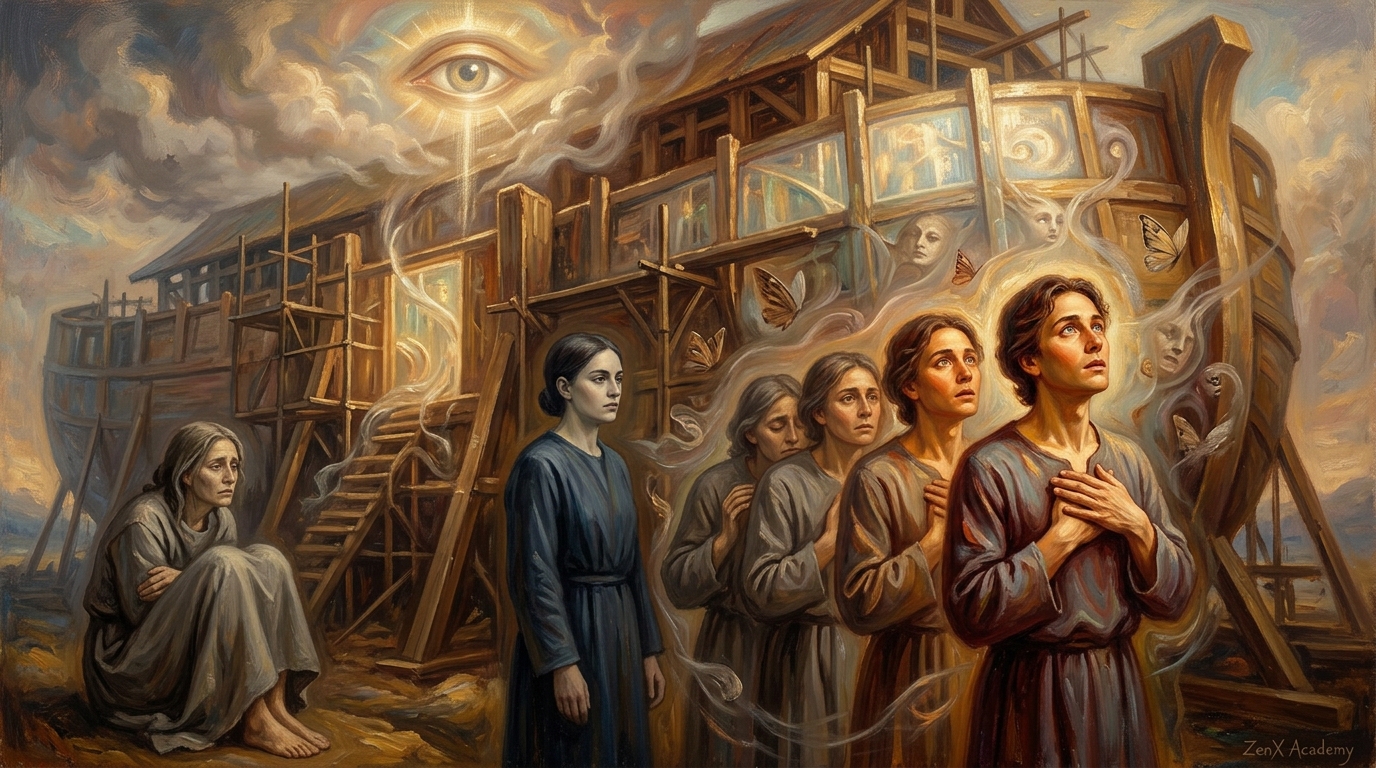
Year after year of this. Proximity without entry. Call without reception. Understanding without formation. Until the capacity to be reached by this particular construction has been replaced, through repetition, by the capacity to recognize it.
And recognition is not reception. Recognition says: I know what this is. Reception says: this is reaching me now, and something in me is moving.
She could recognize the ark perfectly. She could no longer receive it.
The Specific Tragedy of Overexposure
When familiarity replaces formation
There is something in the human interior that is protected by distance. Not every distance, not the distance of ignorance or rejection. The distance of the not-yet-arrived.
When something has not yet reached you, it retains its capacity to reach you. The person who has never heard the call can still, in the moment of first hearing, be completely disrupted by it.
The person who has heard it ten thousand times, and not entered, has gradually insulated themselves from that disruption. Not because they chose insulation. Because proximity without entry produces insulation as a byproduct.
This is the specific tragedy of Imra'at Nuh that no other room in this series names. It is not the tragedy of someone who never knew. It is the tragedy of someone who was so close, for so long, that knowing became a substitute for receiving.
Who was so familiar with the construction that familiarity replaced the capacity to be formed by it. Who lived beside one of the most extraordinary events in human experience, year after year, day after day, and arrived at the flood having never been reached.
Not because the reach was not attempted. Because the interior, through years of proximity without entry, had lost its capacity to receive the attempt.

The Difference Between Two People Beside the Same Construction
One leaves changed. One leaves as they arrived.
Return to the two people standing beside the same ark for the same number of years. One leaves changed. One leaves as they arrived.
The person who leaves changed did not simply endure more exposure. They entered the construction, not just physically, but receptively. Every day, the building reached them. Every plank placed required something of their interior. Every day of work produced a small formation, a slight restructuring of who they were in relation to what the project was building toward.
The construction was producing ark-people. And they allowed themselves to be produced.
The person who leaves unchanged was present for the same construction. Saw the same things. Understood the same principles. Acknowledged the same necessity. But somewhere in the years of proximity, the call of the construction stopped reaching the place where formation happens.
It reached, instead, only the place where things are already known. And the known does not form you. It simply confirms what you already are.

What Intact Receptivity Produces
The disruption that signals formation
When receptivity is intact, when the interior is still capable of being reached by what arrives, something specific happens in the encounter with a genuine call.
The encounter disrupts. Not catastrophically. Not in ways that are always visible from outside. But something shifts in orientation. Something adjusts in the interior. Some part of who you were before the encounter is different, however slightly, in the encounter's aftermath.
This disruption is not comfortable. Formation is not comfortable. But it is the sign that the interior is still open, that the call is still capable of landing in the place where movement is generated.
Intact receptivity does not mean you respond correctly every time. It means the encounter reaches you in a way that requires a genuine response, that does not allow you to simply file it and continue unchanged.
Noah's construction required this of everyone in its vicinity. Not that they understand. Not that they agree. That they remain capable of being reached by it. Year after year. In a way that does not allow proximity to replace entry.
Exercise: The Receptivity Test
One question in three parts
This exercise asks one question in three parts. Choose one construction, one methodology, direction, or transformation, that you have been proximate to for a significant period of time.
Part One: The First Reception
Return to the first time this construction reached you. Before familiarity. Before you had processed and categorized and understood. What did it feel like when it first arrived? Not what you thought about it. What happened in your interior when it first landed.
Part Two: The Current Reception
Now encounter the same construction today, read something from it, sit with its central claim, engage with its core requirement. What happens in your interior now? Does it arrive as something that disrupts, that reaches the place where movement is generated? Or does it arrive as something already known, processed smoothly, recognized accurately, passing through without disruption? The difference between those two experiences is the difference between intact receptivity and its loss.
Part Three: The Gap. Between the first reception and the current one, what changed? Not in the construction. In your capacity to be reached by it. Name what you notice. Not to judge it. To see it clearly as the specific interior change that proximity without entry produces over time.
Because what can be seen clearly can, sometimes, begin to be reversed. And the reversal of lost receptivity is what the remaining sections of this room are built toward.
She did not stop seeing the ark. She stopped receiving it. And the tragedy is not that she was absent, she was closer than most. The tragedy is that proximity, without entry, gradually replaced her capacity to be reached by what was being built. Until the construction that should have continuously called her became simply the background of a life lived beside something extraordinary that had, through familiarity, become ordinary. The flood did not come because she rejected the ark. It came because, by the time the rain arrived, the ark had long since stopped being able to reach her.
Imra'at Nuh · The Loss of Receptivity
Psychological Architecture · ZenX Academy