 IMRA'AT LUT · Section Ten
Section Ten · Conclusion
WHAT THIS ROOM OPENS
The recovery of the capacity to tell the difference
You are still inside a system. This is not a failure. It was never the goal of this room to remove you from all systems. What this room was built for is the recovery of the capacity to tell the difference.
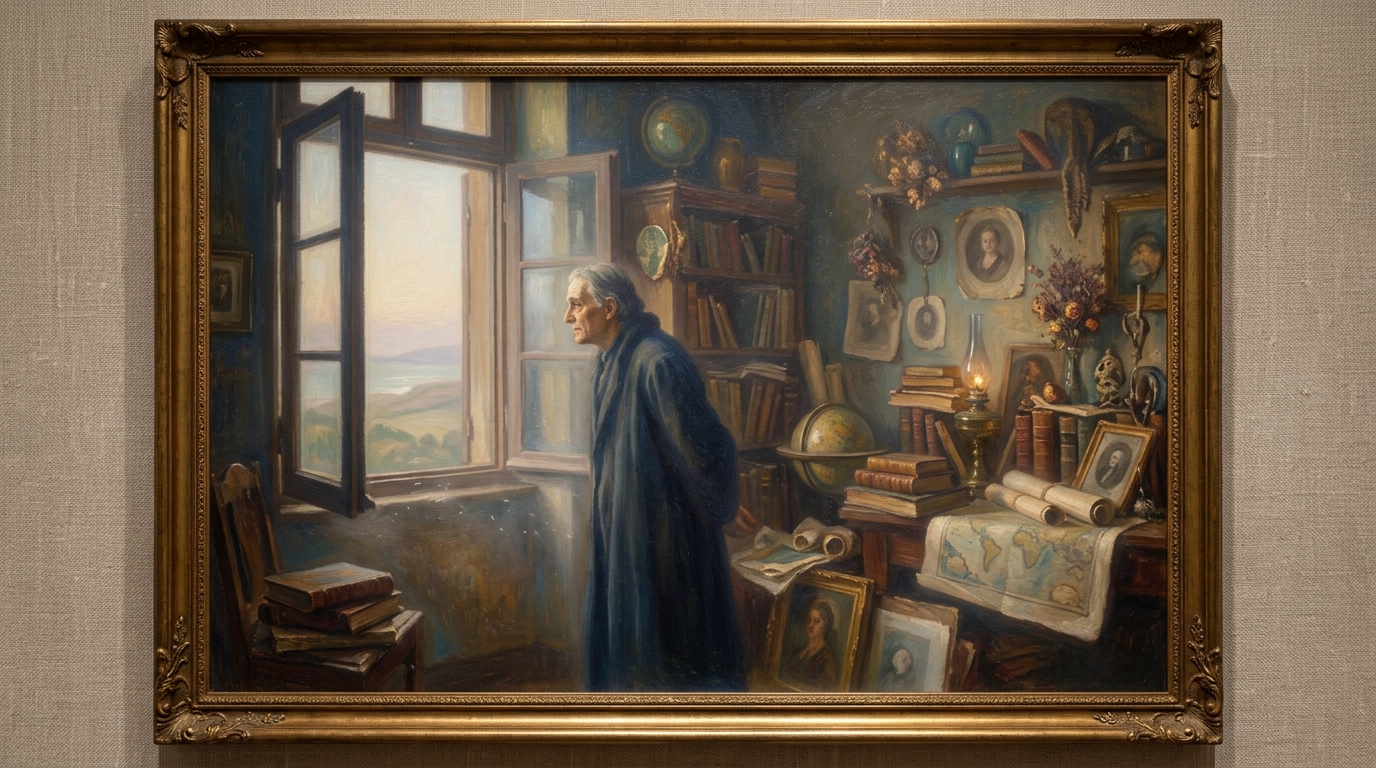
What Imra'at Lut Is Not
A perceptual condition, not a moral failure
She is not a villain. She is not a warning about the dangers of attachment. She is not an example of what happens when you love the wrong things.
She is a condition. A specific condition of the human interior, the condition in which a system has been inhabited so completely that departing from it is experienced not as leaving a system but as leaving reality.
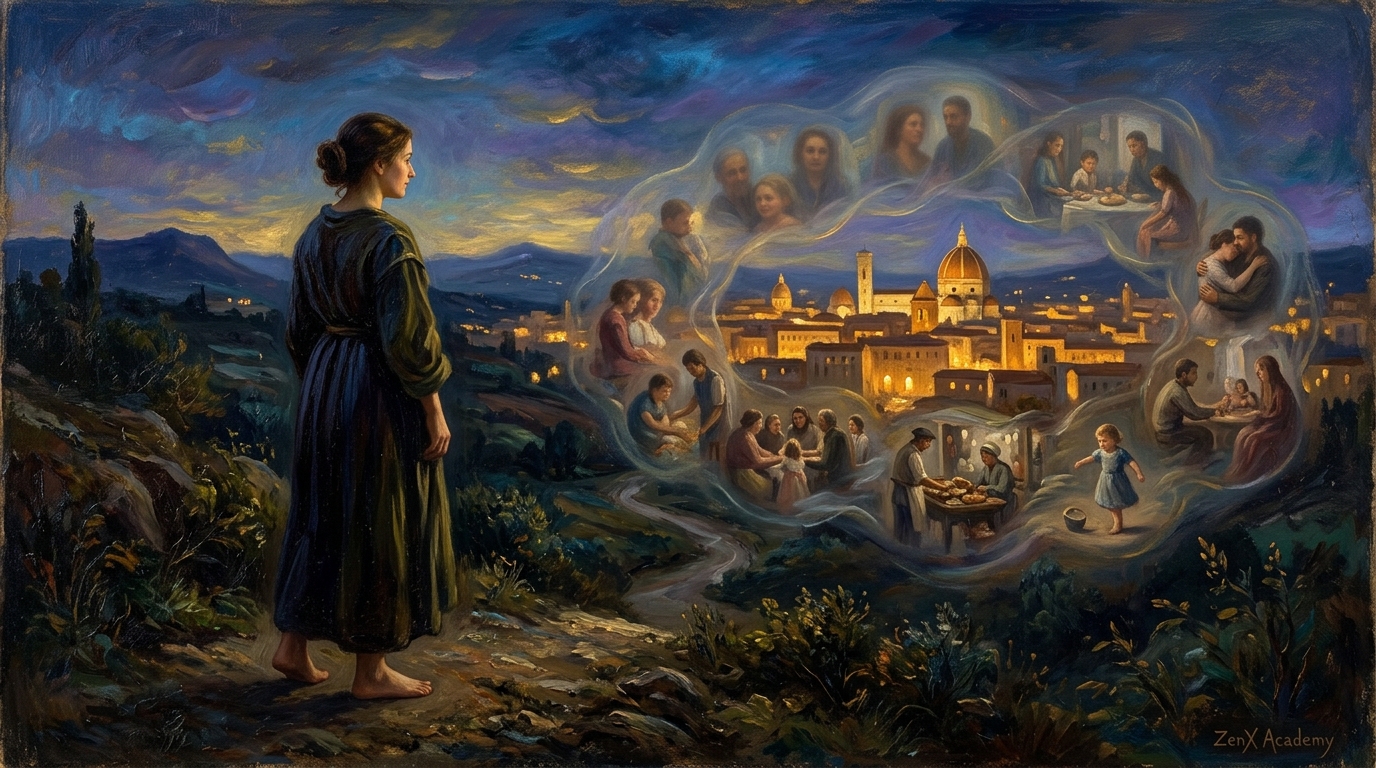
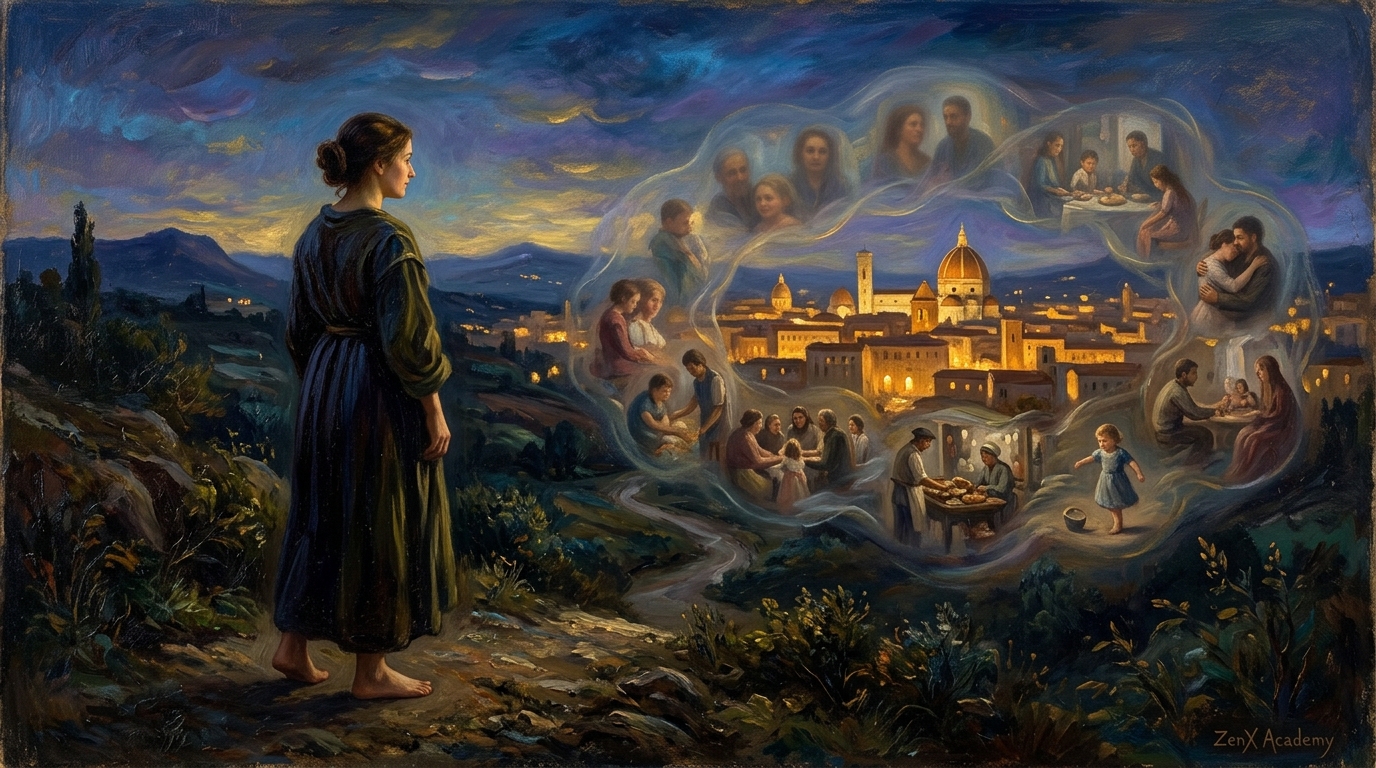
She was not turned back by force. She was not prevented from moving forward by an external obstacle. She turned because the city behind her was not, in her perception, a system she had lived inside. It was what is real.
And when what is real calls, when the accumulated weight of years of saturation pulls toward the familiar definition of reality, the body turns. Not toward the past. Toward what the interior has accepted as the shape of the world.
This is the condition this room was examining. Not a moral failure. A perceptual one. The kind that cannot be addressed by trying harder, by wanting more, by understanding more clearly that the city was a system.
It can only be addressed by the slow, patient, honest recovery of the perception that fitrah was always providing, underneath everything the system deposited on top of it.
The Three Layers
Three figures, three depths of separation
This room sits inside a larger architecture. There are three figures in the Quran who represent three different depths of the same condition, three different ways that the interior can become separated from its original orientation.
They are not the same condition at different intensities. They are structurally different. And they illuminate each other.
Imra'at Abi Lahab feeds the wound. Not the wound itself, but what keeps it active. What carries the fuel that ensures the fire continues burning. She is not the past. She is the mechanism that prevents the past from passing.
Imra'at Lut calls perception back to the system. Not through force, but through saturation. Through the complete absorption of a collective definition of reality into the personal experience of what is real. Until the purer alternative cannot be seen as an option, until the direction fitrah points cannot be recognized as a direction, until the turning back is not a choice but an orientation.
She is not loyalty to the past. She is the condition in which the past has become the present, not as memory, but as the shape of what is real.
Imra'at Nuh closes the gate. Not through rejection, but through fullness. Through an interior so complete in its own definition, so settled in its own account of what is real and what matters, that what arrives from outside cannot find an opening. She is not resistance. She is the condition in which the self has become its own horizon.
Three conditions. Three depths. One does not lead to the next in a simple sequence. They can be present simultaneously, in different domains, at different intensities, covering different portions of the original orientation.
The map is not a ladder. It is a territory, with different conditions present in different regions, sometimes in the same person at the same time.

What Has Changed
The capacity to ask a different question
If this room has worked, if the ten sections have done what they were built to do, something specific has shifted. Not a transformation. Not a liberation. Not a permanent resolution of the divided interior.
Something smaller and more durable: the capacity to ask a different question.
Before this room, the question about the gap was usually some version of: Why can't I change? Or: What is wrong with me? After this room, the question available is different: What is currently governing here, and is it governing from a position that fitrah recognizes as its own?
That question does not resolve anything automatically. But it points at the right thing. At the governing authority rather than the behavior. At the jurisdiction rather than the performance. At whether what is real to you is what fitrah recognizes, or what the system has deposited in fitrah's place.
That question, carried forward into the domains where the divided interior is most active, is what the room leaves with you.
The Permanent Practice
One question, carried forward indefinitely
Is what feels like reality here, what the interior experiences as simply the way things are, the original orientation recognizing itself? Or has something been deposited so thoroughly that the deposit now feels like the ground?
Not asked once. Not resolved once. Asked regularly, in the areas where the system is most active, with the patient honesty that the governing authority consistently works against.
Because saturation does not end with recognition. The system that has been named does not dissolve. What changes is the relationship, the capacity to hold what the interior experiences as real loosely enough to ask whether it is original or deposited.
That looseness, not certainty, not liberation, not the permanent triumph of fitrah over system, is what this room was built to produce.

What Comes Next
The practiced sensitivity to saturation
There are other rooms. Each one addresses a different condition in which the interior becomes separated from its original orientation.
What you carry from this room is not a theory of Imra'at Lut. It is a practiced sensitivity to one specific kind of separation: the separation that happens not through ignorance or malice but through saturation, through the gradual, thorough, imperceptible absorption of a collective definition of reality into the personal experience of what is real.
That sensitivity, carried into the next room, will meet a different condition, one that does not work through saturation but through something else. Something quieter. Something that does not turn you back toward what the system defined as real, but simply ensures that what arrives from outside finds no opening.
The Final Distinction
The person who can still see the daughters
The opposite of Imra'at Lut is not the person who has no systems. It is not the person who has successfully escaped all conditioning. It is not even the person who has completed the transfer, who has granted full governing authority to the forward vision.
The opposite of Imra'at Lut is the person who can still see the daughters. Who can still perceive the purer alternative as a genuine option. Who has not, despite years of saturation, despite the collective system's thorough covering of the original orientation, lost the capacity to recognize what fitrah points toward as real.
Not because they are exceptional. Because they have maintained, through practice, through honesty, through the patient refusal to let the system's definition of reality become the only definition they can access, a small but real connection to the original orientation.
That connection does not need to be complete. It does not need to be constant. It needs only to be real enough that when Lut points toward the daughters, something in the interior recognizes what is being pointed at. Not as an aspiration. As something already known. Already present. Already available, if the system can be held loosely enough to allow the recognition to surface.
She was not turned back by force. She turned because the city was not, in her perception, a system. It was what is real. The work of this room was not to prove the city was a system. It was to recover the perception that something else is also real, and has been real all along, underneath everything the system deposited. That perception, however partial, however imperfect, is what the daughters represent. And what this room, at its best, was trying to restore.
Imra'at Lut · Ten Sections
Psychological Architecture · ZenX Academy