 AZAR · Section Four
Section Four
Interrogating the Inherited Command
The deliberate examination of a command you have been following without knowing you received it
Every pattern Azar runs is based on a command. Not a suggestion. Not an option. A command installed early, reinforced repeatedly, and mistaken for reality.
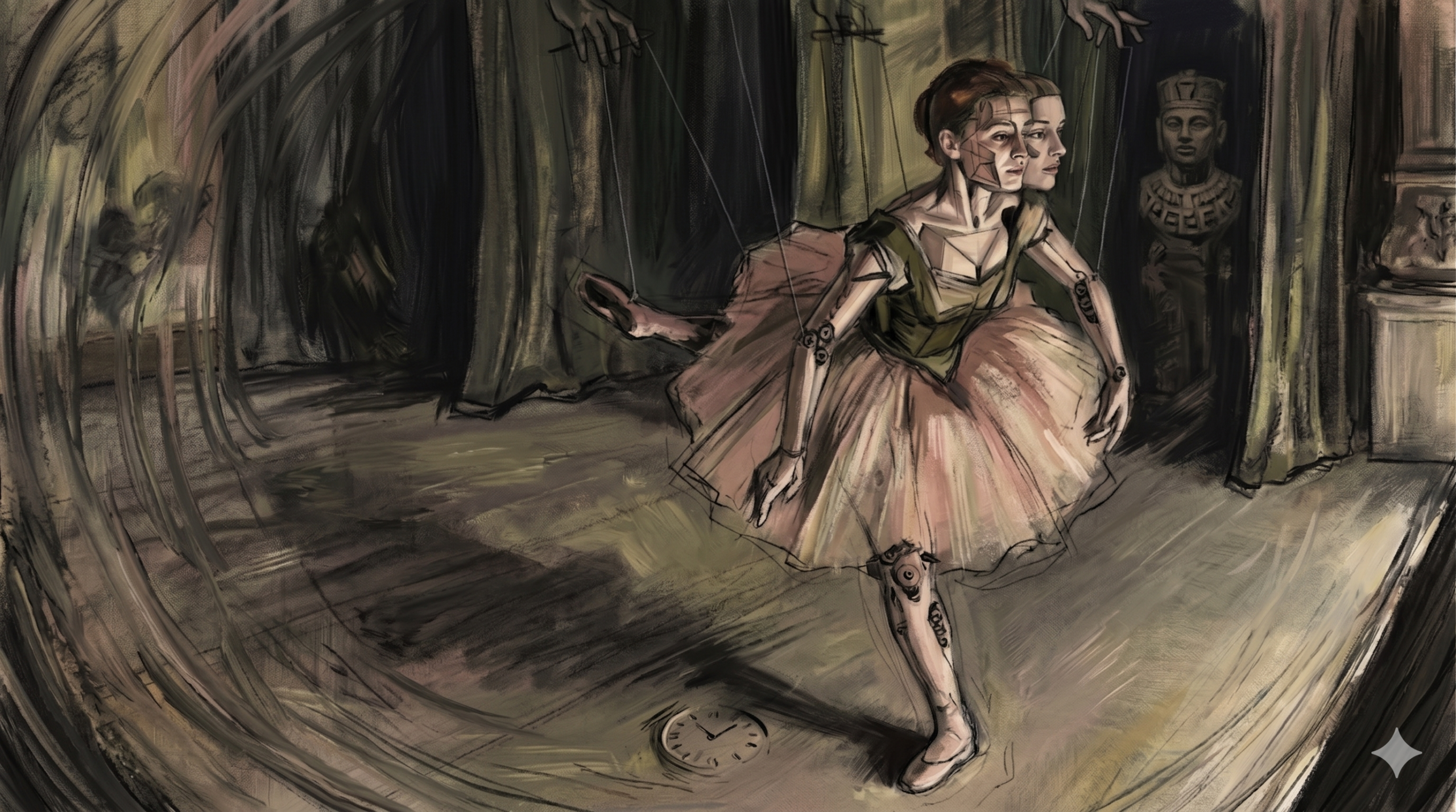
Not Inner Work. Structural Work.
More specific, and more useful, than conventional self-inquiry
This section is not asking you to talk to a voice inside your head. It is not inner child work. It is not spiritual communication. It is not a visualization exercise.
It is something more specific: the deliberate examination of a command you have been following without knowing you received it.
You did not write these commands. You did not agree to them. But you have been following them.
The work of this section is to bring each command into conscious examination and ask, clearly and without anger: "Is this actually true? And if it is not, who decided it was?"
Interrogation, Not Rebellion
The difference between these two is everything in this kind of work
When Ibrahim examined the idols his father made, he did not immediately destroy them. He first asked questions.
"Do these hear you when you call?" "Do these help you when you need them?" "Do these see what is actually happening, or only what they were carved to see?"
This is interrogation, not rebellion. The difference is important.
Rebellion reacts to the idol. Interrogation examines it. Rebellion needs the idol to exist as something to fight. Interrogation dissolves the idol by exposing what it is actually made of.
When you interrogate an inherited command, you are not attacking your parents, your culture, or your past. You are simply asking: "Does this command serve me, or does it only protect what was familiar to whoever installed it?"

The Four Components of an Azar Command
Once you can see the components, the command loses much of its power
The Rule
The command itself. Usually absolute. Usually short.
- "Don't trust easily."
- "Stay small so others feel comfortable."
- "Never show that something hurt you."
The Original Logic
Why this rule made sense in a specific context, at a specific time, for a specific person. Most Azar commands were not invented arbitrarily. They were survival strategies for someone, somewhere, at some point.
- A parent who grew up in scarcity: "Never expect too much."
- A family that survived conflict: "Stay invisible."
- A culture maintaining order: "Respect hierarchy, always."
The command had logic. Once. In a context that may no longer exist.
The Current Cost
What following this command costs you now, in the life you are actually living. This is the part Azar never shows you. Because Azar was not designed to calculate your current cost. It was designed to execute its original function.
The Question
The interrogation itself:
"If I had written this rule myself, based on my own experience, my own observation, my own values, would I have written the same one?"
If yes: the command may still be valid. If no: it is an inherited idol, not a chosen principle.
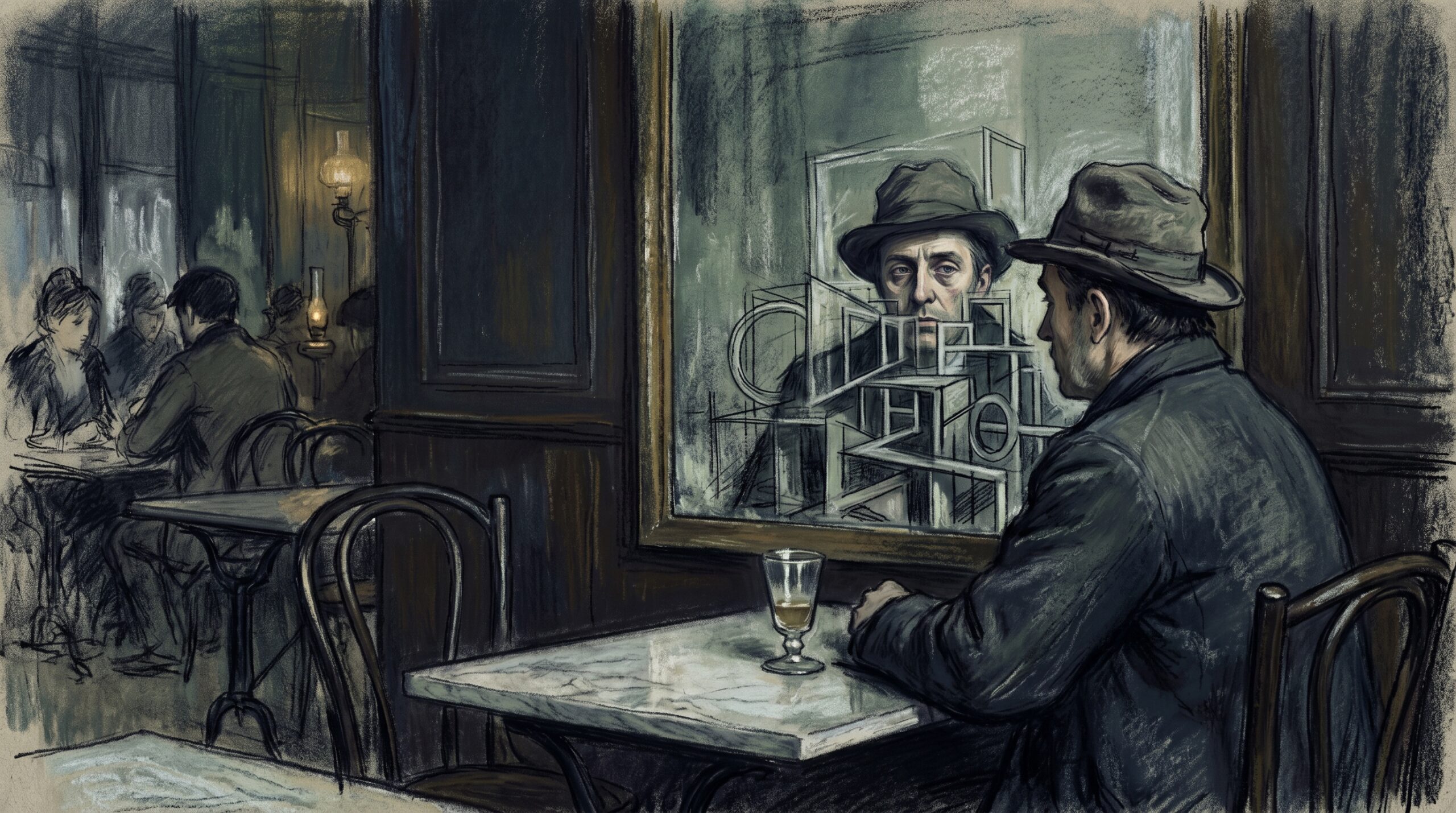
The Command Examination
This exercise works with one Azar command at a time
Choose a pattern from Section Two, one of the areas where you marked O or A most consistently. Then work through the four components in writing.
Exercise Five
The Command Examination
Written examination of a single inherited command, using all four components.
Step One
Name the Rule. Write the command in its simplest form. Not a paragraph. Not an explanation. One sentence. Direct. As if it is giving you an order.
- eg."Never let them see that it affected you."
- eg."Always be the one who gives more."
- eg."You do not deserve attention unless you have earned it."
Step Two
Find the Original Logic. Ask: "Where did this come from? Who lived by this rule, and why did it make sense for them?" You may not know the exact origin. That is acceptable. What you are looking for is the survival function this command once served. Write what you find, even if it is partial, even if it is a guess.
Step Three
Calculate the Current Cost. Ask: "What does following this command cost me now?" Be specific. Not abstract.
Not: "It limits me." But: "It means I do not ask for help when I need it, which means I carry things alone, which means I arrive at exhaustion and call it strength."
Step Four
The Interrogation. Ask the command directly: "Are you still serving me, or are you serving a version of my life that no longer exists?" Write the answer. Not the answer you want. Not the answer that sounds evolved. The honest answer.
What This Actually Produces
Most people expect immediate freedom. What arrives instead is more valuable.
Most people expect this moment to produce immediate freedom. It does not.
What it produces is something more valuable: clarity.
You will not instantly stop following the command. Azar's patterns are not removed by understanding alone. But something changes. The command is no longer invisible. It is no longer you. It is something you received, something you can now examine, and something you can, with time and repetition, choose not to execute.
The idol is not destroyed in one conversation. Ibrahim's process was not a single afternoon. But the questioning itself, done honestly, is where the process begins.
What This Is Not
Defining the frame keeps the work clean
This is structural work. You are examining the architecture of your inherited operating system, identifying which commands are still functional and which ones are running on old logic in a new world. That is all. And that is enough.
In Section Five, we move from examination to interruption. You will begin to see how to pause the pattern before it completes, not through willpower, but through a specific sequence that works with the way Azar actually operates.