 IMRA'AT LUT · Introduction
Introduction
IMRA'AT LUT'S ROOM
The Part That Sees and Is Governed Elsewhere
She was not blind. She was not ignorant. She was not weak. She saw everything and was still governed elsewhere. That gap between what the eyes carry and what the system obeys is the room.
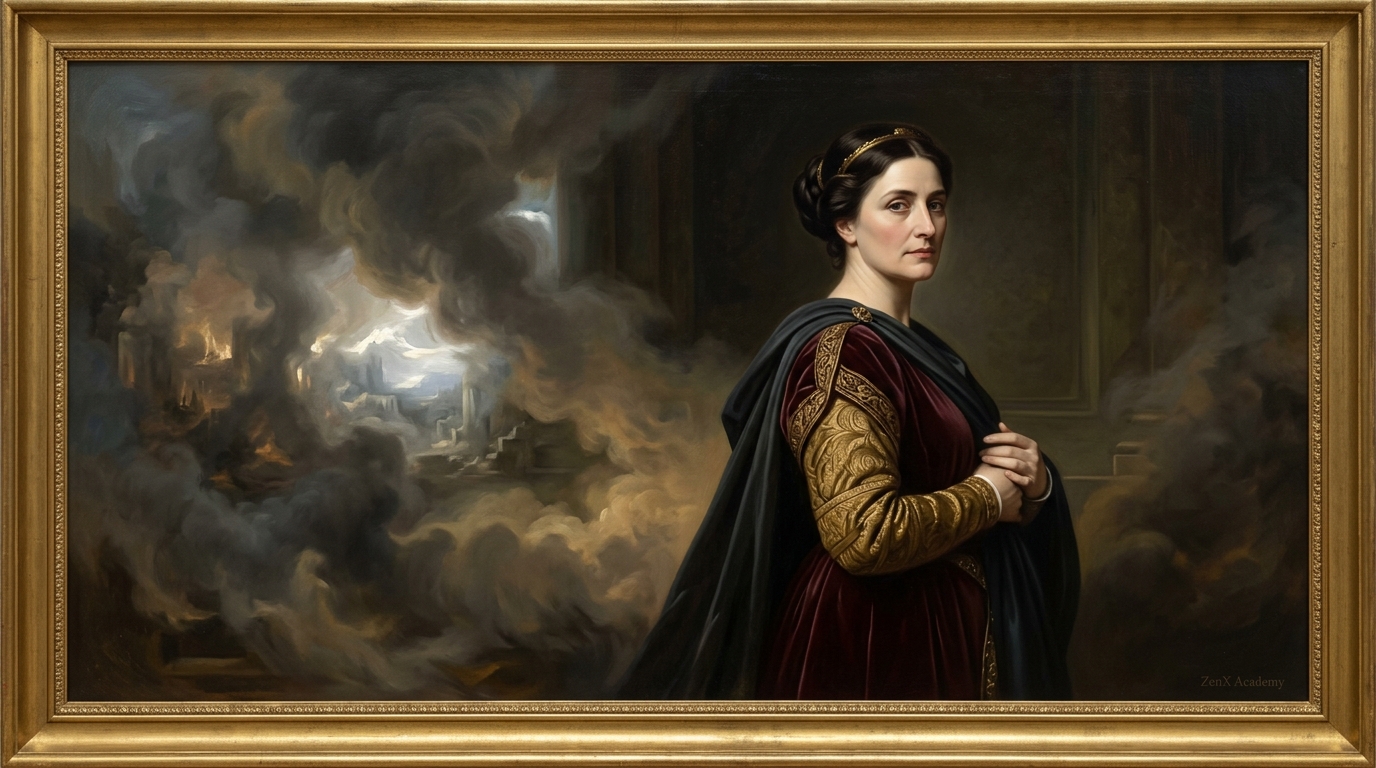
She Was Not Blind
The clarity of vision and the mystery of allegiance
She was not blind.
She saw what was coming. She was told directly, clearly, without ambiguity: move forward, do not look back.
She was not ignorant. She lived inside the mission. She walked beside the one who carried it. The instruction was not hidden from her. It was issued to her.
She was not powerless. She made a choice. A full, functional, deliberate choice. And she looked back.
This is not a story about someone who did not know.
It is a story about someone who knew and was still governed by something else.

The Question That Opens This Room
Beyond the familiar answers
Most frameworks built around inner change ask a version of this question: Why don't you act on what you know?
And the answers they offer are familiar. Fear. Trauma. Habit. Resistance. Conditioning. The comfort of the familiar. The weight of the past.
These are real. But they are not where this room begins.
This room begins with a more precise question.
What inside you holds vision and still refuses to be governed by it?
Not: why can't you see? You can see.
Not: why don't you understand? You understand.
But there is something that sees, understands, and still operates under a different authority. That something is what this room is called to examine.
What "Imra'at" Actually Means
The architecture of allegiance
The word carries its own architecture.
Imra'at, in its Quranic structure, does not simply denote a person. It describes something that receives and executes commands from a particular source. It is, at its root, a system of allegiance. Whatever takes its orders from a given authority.
Imra'at Lut is therefore not primarily a historical figure.
It is the name for a specific operational pattern:
The part of a system that has full access to the vision and still takes its orders from somewhere else.

The Structure of the Problem
Proximity without jurisdiction
Look at the Quranic presentation carefully.
She was under two righteous servants of God. Not distant from them. Not ignorant of them. Not opposed to them in principle. Beneath them. Beside them. Inside the same mission.
And she betrayed the trust.
Not through attack. Not through rebellion. Not through loud opposition. Through a single movement: looking back at what was supposed to have been left.
The betrayal was not ideological.
It was a matter of where authority ultimately resided.
The movement of the body told the truth that the proximity had concealed.
I am still governed by what we were told to leave.
The Divided Interior
The structural condition of modern consciousness
Every person who has worked seriously on themselves knows this experience.
You understand something fully and continue living as if you had not. You see that a relationship has ended and remain in it. You know that a belief no longer holds and still organize your life around it. You recognize that a direction is wrong and keep moving in it.
You have the vision. Clearly. You cannot pretend otherwise. And something else is in charge.
This is not weakness. It is not failure. It is not a character flaw.
It is a structural condition. A divided interior in which vision and authority have come apart.

You see from one place. You are governed from another. And the distance between those two places is exactly what this room is built to examine.
What This Room Will Not Say
Beyond behavioral instruction
This room will not tell you to trust the process. It will not tell you to let go of the past. It will not tell you to stop self-sabotaging.
These instructions address behavior. They stand outside the structure and command it to change. They almost never work. Not because the advice is wrong, but because they address the output of the divided interior without touching the division itself.
What this room will do is something different.
It will show you, specifically, how the division operates. Where the counter-authority resides. What it protects. How it issues its commands.
And what it actually takes, not as motivation or willpower or effort, to grant a different authority the right to govern.
The Central Claim
Seeing is not the same as serving
Seeing is not the same as serving.
You can see truth completely, hold it clearly, describe it accurately, teach it to others. And still be governed by something else.
Imra'at Lut is not the part of you that does not know. She is the part that knows and whose allegiance is elsewhere.
And allegiance, unlike knowledge, cannot be transferred by understanding alone. It requires something this room will spend ten sections approaching.
The act of granting jurisdiction.
Not just seeing what is true. But allowing what is true to become what governs you.
The question this room asks is not what you know. It is not why you do not act on what you know.
It is this: What currently holds governing authority inside your system, and how did it come to hold it?
Because the answer to that question is not found in the vision. It is found in what the vision has, and has not, been permitted to command.
She was not blind. She was not ignorant. She was not weak. She saw everything and was still governed elsewhere. That gap between what the eyes carry and what the system obeys is the room.
Imra'at Lut · Introduction
Psychological Architecture · ZenX Academy