 HAMAN · Section Six
Section Six
The Hidden Commands
The first sentence that appears after a question is usually not your conclusion
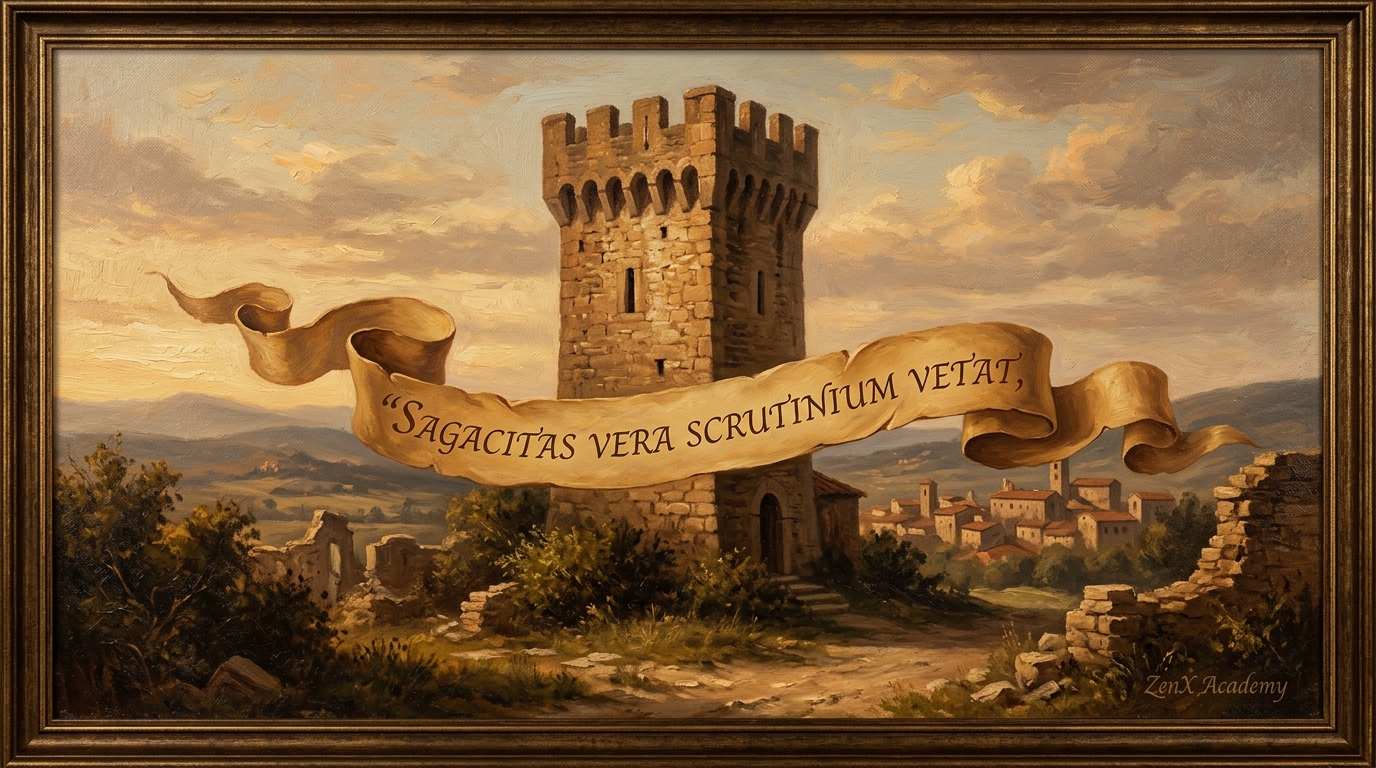
The tower does not announce itself. It does not say: this question threatens me. It does not say: do not proceed. What it produces instead is something quieter, faster, and much harder to catch: a sentence. A single sentence — or sometimes just a phrase — that appears between the question and your engagement with it.

Not a Refusal. Not a Defense.
Just a redirect
Not a refusal. Not a defense.
Just a redirect.
The first sentence that appears after a question
is usually not your conclusion.
It is your instruction.
What a Command Looks Like
Before we name them, a clarification is necessary
The mind produces redirective sentences constantly,
and most of them are not Haman.
- "Not now — I'm tired" is not Haman. It is tiredness.
- "I need more information before I can think about this" is not Haman. It is sometimes accurate caution.
- "This isn't the right moment for this question" is not Haman. It is sometimes genuine discernment.
The hidden command is a specific type of redirective sentence.
It has a precise diagnostic signature:
It appears immediately after a question approaches the foundation — and it functions specifically to prevent examination of the foundation.
Not examination of the content.
Not examination of a specific claim.
The foundation itself. The ground the tower stands on.
That is the threshold.
The Signature of a Hidden Command
One or more of the following features
- It arrives before thinking begins.
The sentence is already there before you've had time to evaluate the question. It doesn't feel generated. It feels obvious. - It redirects to a different subject.
Not: "that question has no answer." But: "that question is not the real question." Or: "the real issue is something else entirely." - It carries a slight moral charge.
The redirect doesn't just change direction. It makes the original direction feel slightly improper. Simplistic. Disloyal. Naive. Untimely. Dangerous. Ungrateful. - It comes with no examination of itself.
The command doesn't invite scrutiny. It arrives with the texture of common sense. It feels like the thing any reasonable person would think.
The Forms of the Command
The hidden commands organize into three basic forms
Redirection
"That's not really the issue." / "The real question is something else."
Substitutes a different subject for the one approaching the foundation.
Deferral
"This isn't the right time." / "You need more context first."
Preserves the question in principle while ensuring it never arrives in practice.
Delegitimization
"You're oversimplifying." / "You don't understand the full context."
Removes the questioner's standing before the question can be examined.
Everything else is a variant of one of these three.
There is a fourth form that appears almost exclusively
in practiced, intelligent readers:
Familiarity Mistaken for Examination
"I've already thought about this."
Not because examination happened. Because the question feels known.
The tower sometimes has no defense stronger than this —
because the reader genuinely believes the gate was already opened,
when in fact it was only labeled.

What Makes the Command Hidden
None of these sentences, read in isolation, sounds like a defense mechanism
None of these sentences, read in isolation, sounds like a defense mechanism.
They all sound like wisdom.
Practical. Measured. Mature.
And this is not an accident.
The hidden command is effective precisely because it sounds like discernment.
- The Belonging Tower doesn't say: do not ask this because it threatens your membership. It says: a person who truly understood this community would know why this question is beside the point.
- The Suffering Tower doesn't say: do not examine this because it reorganizes your identity. It says: what you're really asking is why people don't just move on. And you should think carefully about what that means.
- The Achievement Tower doesn't say: do not question this because too much is invested. It says: this is not the time for theoretical discussions. There is real work to be done.
The command borrows the language of maturity.
And this is how Haman remains invisible.

The Diagnostic Test
Not a definitive test — but a useful one
Because these sentences can be either genuine discernment
or hidden commands, a test is needed.
Not a definitive test. Haman is not defeated by single observations.
But a useful one:
Ask: what is this sentence directing attention away from?
If the answer is a specific piece of external content —
a fact, a claim, a logistical concern —
the sentence is probably not a hidden command.
If the answer is the process by which this area became unexaminable —
then you are looking at a hidden command.
The command is always about direction, not content.
It doesn't say: that claim is false.
It says: looking in that direction is not productive.

What the Command Protects
It is not the tower — it is the first architectural response
Return to what we established in Section Five:
The tower is not protecting content.
It is protecting against a specific exposure —
the moment a framework becomes visible as a framework.
The hidden command is what prevents that moment from happening.
It is not the tower.
It is the first architectural response to a threat approaching the tower.
Which means: catching it does not require dismantling the tower.
It requires only noticing that a sentence appeared —
before the question was examined —
whose function was to close the examination before it opened.
Return to Section Four for a moment.
The gap was defined as the space between the question's arrival and the architecture's response.
The hidden command is usually what closes it.
Not a wall. Not a refusal.
A sentence that sounds like wisdom — and arrives before thinking begins.
Exercise: One Command in Forty-Eight Hours
Precision over frequency
The Requirement
This exercise has a single requirement: precision over frequency.
You are not looking for every redirect your mind produces.
You are looking for one — one sentence that meets the diagnostic criteria:
It arrived after a question that moved toward a foundation.
It redirected before examination began.
It carried, however faintly, the texture of wisdom rather than avoidance.
When You Find It
Write it down exactly as it appeared. Not paraphrased. The actual sentence.
"The sentence was:"
Then write:
"The question that preceded this was:"
Then write:
"This sentence was directing attention away from:"
What You Are Not Asked to Do
You are not asked to override the command.
You are not asked to answer the question it closed.
You are asked only to see it — clearly, once —
as a command rather than as common sense.
That is sufficient for this section.
A Note on False Positives
Not every redirect is Haman
Not every sentence that defers, redirects, or closes a question is Haman.
Some redirects are wisdom.
Some deferrals are accurate timing.
Some closures are genuine saturation.
The test is not: did a redirect happen?
The test is: was the redirect protecting examination — or preventing it?
A sentence that says look more carefully is not a hidden command.
A sentence that says don't look there — especially when there is the foundation — is.
The tower doesn't need force. It only needs a sentence that arrives before the question does.
Section Seven examines the specific cost of genuine examination — not the cost the tower announces, but the actual cost, and why it is both less and more than what the architecture prepares you for.