 HAMAN · Section Seven
Section Seven
What Examination Makes Possible
This section is not about demolition
The tower may still be standing at the end of this section. The commands may still arrive. The architecture may remain exactly as it was. What changes is something more precise — and in some ways, more significant.
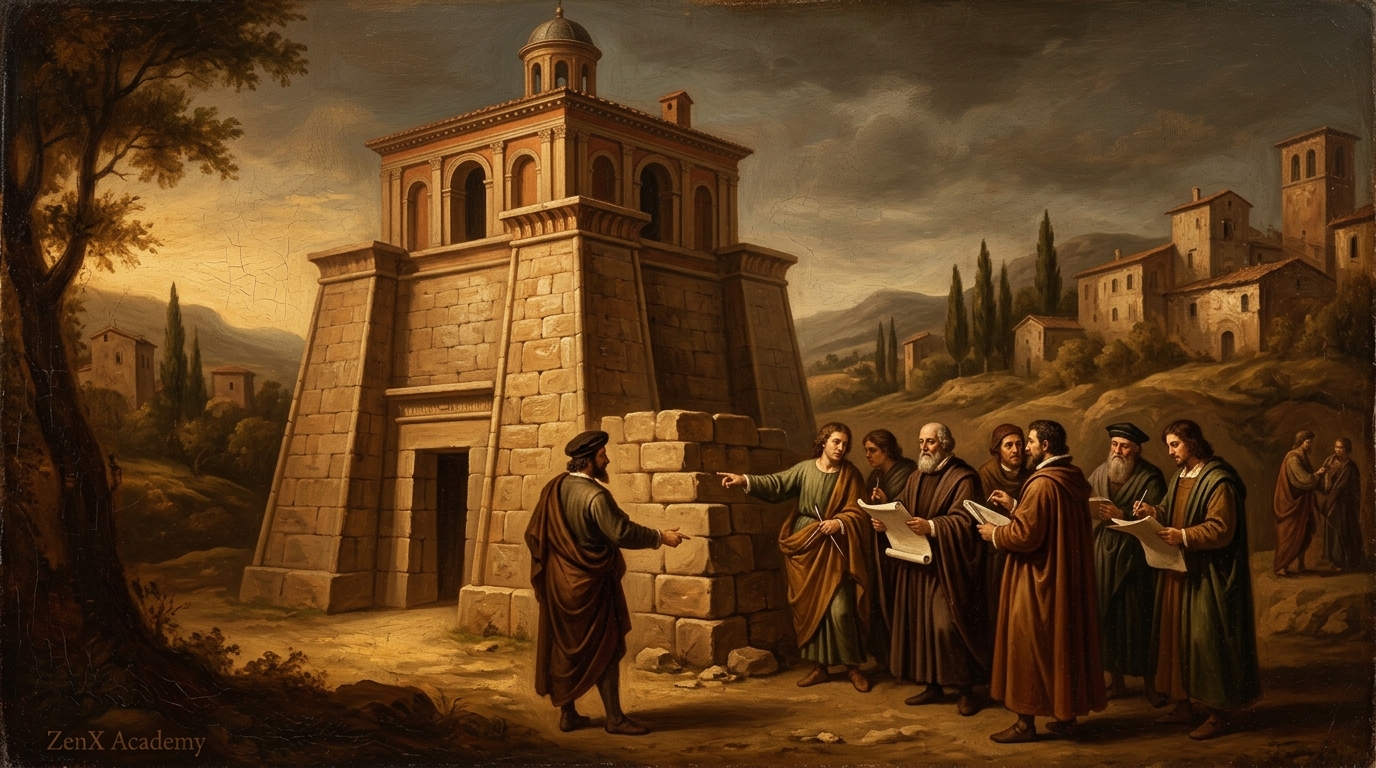
What Recognition Actually Does
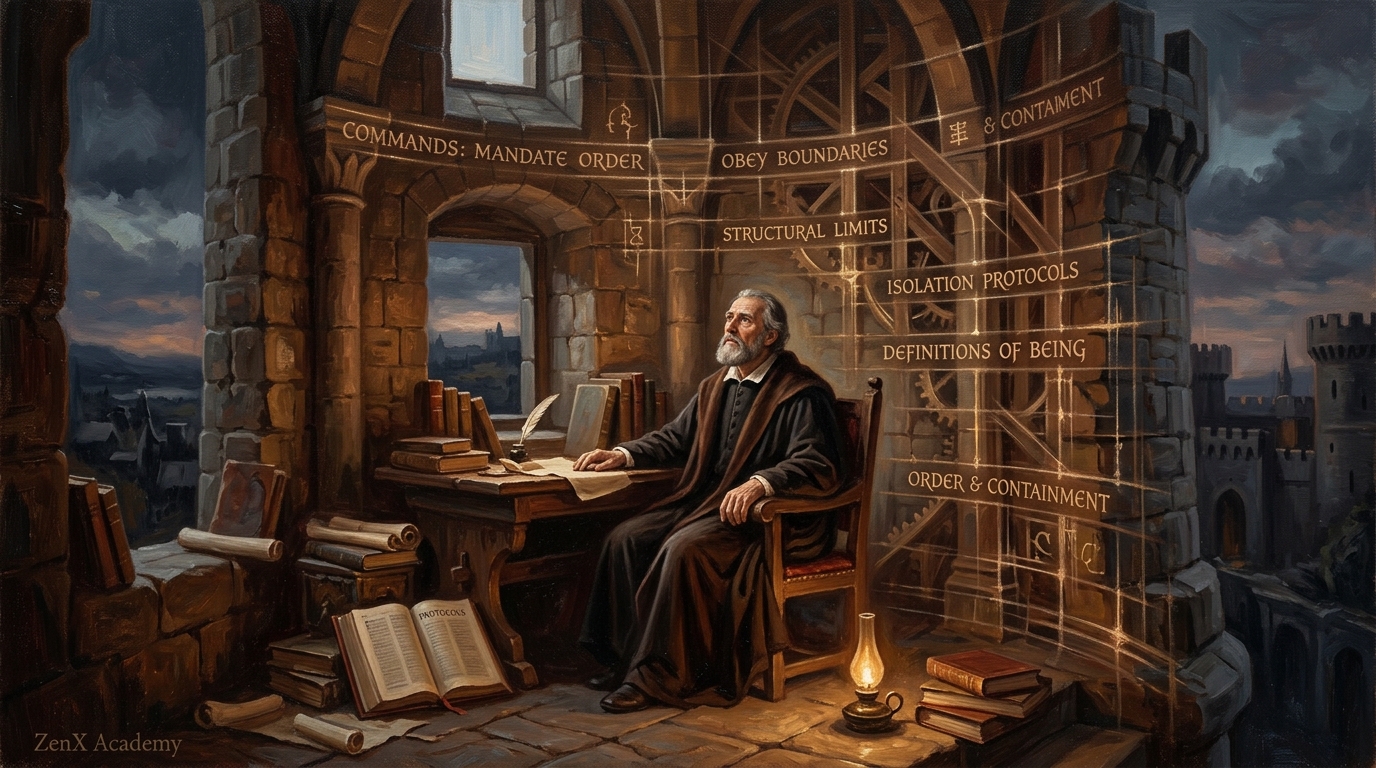
Not freedom from the command — a moment between the command and compliance
When a hidden command is seen clearly —
not analyzed, not fought, not overcome,
but simply seen —
something specific becomes available.
Not freedom from the command.
A moment between the command and compliance.
That moment did not exist before recognition.
Before recognition,
the command and its execution were a single event.
You did not decide to redirect.
The redirect simply happened.
After recognition, they become two events.
The command arrives.
And then — briefly, sometimes uncomfortably —
there is a space in which something other than
automatic compliance is possible.
This is not transformation. It is not liberation.
It is the restoration of a faculty that the tower had been operating without.
What Does Not Follow From This
Recognition does not mean what the tower fears it means
- Recognition does not mean the question must be pursued.
- It does not mean the tower is wrong.
- It does not mean the foundation will not survive examination.
- It does not mean the redirect was always dishonest.
Some questions, examined fully,
will confirm what the tower was protecting.
Some foundations, looked at directly,
will prove to be solid.
Some redirects, held up to light,
will turn out to be genuine discernment.
The point is not what examination finds.
The point is that examination became possible.
The Two Outcomes of an Examined Tower
When a tower is examined rather than simply inhabited
When a tower is examined rather than simply inhabited,
one of two things tends to happen.
First: the tower changes form.
Not collapses. Changes.
The same core — the identity, the belonging, the history,
the authority, the achievement — remains.
But the architecture through which it is held becomes different.
Less defensive. More transparent to itself.
The thing that was held by protection
begins to be held by understanding.
And understood things are held more stably than protected things.
Because what you've actually examined, you actually possess.
What you've only defended, you've only managed.
Or: second — the tower is recognized as having been built
around something that no longer needs a tower.
Not because the original thing was false.
But because the person has become capable of holding it
without requiring the examination to stop.
This is a different kind of strength than the tower provided.
The tower's strength came from the commands.
This strength comes from having looked.
The Specific Freedom This Produces
Freedom is not the absence of towers
Freedom is not the absence of towers.
A person without towers is not a person with greater clarity.
It is a person with less structure
than their actual life requires.
The freedom that examination produces is different:
The tower becomes visible to the person who lives inside it.
This means:
- The commands can be heard as commands, not as common sense.
- The foundation can be approached when there is reason to approach it.
- The architecture can be recognized without requiring it to fall.
And most importantly —
the question of whether the tower should stand
can be asked by the person the tower was built to protect.
Not by an outside voice.
Not by a challenge.
By the resident.
That is the shift.
Not from tower to no tower.
From unconscious inhabitant to someone who can examine what they live in.
Solomon's Architecture
The Quran gives us two builders in proximity
The Quran gives us two builders in proximity.
Fir'aun commissions Haman to build a tower toward the sky.
Solomon builds a palace of glass.
The difference is not the material.
It is not the height.
It is not even the purpose.
The difference is what happens when something moves through it.
Haman's tower is opaque from the inside.
It is designed so that looking at it from within
produces the experience of looking at reality.
The frame disappears. Only the view remains.
Solomon's architecture is different.
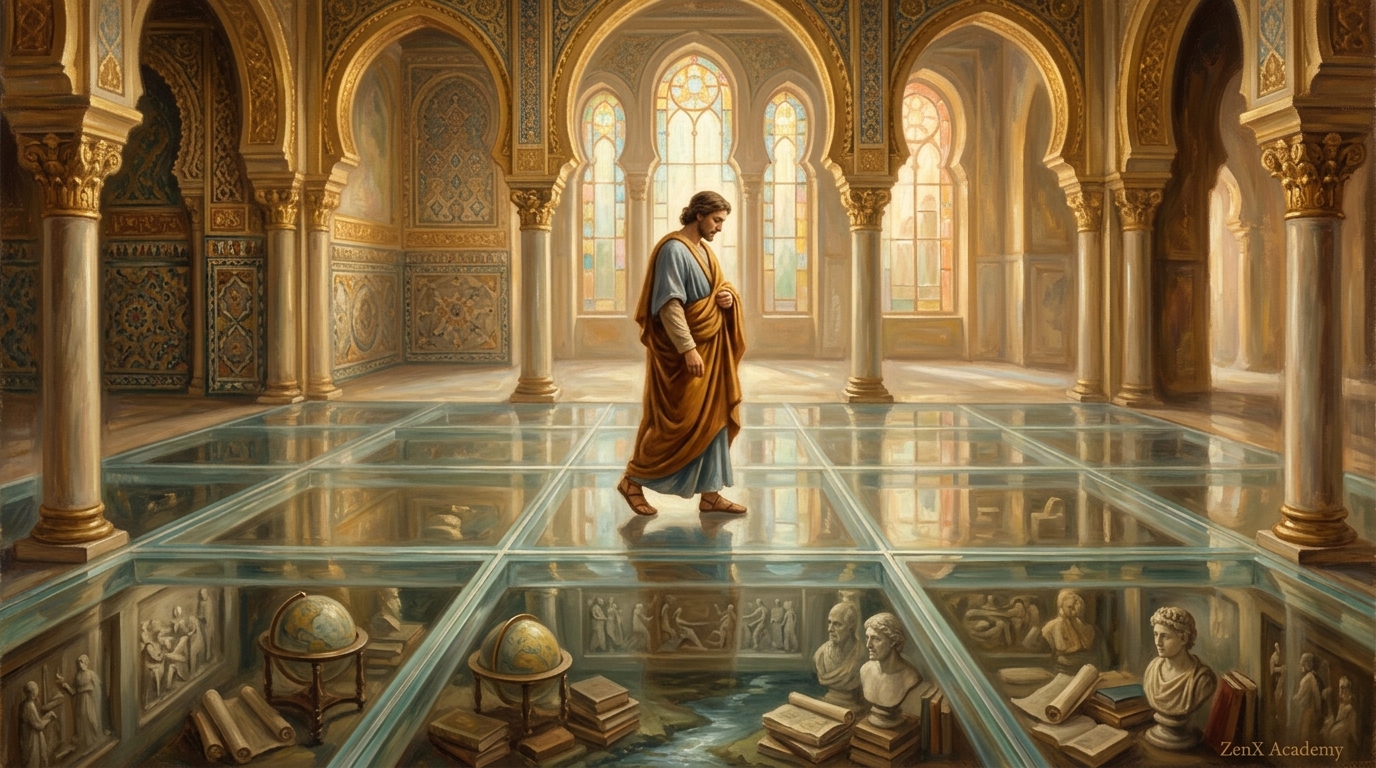
The Queen of Sheba walked across the floor of glass
and thought she was entering water.
She could see through it. But she could not yet read it.
She had to be told: this is crystal.
And then — having been told —
she could walk across it and see it simultaneously.
She could inhabit the architecture
and see it as architecture.
That is the movement this room has been building toward.
Not the destruction of the palace.
The ability to see the floor you are walking on.
Exercise: The Tower After Examination
Return to the tower you identified in Section Five
The Return
Return to the tower you identified in Section Five.
You wrote:
What it announces it protects.
What it is actually protecting against.
The distinction between the thing itself and the architecture holding it.
Now Add One Line
Now add one line:
If I could examine this fully — and the examination went somewhere I didn't expect — what would I want to still be standing when it was over?
Not: what do I fear losing?
But: what do I actually want to keep?
Why This Question
Because that question — asked genuinely, from inside the tower —
is the beginning of owning the structure
rather than being owned by it.
Freedom is not the absence of towers. It is the capacity to examine what you're living in — and to ask, for the first time, whether you built it or it built you.
Section Eight brings the series to its close — not with a final argument, but with a question about what remains when the architecture has been seen, and what kind of person is left standing after the tower has become visible.