 HAMAN · Introduction
Introduction
The Architect of the False Tower
Understanding the Function That Holds All States Together
Why the palace returns after being seen, and what was missed
Fir'aun does not say "I will build the tower." He says to Haman: "Build it for me." That command reveals everything.
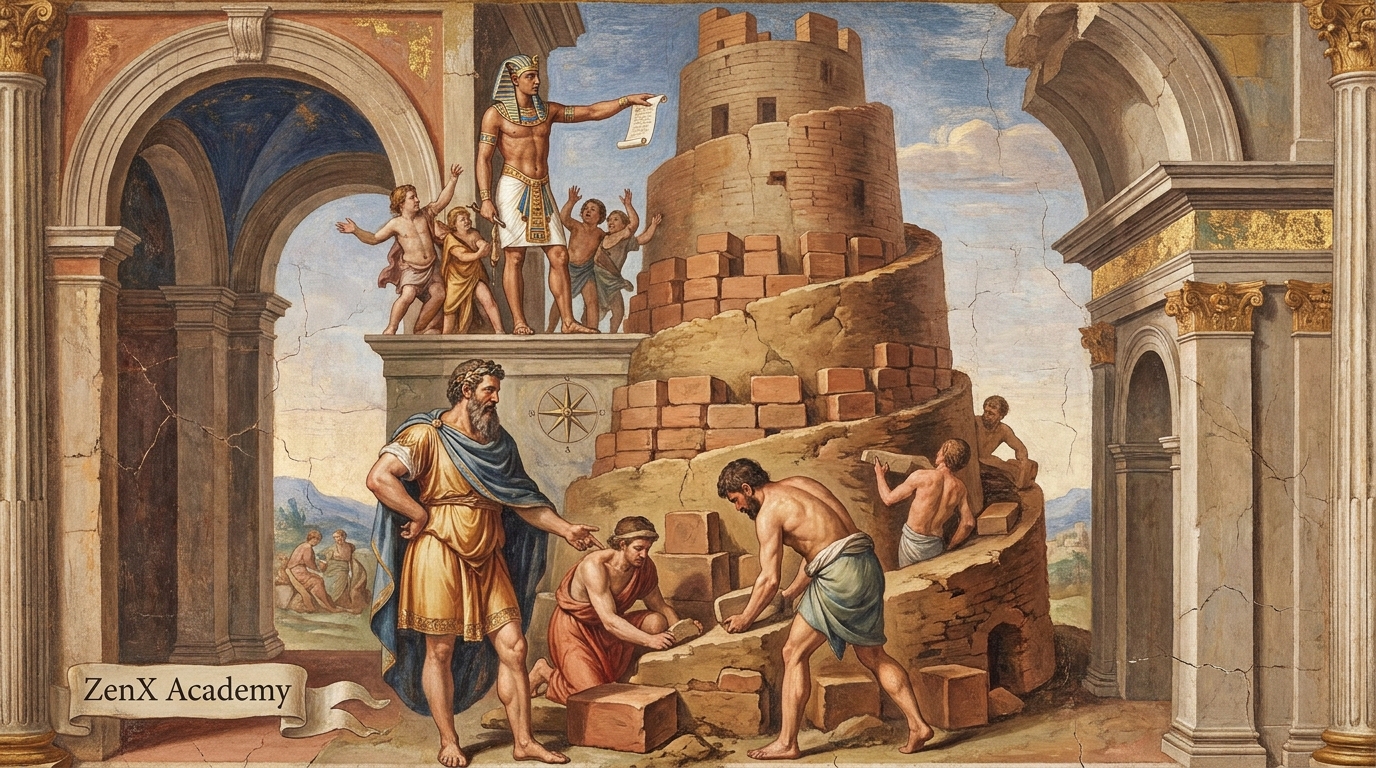
Why This Command Reveals Everything
Fir'aun is visible. Haman is never seen.
There is a reason Fir'aun does not say to himself:
"I will build the tower."
He says to Haman:
"Build it for me."
This command reveals everything.
Fir'aun is visible.
He speaks. He claims. He declares.
You can hear him.
You can challenge him.
You can, with sufficient clarity and courage, say:
"That is a claim, not a truth."
And at that moment,
when the claim is finally seen as a claim,
Fir'aun is, as it has been said,
just a man who shouts.
Haman is different.
Haman is never seen.
He does not claim.
He does not declare.
He does not even speak much.
He builds.
And what he builds
is the world inside which Fir'aun's claim
does not feel like a claim at all.
It feels like the structure of reality.
Before Bodies Clash, Ideas Must Fall
The structure that makes power feel like the natural order
The soldier doesn't move without a motive.
The motive doesn't hold without a structure.
The structure doesn't stand without a builder.
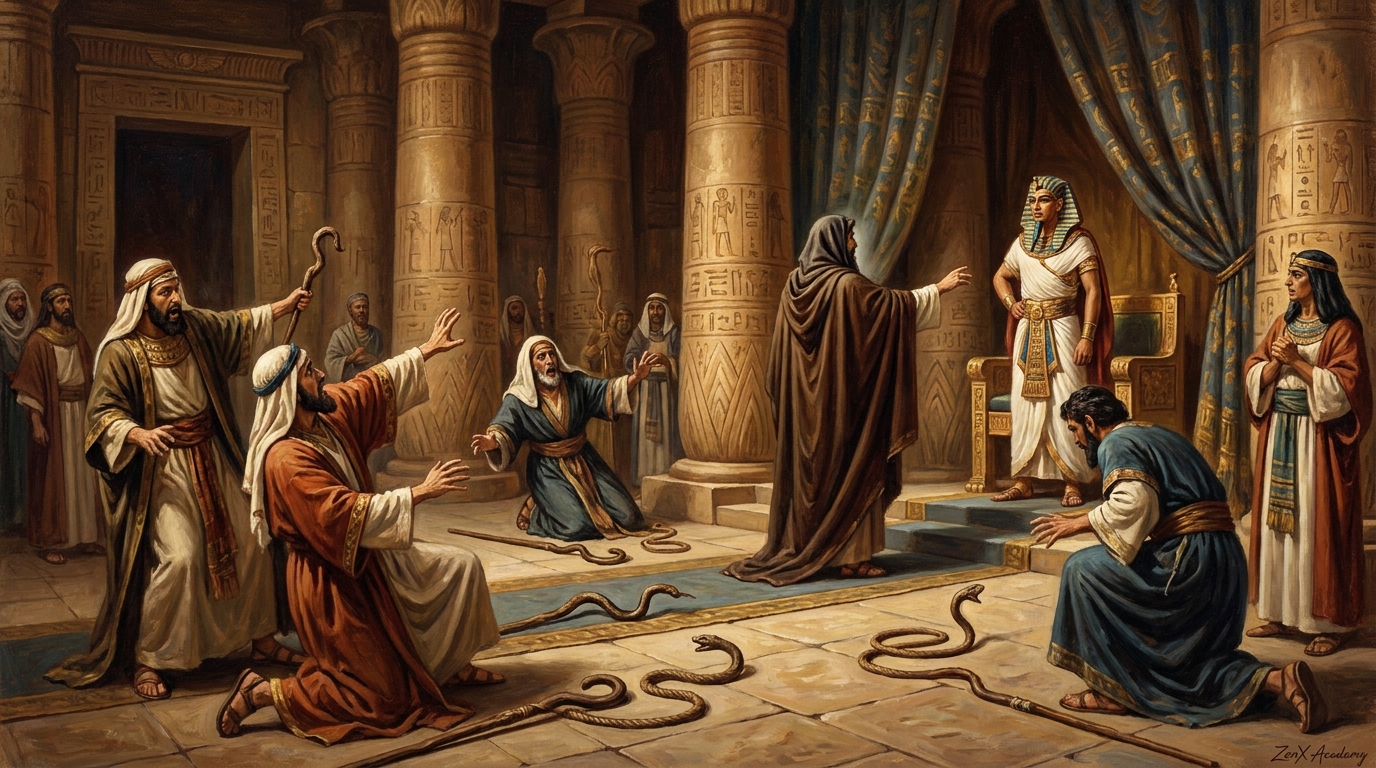
When Moses challenged Fir'aun in public,
on the day of adornment, before the crowd,
what he was actually dismantling
was not Fir'aun's authority.
It was Haman's architecture.
The illusion that the magicians' ropes and sticks
were more than ropes and sticks.
The structure that made the palace's power
feel like the natural order of things.
When that structure fell,
when the illusion became visible as illusion,
the magicians themselves fell to their knees.
Not because Moses overpowered them.
Because Haman's tower had been made visible.
And a tower that is seen as a tower
is no longer the structure of what is.
Why This Room Comes After Fir'aun
The question Section Eight did not fully answer
After Section Eight of Fir'aun's room,
after genuinely recognizing the palace,
something strange happens.
The palace returns.
Not immediately.
But within days, weeks, or months:
the framework that was held as a framework
begins again to function as reality.
The question,
"Is this my seeing or is this what is?",
becomes less available.
And the question that Section Eight did not fully answer is:
Why?
Because you saw the certifier, but not the architect.
You saw Fir'aun. You did not yet see Haman.
You saw the claim. You did not yet see the construction that makes the claim feel self-evident.
This room is about Haman.
What Haman Is Not
Before the mechanism is described
Haman is not:
- The illusion itself
- The vanity itself
- The grandiosity itself
- The control itself
These are his materials.
They are what he works with.
Haman is the function that takes these materials
and builds something that looks like access to truth
but is constructed entirely from earth.
- The clay becomes the tower.
- The susceptibility becomes the sacred structure.
- The ordinary human desire for coherence and meaning becomes the thing that is beyond examination.
Section One maps the function itself: what Haman actually does, how the construction operates, and why it is the most difficult structure to see from inside.