 IMRA'AT AL-AZIZ · Section Ten
Section Ten
What the Room Leaves You With
Not a resolution. A capacity.
The house is still there. Something in the quality of the encounter has changed. That familiarity, small and imperfect, is what the room actually produced.
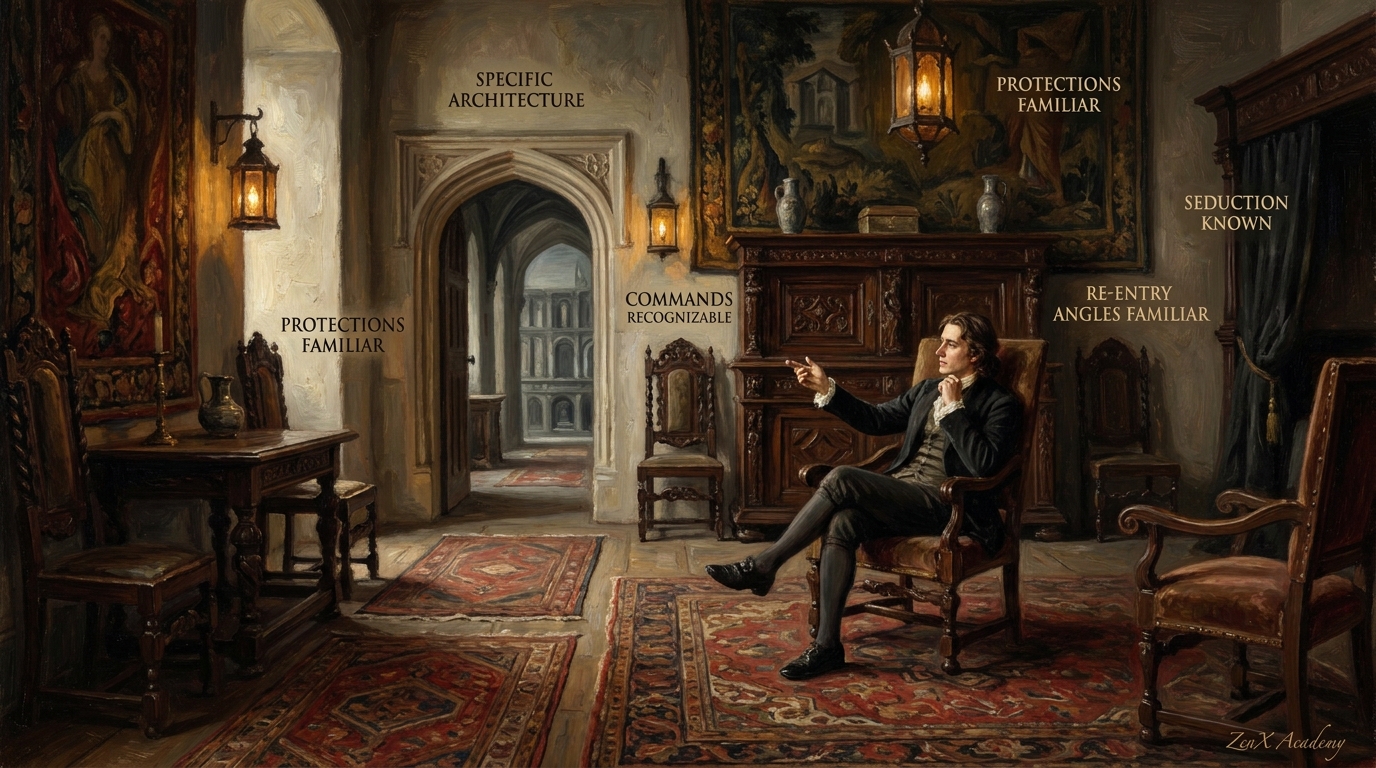
What Has Not Changed
And this is not a failure of the room
The house is still there.
The commands still produce their language.
The seduction still knows your vocabulary.
The re-entry still finds its angles.
The borrowed authority still arrives in the language of the work.
None of this has been removed.
And this is not a failure of the room.
The room was not designed to remove the house.
What Has Changed
Something in the quality of the encounter
Early in this work,
before the room had any language for what was happening,
the house was indistinguishable from reality.
The commands felt like observations.
The reinterpretation felt like thinking.
The seduction felt like wisdom arriving at exactly the right moment.
The closing of the doors felt like the neutral arrangement of things.
After the work of this room:
The house has become recognizable as the house.
Not always immediately.
Not in every domain.
Not without re-entry and recovery.
But with a frequency and an earliness
that were not available before.
The specific architecture,
its protections, its commands, its preferred forms of return,
is familiar now in a way
that changes how long it can operate without being noticed.
And that familiarity,
small, accumulated, imperfect,
is what the room actually produced.
The Yusuf Capacity
What the room was building toward
This is what the room was building toward.
Not a person.
Not a moral achievement.
Not the state of someone who never re-enters the house.
A capacity:
The capacity for directed movement toward clarity
before negotiation reshapes what the movement means.
This capacity is not always present.
It develops through the specific practices this room described:
- Locating the clarity before the conversation.
- Naming the first sentence of reinterpretation.
- Recognizing the house closing its doors.
- Refusing the table without refusing the thinking.
- Holding the reference point while the commands are running.
- Recovering contact with the clarity after re-entry.
Each cycle of this practice,
each encounter with the house that ends with recovery
rather than permanent capitulation,
deposits something.
Not a skill in the conventional sense.
A recognition.
The recognition of what your specific house sounds like
from a position slightly outside it.
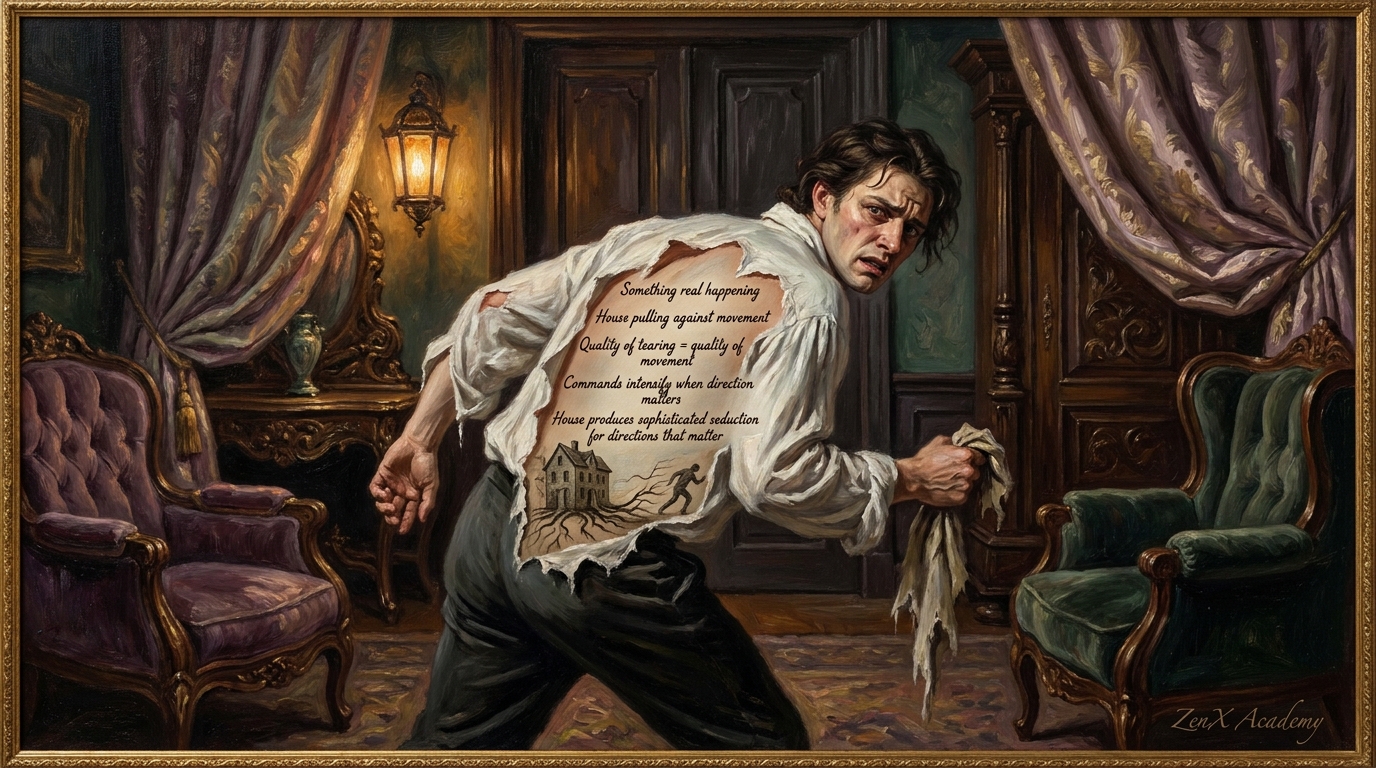
What the Shirt Reveals in the End
The quality of the tearing
The shirt tears from behind.
Not because Yusuf was weak.
Because something real was happening,
something that the house was pulling against.
The quality of the tearing
is sometimes the most accurate information available
about the quality of the movement.
When the commands intensify,
when the borrowed authority arrives most convincingly,
when the house closes most completely,
that intensity is often the most reliable evidence
that the direction was real.
Not every resistance means the direction is right.
But the house does not produce its most sophisticated seduction
for directions that do not matter.
The shirt tears because something is moving.
And the movement, imperfect, costly, not free of the house's pull,
is what the Yusuf capacity produces.
A Final Note on the House
It was not built maliciously
The house was not built maliciously.
It was built by you,
over time,
in response to real things.
Real uncertainty. Real protection required. Real arrangements needed.
The commands formed because something needed protecting.
The seduction runs because something genuinely preferred
stability to exposure.
The house is not the enemy.
It is the arrangement that formed
before you had access to the reference point you have now.
Working with it does not require its destruction.
It requires only: the capacity to recognize when you are inside it, to find the reference point that exists outside it, and to move from that reference point, however slowly, however imperfectly, toward the clarity that was present before the negotiation began.
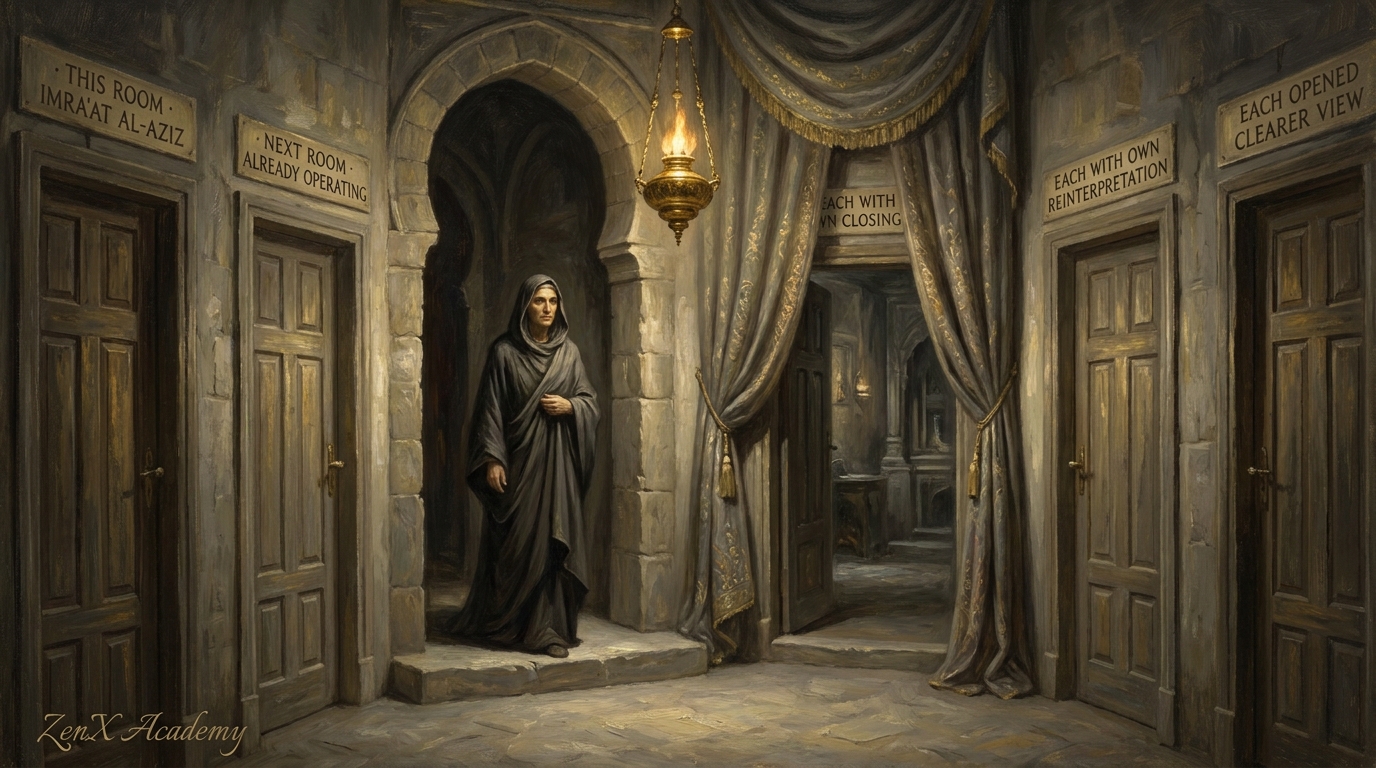
The Architecture Is Larger
This room addressed one state
This room addressed one state.
The seduction that runs from inside.
The voice that knows your language,
uses your history,
and arrives at exactly the threshold
where clarity would otherwise become action.
There are others.
Each with its own architecture.
Each with its own form of closing.
Each with its own version of the reinterpretation.
And each, worked with,
opens a clearer view of the arrangement within.
The next room is already operating.
You have been inside it.